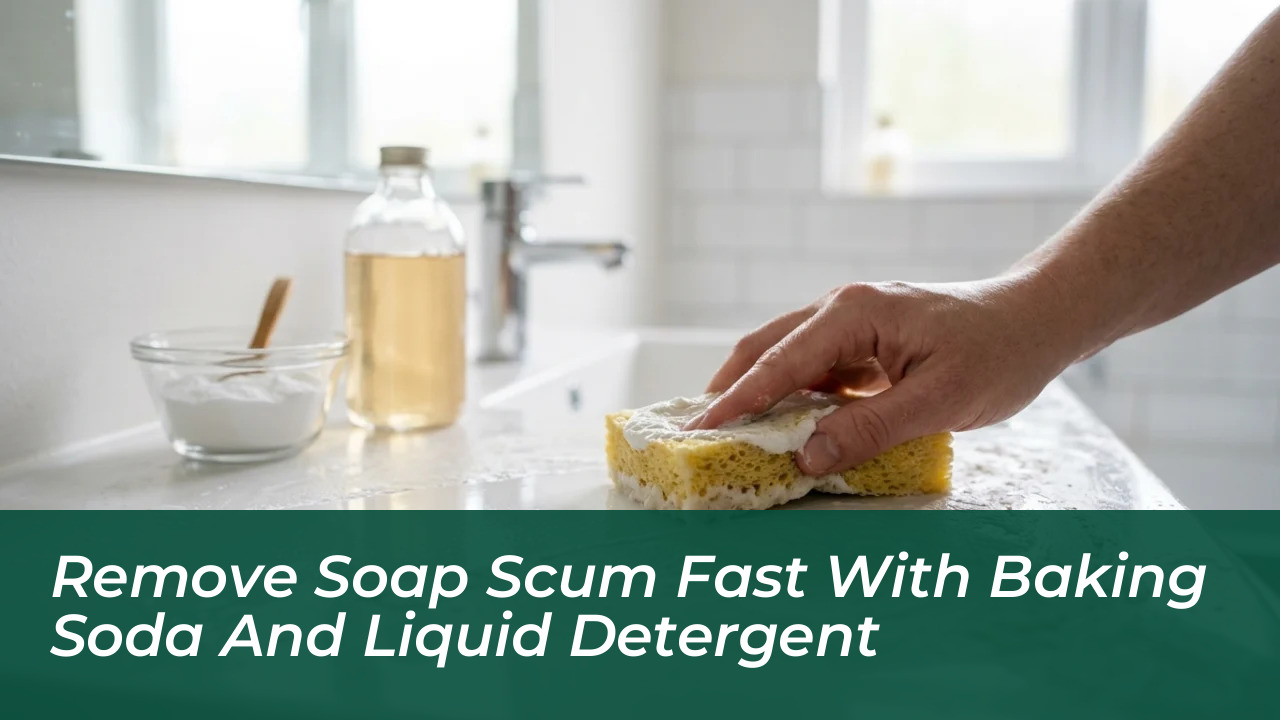

Tackling bathroom fixtures often feels like an endless battle against persistent grime. Soap scum, body oils, and hard water residue bond quickly to porcelain, tiles, and acrylic surfaces. This turns routine weekend chores into heavy manual labor. Instead of reaching for caustic chemical sprays or expensive commercial descalers, a simple domestic formulation relies on common household items. Mix half a cup of baking soda with standard liquid washing-up detergent to utilize their complementary chemical and physical properties.
Backed by practical formulations featured in official non-toxic guidance from the United States Environmental Protection Agency (EPA), this two-ingredient paste breaks down oily residues. It provides just enough friction to scour limescale and soap scum away. Completely free of overpowering fumes, this natural approach keeps everyday maintenance practical, low-cost, and highly effective.
How the Baking Soda and Detergent Formula Works
The mechanical efficiency of this homemade mixture comes down to a dual-action process supported by basic chemistry:
- The Mild Abrasive: Baking soda (bicarbonate of soda) acts as a gentle, non-scratch abrasive. It dislodges dried residue through surface friction without damaging delicate enamel, porcelain, or plastics.
- The Surfactant: Liquid washing-up soap functions as a powerful surfactant. It cuts straight through greasy film, breaking surface tension so water can wash the loosened grime away freely.
When combined, these two ingredients produce a thick, creamy paste. This paste clings securely to vertical walls and fixtures. Many people believe commercial cleaners require lengthy contact times to dissolve bathroom dirt. In reality, mechanical agitation paired with the right surfactant blend dislodges surface build-up immediately, making long waiting times entirely unnecessary.
Step-by-Step Preparation and Application
The EPA’s published guidance in its green cleaning resources recommends mixing only the exact quantity needed for each cleaning session. This ensures optimal texture and effectiveness.
Ingredients and Batch Mixing
- Half a cup of baking soda (bicarbonate of soda).
- Standard liquid soap or washing-up liquid, added gradually until the mixture achieves a frosting-like consistency.
- Optional: 5 to 10 drops of natural essential oil, such as lavender, rose, or lemon, for a fresh fragrance.
Place the dry powder into a clean bowl. Stir in the liquid detergent slowly until a thick, workable paste forms. If you choose to add scented essential oils, blend them thoroughly during this mixing stage.
How to Apply the Scrub
Scoop the paste directly onto a damp sponge or microfiber cloth. Scrub the target surface thoroughly using gentle circular motions to lift trapped dirt and oils. Rinse the area immediately with clean water to wash away lingering residue and loosened grime. Unlike acidic sprays or caustic bleach preparations, there is no need to let the product sit on the fixture before rinsing. The physical action of the sponge combined with the abrasive particles delivers immediate results upon contact.
Approved Surfaces and Material Compatibility
Abrasive scrubs must always be used with caution around specialist or delicate materials. However, this specific creamy formulation is proven safe and effective across several common household surfaces identified in official non-toxic cleaning guidance.
| Surface Type | Application Advice |
|---|---|
| Bathtubs | Removes oily tide marks and stubborn soap residue quickly from acrylic and enamel. |
| Sinks & Basins | Cleans surrounding metal tap fixtures and porcelain surfaces without scratching. |
| Shower Stalls | Tackles heavy build-up and water spots on plastic shower surrounds or tiled walls. |
| Formica Surfaces | Lifts entrenched everyday dirt safely without causing excessive surface wear. |
Enhancing Your Natural Cleaning Routine
Adopting eco-friendly cleaning solutions reduces household chemical exposure while keeping surfaces spotless. For homeowners looking to expand their green cleaning repertoire, white vinegar makes an exceptional natural ally. Its mild acidity helps cut through mineral deposits and disinfects when used separately from baking soda. Do not mix acidic vinegar directly with basic baking soda in closed containers. The resulting reaction neutralizes their individual cleaning strengths.
Have you tried swapping out harsh commercial cleaning sprays for simple kitchen cupboard staples? Share your experiences in the comments below and tell us which bathroom surfaces respond best to this DIY baking soda and detergent scrub in your home!
Frequently Asked Questions
Can I store leftover baking soda and detergent paste?
The EPA recommends mixing only the exact amount of paste needed for a single cleaning session. Baking soda can dry out or lose its optimal whipped texture when left sitting, so fresh batches perform much better.
Is this mixture safe for acrylic bathtubs?
Yes. Baking soda acts as a very mild, non-scratch abrasive that dissolves easily. It will not scratch standard acrylic or fiberglass bathtubs when applied with a soft, damp sponge.
Can I substitute baking soda with washing soda?
Washing soda (sodium carbonate) is significantly more alkaline and abrasive than baking soda (sodium bicarbonate). For delicate bathroom fixtures like porcelain and acrylic, stick to baking soda to avoid unintended surface etching.
Do I need to let the paste sit before scrubbing?
No waiting time is required. The physical friction of the baking soda combined with the surfactant properties of the liquid detergent immediately breaks down grease and soap scum upon contact.
What causes soap scum to bond so tightly to bathroom tiles?
Soap scum forms when minerals in hard water react with fatty acids found in soaps and body oils. This chemical reaction creates an insoluble, sticky film that clings stubbornly to tiles, glass shower doors, and porcelain.