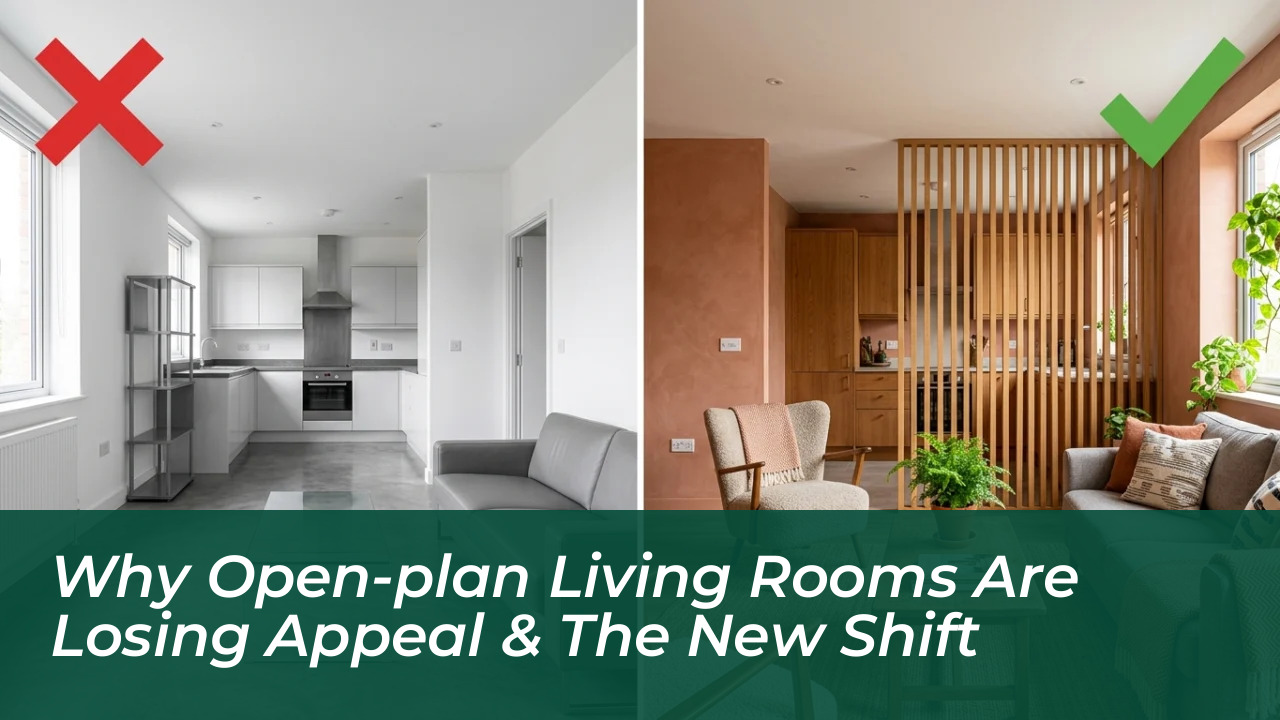

The vast open-plan layout is steadily losing its grip on modern domestic life. British households actively seek warmth, acoustic calm, and practical division rather than sterile, cavernous spaces. Cold grey palettes and showroom-matched furniture sets are being phased out. They are being replaced by multi-layered rooms, earthy shades, and tactile surfaces that reflect everyday life rather than untouchable perfection.
Decor trends evolve gradually through the materials manufacturers develop, the palettes paint specialists release, and the practical requirements of everyday living. Emerging design forecasts indicate a distinct departure from clinical, coordinated aesthetics. Instead, they lean toward tactile, sensory-rich spaces that support relaxation away from digital screens.
The shift toward warm palettes and tactile finishes
Sterile white walls and stark greys are being challenged by warm wood grains, muted clays, and nature-inspired tones. Major international paint manufacturers are setting this direction with selections rooted in natural landscapes. They spotlight grounded earthy tones such as deep terracotta, muted sage, and warm compost browns designed to anchor interior spaces. This colour progression aligns with a growing desire for sensory engagement within the home.
Polished, uniform finishes are giving way to raw stone, unlacquered metals, lime-plastered walls, woven textiles, and handmade ceramics with natural imperfections. A lived-in interior relies on patina, uneven surfaces, and layered textures rather than factory-perfect finishes. Rather than relying on single accent features, current decorating schemes layer varying sheens and textured surfaces to produce depth without overwhelming the eye.
Traditional vs. Emerging Interior Design Elements
- Traditional Modern Interior: Cool monochrome greys and stark whites
- Emerging Interior Focus: Earthy browns, muted sage, and warm timbers
- Traditional Modern Interior: Flat, high-gloss, or uniform surfaces
- Emerging Interior Focus: Tactile stone, textured plaster, and rich wood grain
- Traditional Modern Interior: Matching showroom furniture sets
- Emerging Interior Focus: Curated vintage finds, heirlooms, and patina
- Traditional Modern Interior: Fully open-plan communal living
- Emerging Interior Focus: Zoned layouts with flexible, semi-private partitions
Rethinking layout: Why the total open plan is receding
Expansive kitchen-diners remain a fixture of British architecture. However, property owners are reconsidering the practical realities of vast, unpartitioned spaces. Cooking smells, screen glare, and household noise travel freely across unbroken layouts. This drives demand for adaptable zoning.
In a closed-plan home, shutting a door contains sound. In an open-plan space, there is nowhere for noise to go. , remote work exposed profound structural weaknesses. When the dining table became a desk and the living room served as a video call background, the lack of spatial separation made concentration difficult. Combined with rising heating costs and the challenge of managing household mess, more people are concluding that what they actually want is a wall.
Flexible boundaries over rigid walls
Instead of rebuilding structural load-bearing walls, homes are adopting softer demarcation strategies to achieve functional separation without permanent construction:
- Sliding doors and timber screens: Enabling spaces to open for hosting or shut off for quiet evening downtime.
- Heavy drapery: Providing acoustic dampening and flexible visual borders between cooking and lounging zones.
- Strategic furniture placement: Using low-backed storage units, reading niches, and double-sided shelving to structure floor space organically.
This zoning shift complements furniture that adapts to shifting daily needs. Extending dining tables double as productive daytime workbenches, while mobile, modular seating allows living areas to reconfigure effortlessly.
Curating character and designing offline sanctuaries
The concept of buying an entire decorative suite in a single transaction has lost its appeal among discerning decorators. Modern spaces increasingly celebrate items gathered over time. They blend contemporary design with vintage discoveries, inherited objects, and artisanal art that reflects genuine personal history.
Alongside characterful styling comes an intentional retreat from smart screens and constant connectivity. Dedicated reading chairs, games tables, craft areas, and conversational seating arrangements are gaining prominence across modern layouts. These establish tactile spaces explicitly designed for unwinding offline.
Closed rooms aren’t a step backward. For a lot of people living in the reality of open-plan homes, they are starting to look like the sensible option that was there all along.
Frequently Asked Questions
Why are open-plan living rooms losing their popularity?
Open-plan living rooms are losing appeal due to persistent issues with noise traveling freely, lingering cooking smells, the inability to hide household mess, difficulties in heating large spaces efficiently, and a lack of privacy or quiet areas for remote work and relaxation.
What design elements are replacing sterile open-plan minimalism?
Sterile minimalism is being replaced by warm, earthy color palettes, such as terracotta, sage, and compost browns. It is also being replaced by tactile finishes like raw stone, lime plaster, unlacquered metals, and layered textures that create depth and a lived-in feel.
How can I create division in an open-plan home without building walls?
You can create functional zoning without permanent walls by using sliding doors, timber screens, heavy drapery for acoustic dampening, double-sided shelving units, area rugs, and strategic furniture placement.
Why did remote work impact the appeal of open-plan layouts?
Remote work blurred the lines between professional duties and domestic rest. Without physical walls or doors, visual and auditory distractions made it difficult to concentrate, prompting a major desire for private, dedicated workspaces.
Are traditional closed rooms making a permanent comeback?
While open kitchens remain popular architectural features, homeowner demand has clearly shifted toward flexible zoning, semi-private partitions, and spaces that offer acoustic calm and personal privacy.