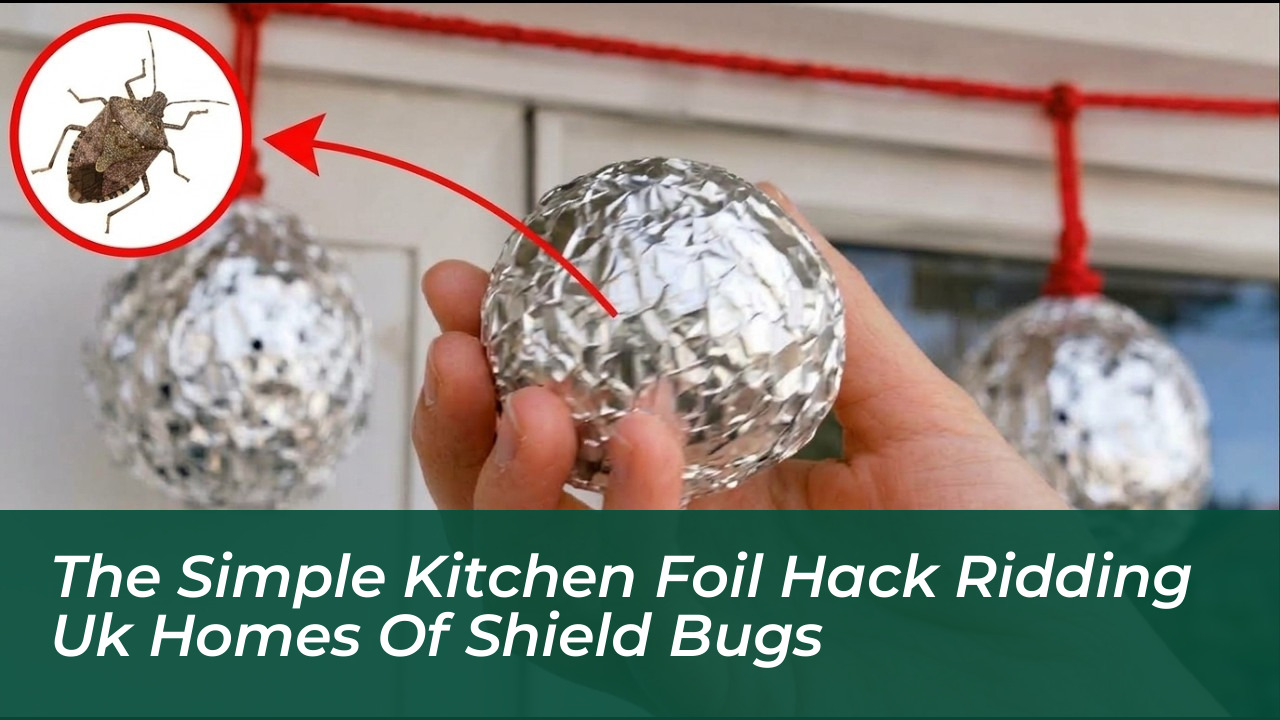

As autumn and early winter temperatures drop across the United Kingdom, native shield bugs and invasive brown marmorated stink bugs search for indoor hibernation spots. Finding these uninvited guests crawling across curtains, skirting boards, and double glazing is an annual frustration for householders nationwide. However, a growing number of British homeowners are using a simple, non-toxic physical defence that requires zero chemicals, zero costly exterminators, and materials already sitting in the kitchen drawer: ordinary aluminium kitchen foil.
Stretching ordinary aluminium kitchen foil across window sills and entry points creates an optical and tactile barrier that drives stink bugs away within minutes. Because these persistent shield bugs rely heavily on natural light orientation and heat absorption, the glaring reflection and cool, slick texture of household foil prove intensely disorienting for their sensitive sensory receptors.
The Science Behind Why Foil Scatters Shield Bugs So Quickly
Shield bugs belong to the order Hemiptera. They possess sensitive compound eyes and delicate antennae designed to detect warm surfaces and safe crevices for sheltering through cold spells. When these insects encounter polished aluminium foil, their natural navigation system goes into disarray. Aluminium foil acts against shield bugs through three primary physical deterrents:
- Light Disruption: Household foil bounces harsh, irregular reflections of direct daylight, dazzling the insect’s compound eyes and triggering an instinctive flight response.
- Slick Surface Texture: The tiny tarsi, or claws, on a shield bug’s legs cannot secure traction on polished aluminium, preventing them from climbing upwards into window seals.
- Thermal Reflection: Foil reflects ambient warmth away rather than retaining it, eliminating the warm micro-climates that bugs deliberately seek out when clinging to external frames.
The result is rapid evasion. Rather than settling into the warm draughts of window reveals, the bugs quickly turn around or take flight in search of rougher, darker substrates elsewhere.
Step-by-Step: Applying the Foil Barrier Around Windows and Doors
Setting up the physical barrier takes barely five minutes per room. It requires only standard kitchen roll foil and a roll of low-tack painter’s tape to avoid peeling any paintwork from window boards.
Begin by thoroughly wiping down the window sill to remove dust, dead insects, and any residual pheromone trails left behind by previous visitors. Shield bugs often deposit aggregation pheromones that signal safe resting spots to other bugs in the vicinity.
Securing the Physical Perimeter
Tear off a strip of aluminium foil that matches the precise length of the window sill. Smooth it down directly along the interior frame where the window sash meets the ledge. Keep the shiny side facing upwards and outwards towards the glass. Secure the edges firmly with masking tape or painter’s tape so the strip stays flat against draughts.
If your property features exterior balcony doors, patio sliders, or vents where insects frequently enter, affixing narrow strips along the threshold creates an effective deterrent zone. This stops them from crawling inside before they reach your living room carpet.
Safe Handling: What to Do If One Gets Inside
Despite your best defences, an occasional straggler may slip past when patio doors are open. Handling them correctly prevents them from deploying their notorious, coriander-like defensive stench.
Never swat, crush, or squash a shield bug underfoot. Doing so ruptures their internal thoracic glands, releasing aldehydes that smell dreadful and can stain wallpaper and soft furnishings permanently. Crushing them indoors releases an intensely pungent chemical defence mechanism that lingers on upholstery and skin for hours.
Instead, use the gentle jar-and-paper trap method to usher the insect outside. Alternatively, gently coax the bug onto a piece of kitchen foil. Its inability to gain traction will keep it trapped in place while you walk it straight out to the garden.
Frequently Asked Questions About the Stink Bug Foil Trick
Does aluminium foil actually repel shield bugs?
Yes. Aluminium foil disrupts shield bugs through intense light reflections, a slick texture that prevents foot traction, and thermal reflection that eliminates the warm micro-climates they seek out.
Which side of the foil should face upwards on the window sill?
Keep the shiny side facing upwards and outwards towards the glass to maximize the harsh, irregular light reflections that disorient the insects’ compound eyes.
Will this hack damage my window paint or window sill?
No, provided you use low-tack painter’s tape or masking tape to secure the edges of the foil, which prevents any peeling or sticky residue when removed.
Does crushing a shield bug release a bad smell?
Yes. Squashing a shield bug ruptures its internal thoracic glands, releasing pungent aldehydes that smell like coriander and can linger on skin and fabrics for hours.
What other natural ingredients can deter household pests?
Many homeowners combine physical barriers like foil with strong aromas that insects and rodents dislike, such as peppermint oil, bay leaves, cloves, cayenne pepper, and turmeric.