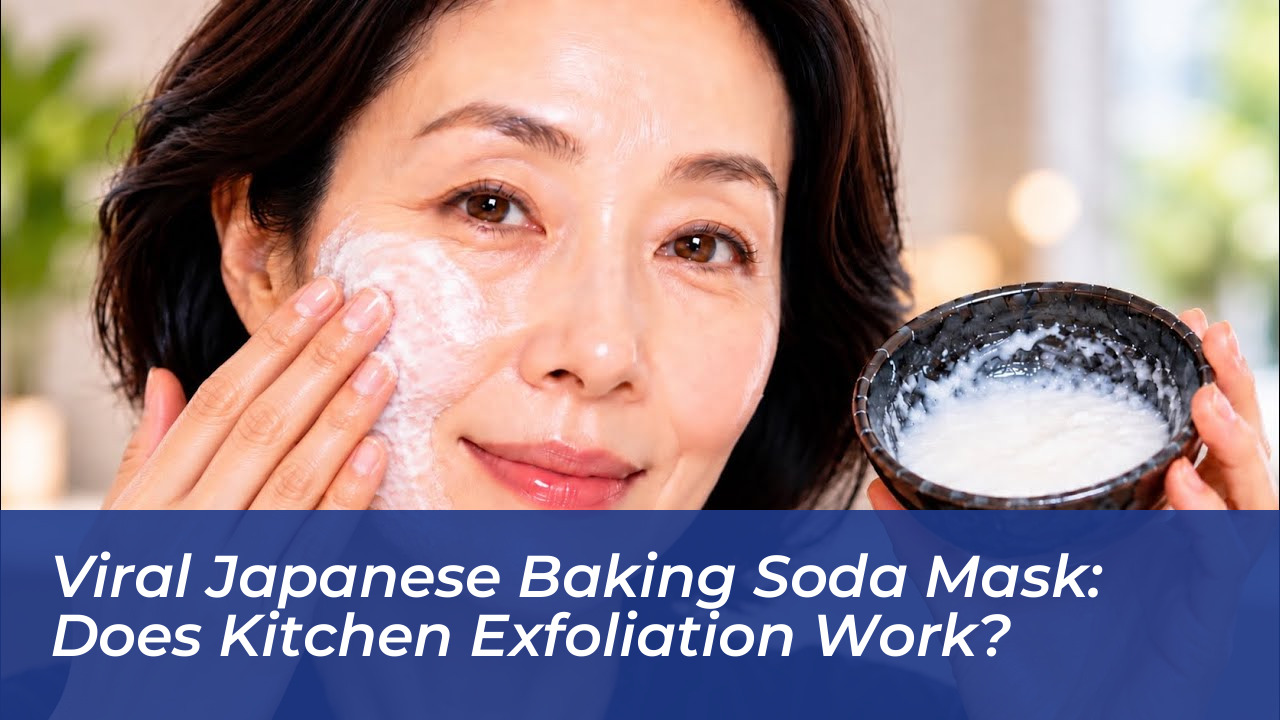

A simple baking soda mask cannot literally reverse two decades of ageing, but its micro-crystalline structure delivers an immediate surface polish. It noticeably brightens a dull complexion and smooths rough patches on mature skin. By lifting stubborn dead skin cells and clearing pores, sodium bicarbonate creates an instant optical refinement that mimics a professional clarifying treatment.
The pursuit of radiant skin has led beauty enthusiasts across the United Kingdom to look towards East Asian beauty rituals. While high-street shops promote potent serums with high price tags, kitchen remedies remain a compelling alternative. The secret does not lie in using sodium bicarbonate alone, which can disrupt the skin’s delicate acidic mantle. Instead, traditional Japanese-inspired home preparations temper this alkaline compound by blending it with nourishing, barrier-replenishing kitchen staples.
The Chemistry of Kitchen Peels: How Sodium Bicarbonate Transforms Texture
Human skin maintains a naturally acidic pH of approximately 5.5, while sodium bicarbonate sits higher up the alkaline scale at roughly 8.3. When applied to the skin, fine bicarbonate particles act as a physical abrasive while dissolving surface oils and loosening the bonds between dead cells. This rapid exfoliation is why a viral baking soda mask gives such an instantaneous, radiant finish.
However, leaving the compound unbuffered risks stripping essential surface lipids, leading to moisture loss and redness. To capture the brightening benefits without aggravating mature skin, Japanese DIY methods mix the powder with fatty emollients, natural humectants, and buffering acids. These added elements cushion the physical polish, delivering a silky finish without irritation.
Six Targeted Japanese-Inspired Formulations to Restore Radiance
Depending on whether your primary concern is dry patches, uneven tone, or stubborn congestion, pairing bicarbonate with specific kitchen ingredients creates a tailored, spa-level treatment:
- Baking Soda and Avocado Oil: Avocado oil is packed with oleic and essential fatty acids. This combination smooths weathered skin while replenishing moisture reservoirs, making it beneficial for dry, mature complexions.
- Baking Soda, Yoghurt, and Honey: The lactic in plain natural yoghurt balances the alkalinity of the paste, whilst raw honey acts as a natural humectant that draws hydration straight into parched skin layers.
- Baking Soda and Mineral Water: The most straightforward purifying paste. Mixed into a thin slurry, it serves as a clarifying wash for congested T-zones and rough jawlines.
- Baking Soda and Mashed Banana: Rich in potassium and gentle fruit sugars, fresh banana provides a soothing cushion that counteracts the physical scrubbing action of the fine crystals.
- Baking Soda and Finely Ground Oat Flour: Oats contain beta-glucans and natural compounds known to calm sensitivity. Blending them with bicarbonate produces an ultra-soft buffing polish that lifts dullness without scratching.
- Baking Soda and Mandarin Juice: The natural citric and vitamin C in fresh mandarin juice help illuminate hyperpigmentation and fade the appearance of sun-induced dark spots.
Protecting Your Skin Barrier: Application Rules
Before applying any homemade mixture directly across your face, conduct a 24-hour patch test on your inner forearm, as recommended by British dermatological standards. Those with sensitive skin or conditions such as rosacea should exercise caution with alkaline kitchen treatments.
Never scrub the mixture aggressively into delicate facial tissue. Instead, pat the mixture gently onto clean, damp skin, leave it in place for no more than three to five minutes, and rinse thoroughly using tepid water before sealing with a rich, ceramide-based moisturiser. Practitioners of Japanese minimalist skincare advise against daily exfoliation. A single treatment every fortnight is typically sufficient to sustain cellular turnover without compromising the skin barrier.
Always follow morning exfoliation with a broad-spectrum SPF 30 or SPF 50, as removing dead surface cells leaves fresh underlying skin more vulnerable to ultraviolet damage, even under typical British cloud cover.
Finding the right balance between natural pantry ingredients and active skin biology requires patience, observation, and gentle application. Have you ever tried a natural home facial using sodium bicarbonate? Share your results and your favourite pantry pairings in the comments below.