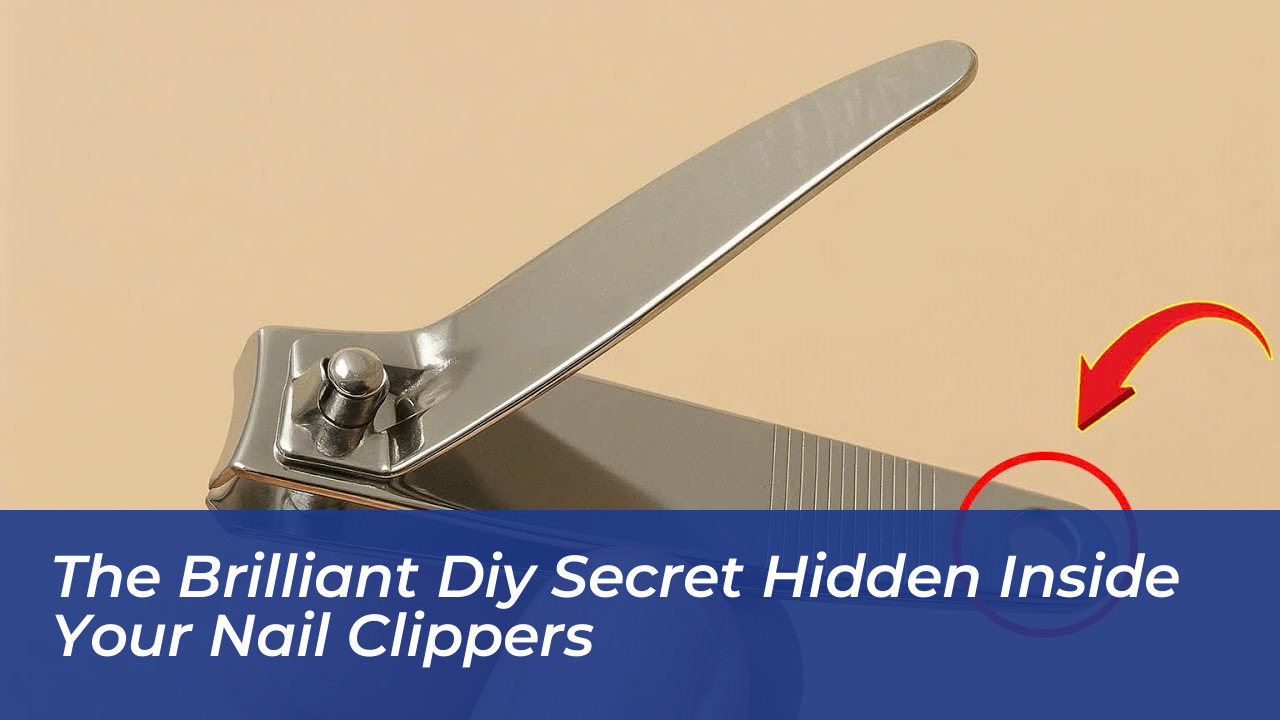

Standard stainless steel nail clippers do far more than simple personal grooming. Tucked away in nearly every bathroom cabinet across the United Kingdom, their clever compound-lever design makes them one of the most effective micro-cutting implements in the home. Most households possess three or four spare pairs hidden away in bedside tables or travel bags. Before consigning an older pair to the bin, examining their mechanical geometry reveals why DIY enthusiasts and crafters frequently keep them inside their workshop toolboxes for precision tasks.
The Hidden Engineering Behind Everyday Clippers
The standard clipper relies on a clever first-class compound lever system that concentrates modest fingertip pressure into formidable cutting force at the blades. Because the opposing curved edges meet squarely rather than sliding past one another like scissors, they deliver a controlled, bilateral pinch. This distinct cutting action prevents materials from sliding along the edge while you squeeze.
As demonstrated in practical workshop tutorials, this mechanical leverage allows for surgical precision in tight spaces where bulkier pliers or craft knives simply cannot reach. When repurposed thoughtfully around the house, that small steel frame easily solves frustrating everyday snags.
Five Clever Household Functions for Old Clippers
Repurposing an older pair of nail clippers can save considerable time, protect your fingernails, and prevent damage to expensive specialist tools across several common household tasks:
- Precision Wire Stripping: Gently squeezing the plastic sheath of a thin speaker cable or craft wire with the curved blades allows you to score the insulation without nicking the copper core. A light twist and pull slides the plastic casing off cleanly.
- Flush-Cutting Cable Ties: Standard scissors often leave a sharp, jagged edge on nylon zip ties that can scratch hands. The concave jaw of a clipper cuts flush against the tie’s ratchet block, leaving a smooth, safe finish.
- Prying Open Key Rings: Forcing a thick key onto a tight split metal ring frequently results in broken nails or pinched fingers. Slipping the flat, swung-out swing lever between the coils creates an immediate gap to slide keys on effortlessly.
- Emergency Thread and Twine Snips: Keen knitters and stitchers keep a compact clipper in their sewing kits to slice embroidery floss, yarn, and heavy upholstery thread without fraying the ends.
- Makeshift Mobile Stand: By flipping the swinging arm backwards and propping the body against a flat surface, certain clipper designs form a sturdy, low-profile kickstand for viewing media hands-free.
Taming Impenetrable Blister Packaging
Rigid clamshell plastic packaging represents one of the most common domestic annoyances, often leading people to recklessly hack at corners with kitchen knives or heavy shears. According to general safety guidance from British trading bodies, inappropriate cutting implements cause thousands of preventable household hand injuries annually.
A pair of sharp nail clippers provides far greater control. By nibbling along the perimeter seam step by step, the jaws punch through thick vacuum-formed plastic without the sudden, uncontrolled slippage that makes kitchen utility blades hazardous.
Maintenance and Workshop Safety
Before moving any grooming implement into a secondary role, proper hygiene and maintenance remain essential. Tools dedicated to workshop tasks, such as stripping wires or trimming gardening cord, should be clearly separated from those used for personal health. Wiping the carbon or stainless steel frame with surgical spirit removes residual grease and prevents cross-contamination.
If the hinge mechanism feels stiff after months in a damp bathroom, applying a single drop of mineral oil directly into the pivot pin restores smooth, snappy movement instantly. Bear in mind that nail clippers are engineered for softer materials like organic keratin, copper filaments, and thin plastics. Never attempt to cut hardened steel nails, thick screws, or fencing wire, as doing so will instantly notch the delicate cutting edges and ruin the jaw alignment.
Retiring a worn grooming tool into a secondary utility role prevents unnecessary waste and keeps high-dexterity solutions right at your fingertips. The next time you find yourself battling a stubborn cable tie or searching for an elusive wire, your dressing table just might hold the ideal fix.