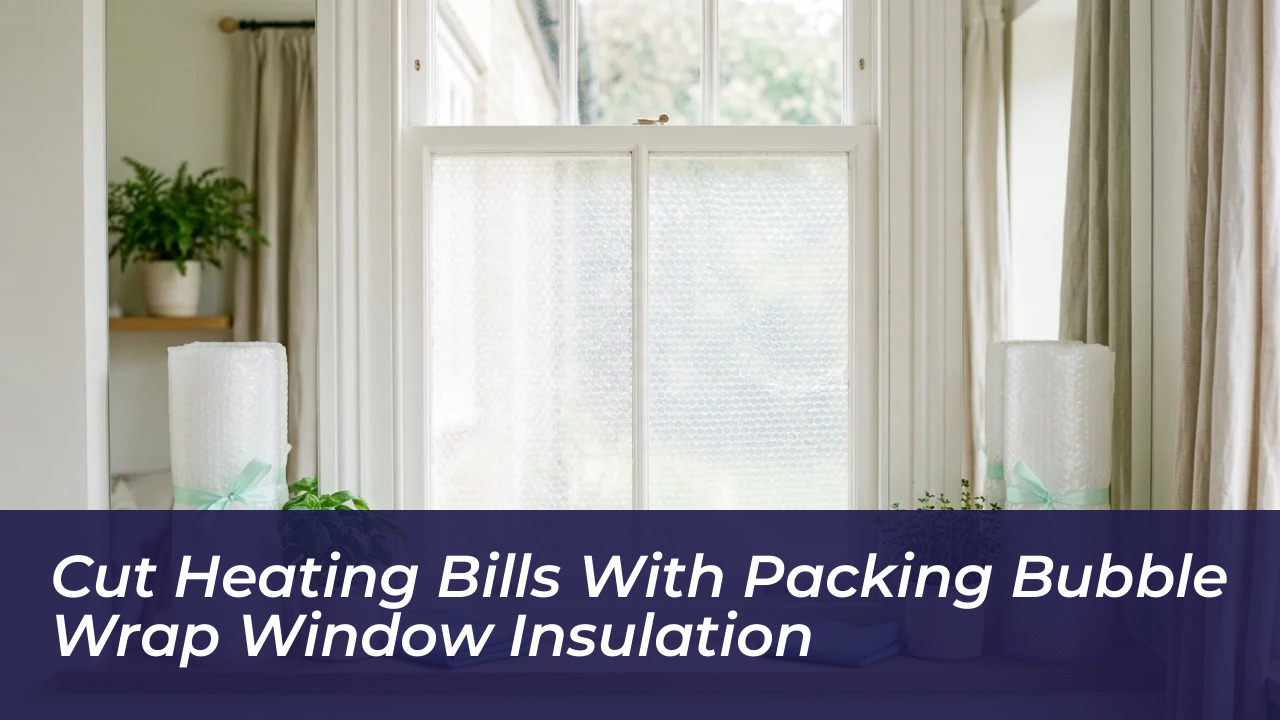

Applying standard packing bubble wrap directly over interior window panes creates an immediate thermal buffer that prevents indoor warmth from leaking outside. Instead of allowing cold drafts to drop room temperatures and drive up winter heating bills, the tiny, sealed air pockets inside ordinary cushioning mimic double glazing, trapping heat inside your living space for pennies. Windows are notorious for being the weakest thermal link in any home, often hemorrhaging indoor warmth through radiation and conduction while forcing your heating system to work overtime. By introducing a secondary layer of dead air directly against the glass, you disrupt cold air transfer without blocking out natural sunlight.
The Physics Behind the Bubble Wrap Thermal Barrier
The science behind this household technique relies on standard thermal resistance. Glass is an effective heat conductor, meaning warm air inside a heated room naturally migrates toward the freezing pane, cools down rapidly, and sinks to the floor to create an internal draft. Standard packing material interrupts this exact thermodynamic cycle.
Each individual bubble functions as a sealed capsule of stagnant air. Because still air possesses exceptionally low thermal conductivity, it acts as an insulator rather than a conductor. When affixed tightly across the frame using water surface tension or double-sided tape, the sheet establishes an extra boundary layer that significantly slows conduction losses. Air pockets in standard bubble wrap act as an extra thermal barrier, keeping the cozy heat inside and the freezing chill outside.
Why Thin Plastic Outperforms Exposed Glass
While heavy curtains block light and leave a gap where cold air can spill underneath, clear polyethylene sheets sit directly against the perimeter of the opening. This prevents convective air currents from forming along the glass surface. The result is a warmer room perimeter without turning your living area into a dark cave.
In terms of raw efficiency metrics, single-glazed windows can experience a reduction in heat loss of up to 50% when insulated with bubble wrap. Double-glazed windows see roughly a 20% improvement, while triple-glazed panes receive negligible benefits because they are already exceptionally well-insulated.
Step-by-Step Installation for Maximum Efficiency
Executing this technique requires zero specialized tools and only a few basic household supplies. Follow these exact steps to seal your room before the next cold front hits:
- Clean the glass thoroughly: Wipe away all dust, moisture, and grime from the window panes and frames so adhesives hold firmly.
- Measure and cut the material: Measure your window sash dimensions and cut clear polyethylene bubble cushion to match the exact size of the glass, leaving a 5mm gap on each edge.
- Apply moisture or perimeter adhesive: Spray a light, even film of water on the glass or place strips of double-sided tape along the window frame edges.
- Press the sheet firmly: Align the bubble wrap with the flat side facing into the room and the textured bubble side facing the glass, pressing edges down firmly to eliminate air gaps.
- Check for drafts: Run your hand along the seams to verify no cold air streams slip past the edges.
For added insulation along heavily drafted casings, combining this barrier with standard foam weatherstripping along the sashes creates an airtight lock that prevents cold outdoor air infiltration entirely.
Comparing Common DIY Winter Window Solutions
Homeowners often debate whether specialized hardware store kits outperform repurposed packing supplies. The table below outlines how common materials stack up when attempting to lower seasonal utility expenses.
| Insulation Method | Primary Mechanism |
|---|---|
| Bubble Wrap Layering | Trapped dead-air cells provide localized thermal barrier while letting daylight pass |
| Polyethylene Shrink Film | Creates a sealed whole-frame air pocket using perimeter mounting tape |
| Foam Weatherstrip Tape | Fills structural sash gaps to halt direct mechanical drafts and airflow leaks |
| Thermal Blockout Curtains | Heavy fabric barrier that blocks drafts but eliminates interior natural light |
Common Misconceptions About Winter Window Sealing
A widespread myth suggests that turning your thermostat higher is the only way to counteract drafty rooms during sub-zero temperatures. In reality, cranking up central heat without addressing conductive window loss simply pushes more expensive energy through the glass, wasting fuel while leaving living areas feeling chilly.
Another frequent error is assuming that high-cost replacement windows are the only remedy for seasonal draft issues. While modern multi-pane windows offer superior performance, simple surface-level barriers can solve convective heat loss in older frames immediately without major renovation expenses.
Frequently Asked Questions About Bubble Wrap Insulation
Is bubble wrap good for window insulation?
Yes. Bubble wrap is an effective low-cost window insulator that adds approximately R-1 of insulation value by trapping air in its bubbles against the glass. For single-pane windows, this can cut heat loss by up to 50%.
Which side of bubble wrap faces the glass?
The bubbly side always faces the glass. The bubbles grip the wet glass surface to create a temporary adhesive bond while forming the insulating air layer directly against the cold pane.
Do you need tape to stick bubble wrap to windows?
No tape is needed if you use the water-spray method. A light mist of plain water creates sufficient surface tension to hold the bubble wrap firmly in place for an entire heating season.
Does bubble wrap insulation work on double-glazed windows?
Yes, but the improvement is smaller than on single-pane glass. Double-glazed windows already feature a built-in air gap, so bubble wrap adds up to a 20% performance improvement.
How long does bubble wrap stay on windows?
With proper installation, bubble wrap stays secured for the entire heating season, typically lasting 4 to 6 months. The same pieces can be peeled off cleanly, stored rolled up, and reused for 1 to 3 seasons.