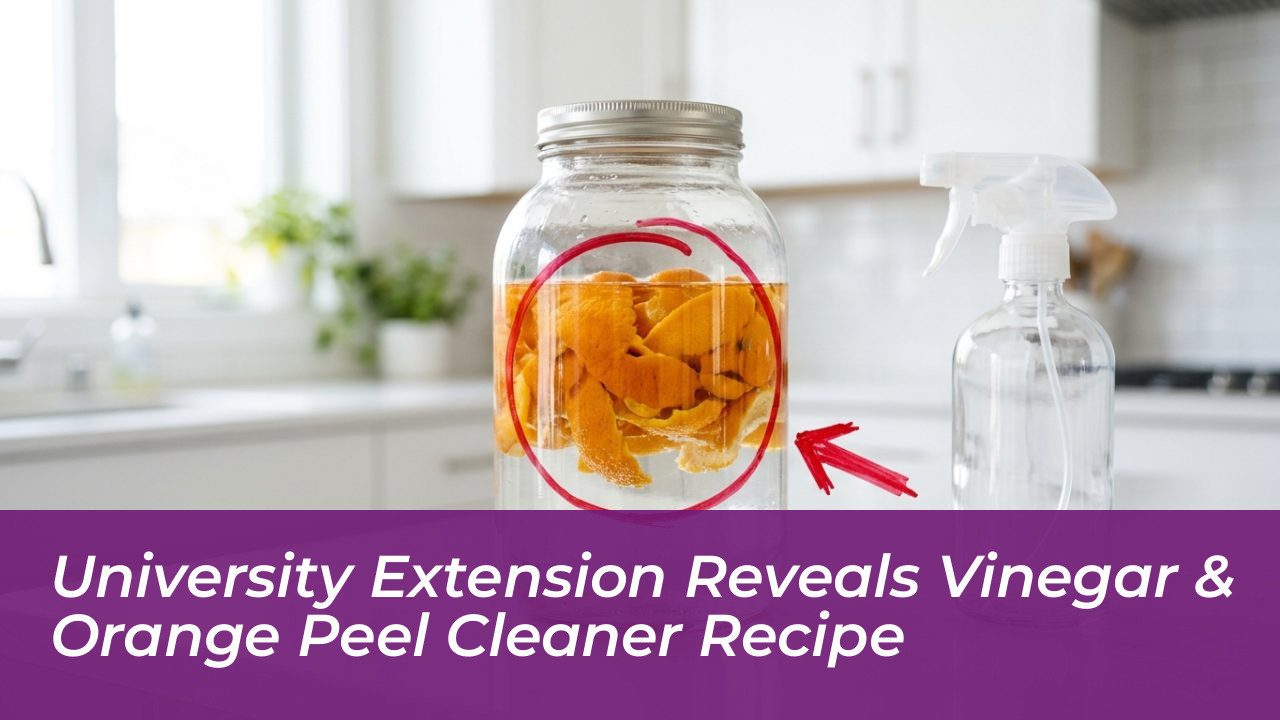

A newly surfaced household cleaning formulation backed by university extension research offers residents a zero-waste alternative to commercial aerosol sprays. By combining leftover orange peels with standard distilled white vinegar, households can create a low-cost, effective cleaning solution capable of breaking down stubborn mineral deposits, soap scum, and everyday kitchen grease without relying on harsh artificial chemicals.
The formulation, highlighted through guidance from the University of Florida’s Institute of Food and Agricultural Sciences (UF/IFAS), harnesses the natural chemical properties of common pantry staples. Rather than discarding citrus scraps into the trash after food preparation, homeowners can repurpose them into a fragrant, multi-use surface cleaner that neutralizes sharp vinegar odors while tackling household grime.
The Science Behind Citrus Peels and Distilled Vinegar
The effectiveness of this DIY cleaner lies in a straightforward chemical synergy. White vinegar contains acetic , a mild that reacts with and dissolves alkaline substances such as hard water scale, calcium buildup, and light kitchen grease.
Meanwhile, citrus rinds contain natural aromatic compounds, primarily d-limonene, which infuse into the liquid over a curing period. These essential citrus oils soften the sharp, pungent scent of pure acetic , leaving behind a fresh fragrance rather than an overwhelming chemical smell. While commercial cleaning products often rely on complex synthetic surfactants and undisclosed fragrances, this traditional pantry combination utilizes basic chemistry to lift dirt from surfaces.

Step-by-Step Preparation According to Extension Guidelines
Preparing the citrus vinegar infusion requires minimal hands-on time and basic kitchen supplies, followed by a mandatory waiting period to allow the active compounds to extract properly.
- Prep the citrus: Strip and clean the peels from four fresh oranges, taking care to remove any excess lingering pulp so the finished liquid remains clear.
- Fill the container: Place the four cleaned citrus rinds inside a clean one-liter glass jar fitted with a secure lid.
- Submerge in vinegar: Pour in enough plain white vinegar to completely cover the orange peels, then seal the lid tightly.
- Allow the mixture to steep: Store the glass jar undisturbed for exactly one week to allow proper extraction of the citrus oils.
- Strain and bottle: After seven days, pour the liquid through a fine-mesh strainer to catch the solid rinds, and decant the finished solution into a standard spray bottle.
- Perform a spot test: Before broad application, spray a small amount onto a hidden corner of the surface to verify compatibility, then wipe clean with a microfiber cloth.
Critical Safety Precautions and Mixing Warnings
Despite its natural origins, safety remains paramount when introducing any homemade cleaning solution into a domestic environment. A persistent myth in home maintenance suggests that combining various natural cleaning agents enhances their cleaning power. In reality, mixing vinegar with specific common household disinfectants leads to severe chemical hazards.
According to UF/IFAS safety guidelines, this citrus vinegar solution must never be combined with household bleach or hypochlorite products. Mixing an like vinegar with bleach triggers a chemical reaction that releases toxic chlorine gas, which can cause severe respiratory distress, coughing, and eye irritation. Users must thoroughly rinse surfaces between transitioning from different cleaning products.
Proper Storage and Container Selection
Proper storage is just as vital as proper mixing when introducing DIY solutions into family homes. Clear labeling prevents accidental misuse, particularly in households with small children or shared living spaces.
- Extraction Window: Rest the closed mixture undisturbed for exactly seven days before straining the solids.
- Prohibited Additives: Never combine the solution with bleach, ammonia, or commercial disinfectants.
- Storage Protocols: Clearly label spray bottles with the contents and creation date; keep out of reach of children and pets.
- Container Selection: Never store cleaning fluids in repurposed food or beverage containers, such as old soda bottles or juice jugs, to prevent accidental ingestion.
Because the infused liquid can resemble tinted juice or commercial beverages, researchers stress the importance of dedicated, clearly marked spray bottles. Incorporating this sustainable citrus repurpose during weekend kitchen routines offers an economical way to maintain living spaces while minimizing household waste and chemical exposure.
Frequently Asked Questions About Vinegar and Citrus Cleaners
Can I use any type of citrus peel for this cleaner?
Yes, while orange peels are standard, you can substitute or combine lemon, lime, or grapefruit rinds. Each provides natural aromatic compounds that help cut through grease and neutralize the pungent vinegar scent.
Is this citrus vinegar cleaner safe for natural stone countertops?
No. Natural stone surfaces such as granite, marble, and quartz cannot tolerate acidic cleaners like vinegar. The can permanently etch the surface finish and break down protective stone sealers.
How long does the homemade citrus cleaner last?
When stored properly in a sealed, dark container or labeled spray bottle away from direct sunlight, the strained solution typically remains stable for several months.
Does this DIY cleaner disinfect surfaces?
No. While this solution effectively removes dirt, mineral deposits, and light grease, it is classified as a cleaner rather than an EPA-registered disinfectant. It does not reliably kill harmful bacteria or viruses.
Why shouldn’t I store the mixture in a recycled soda bottle?
Storing household cleaning solutions in repurposed food or beverage containers creates a severe safety hazard, as children or guests could easily mistake the brightly colored liquid for a drink.