
Pouring extra water onto wilting potted mums often accelerates root suffocation rather than saving the plant. Soggy soil deprives root systems of oxygen, mimicking the exact drooping symptoms of extreme drought. When garden chrysanthemums begin to sag or drop petals in autumn containers, instinctive over-caring frequently turns a temporary stress response into irreversible root rot. Diagnosing the exact environment around the root ball prevents well-intentioned gardeners from ruining their fall displays. Catching environmental imbalances early allows resilient plants to bounce back rapidly once proper moisture and sunlight balance are restored.
The Paradox of Potted Mums: Why Extra Water Causes Rapid Decline
When foliage droops, the standard reaction is reaching for the watering can. Yet, garden mums tolerate dry conditions significantly better than waterlogged containers. Excessive moisture rapidly breaks down fragile feeder roots, stopping the plant from moving hydration to upper stems entirely.
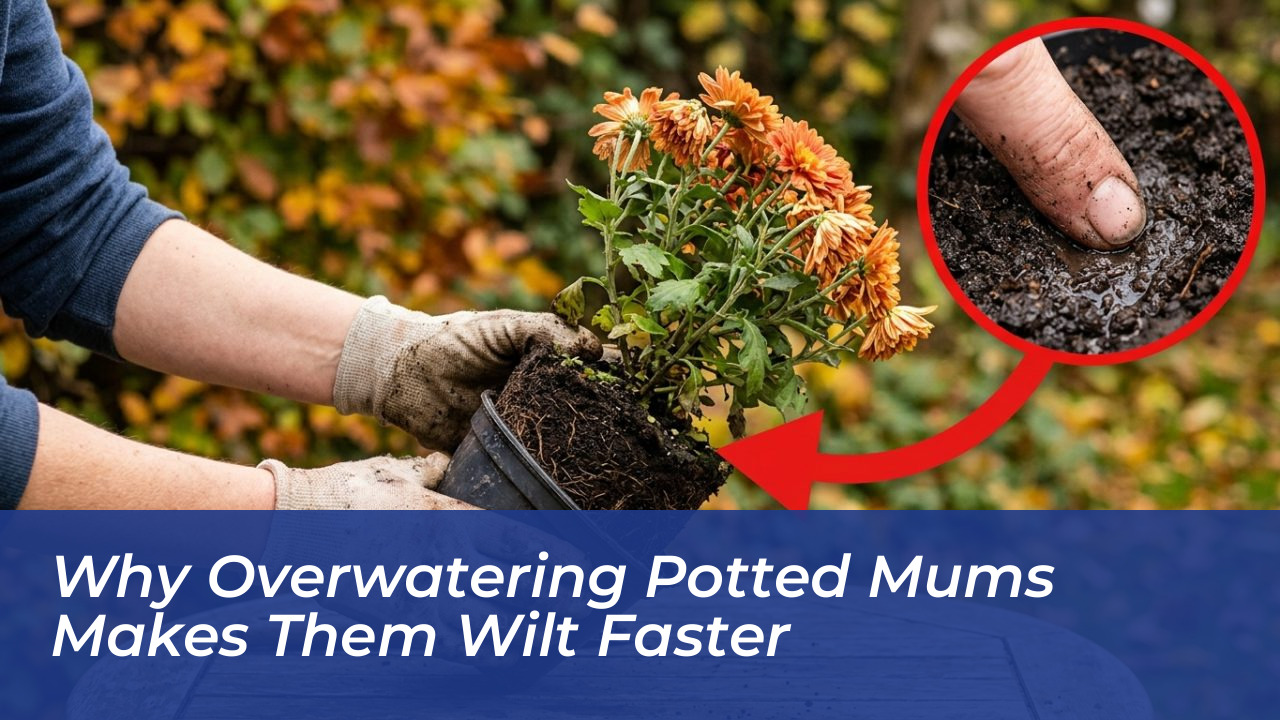
“Too much water and too little water can cause the plants to wilt, the flowers to fade,” says Justin Hanc**k, horticulturist at Costa Farms. “Feeling the moisture level in the soil with a fingertip is a great way to start so you can physically get a sense of its wetness or dryness.”
Swinging wildly between extreme moisture levels creates deep physiological shock. Allowing a container to turn bone dry before drenching it until it is waterlogged damages roots faster than sustained underwatering. Consistency, rather than abundant hydration, preserves healthy root systems.
Diagnostic Clues: How to Read Distressed Chrysanthemums
Before moving or replanting declining autumn blooms, inspect physical symptoms methodically. A drooping plant requires careful root and soil assessment rather than immediate repotting.
Observed Issue: Soggy soil and drooped stems
Root Cause and Immediate Action: Overwatering. Slip root ball out of pot to dry; do not repot.
Observed Issue: Water runs straight off surface
Root Cause and Immediate Action: Hydrophobic soil. Submerge pot halfway in water for 30 minutes.
Observed Issue: Sparse, weak floral buds
Root Cause and Immediate Action: Insufficient sunlight. Relocate container to six hours of direct sun.
Observed Issue: Roots circling drainage holes
Root Cause and Immediate Action: Root-bound container. Upgrade to larger pot or loosen root ball.
Rescuing Waterlogged and Hydrophobic Roots
Fixing moisture mistakes requires two entirely different mechanical approaches depending on what the fingertip test reveals:
- Overwatered containers: Carefully slide the root ball completely out of its plastic pot. Exposing the damp exterior directly to the air allows moisture to evaporate quickly without damaging delicate root hairs. Avoid repotting a wet mum into a larger container, as flower production requires plant energy that should not be diverted to adjusting to new soil.
- Hydrophobic, bone-dry soil: Severely dried potting soil shrinks and sheds water down the sides instead of absorbing moisture. Place the entire pot into a bucket or basin filled halfway with water. Let it soak for roughly 30 minutes to draw moisture upward through capillary action until fully hydrated.
Sunlight Shortages and Root-Bound Nursery Pots
Autumn chrysanthemums demand direct energy to maintain vibrant seasonal blooms. Placing containers under deep porch overhangs or shaded entryways often causes buds to stall or fade prematurely.
“Sunlight plays a key role in how well they will perform,” notes Rhonda Kaiser, author of The Vintage Farmhouse Garden. “For the healthiest plants, I recommend placing mums where they’ll receive at least six hours of direct sunlight each day.”
Physical confinement poses another hidden hurdle. Most garden centers sell mature potted mums that are already completely root-bound. When roots circle tightly inside nursery pots, they lose the ability to drink evenly or transport nutrients to developing flowers. If visible root strands push out through base drainage holes, move the mum into a slightly larger decorative pot filled with fresh potting soil. When transplanting into landscape garden beds, carefully score the root boundaries with a garden knife and gently loosen the outermost root strands with your fingers before setting the plant into the ground.
Natural Fading Versus Environmental Plant Stress
A widespread misconception is that yellowing or browning blossoms always signal a dying plant. Every mum cultivar operates on an inherent floral life cycle, and fading petals do not automatically indicate cultural failure.
The blooming window of garden mums is naturally compact. Individual blossoms gradually expire after several weeks of exposure regardless of how pristine your care routine remains. If lower green leaves appear crisp and healthy while older blooms begin to brown, the specimen is simply concluding its primary flowering phase. In many instances, clearing aged flowers helps encourage a modest secondary flush of buds before cold winter weather sets in.
Quick Care Takeaways
- Check your container soil before adding water. A single finger test avoids accidental root suffocation.
- Inspect root density at the drainage holes. Loosening tight roots protects late-season vitality.
- Give plants six hours of unobstructed autumn sun. Bright light extends color duration significantly.
Have your autumn blooms started to wilt this season? Share your care routine in the comments below.