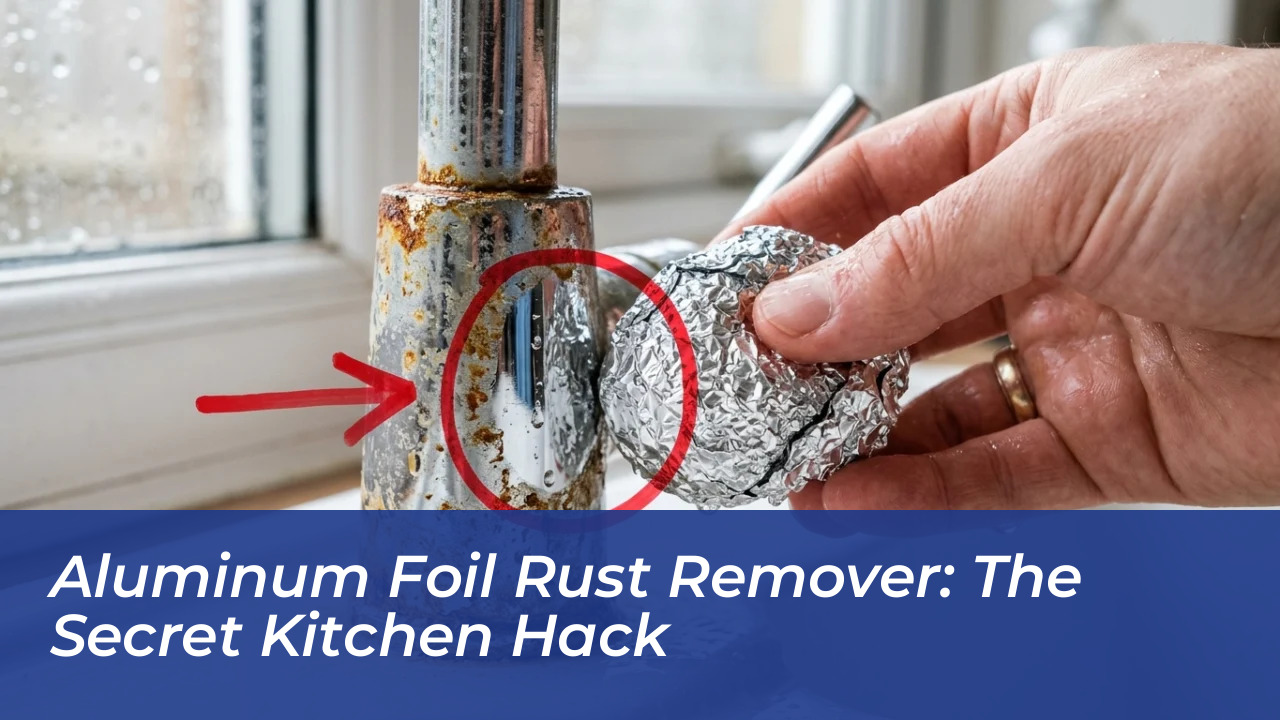

That standard roll of aluminum foil in your kitchen drawer has an unexpected mechanical property. When crumpled into a loose ball, it strips away rust and limescale from chrome faucets and stainless cookware without scratching the underlying metal. Instead of replacing tarnished kitchenware or spending money on specialized chemical compounds, this everyday material uses a subtle hardness mismatch and friction to polish corroded surfaces back to a clean shine.
Rust and mineral build-up tend to accumulate gradually on metal fixtures, pots, and pans. Many homeowners assume that once oxidation sets in, the finish is permanently ruined or requires aggressive steel wool. However, harsh abrasive scrubbers often gouge metal surfaces, creating microscopic grooves where corrosion returns even faster. The bathroom and kitchen remain two areas where rust commonly accumulates due to constant exposure to moisture.
Why Aluminum Foil Works Against Metal Oxidation
The effectiveness of this technique relies on mechanical action and mild chemical friction. Because aluminum is significantly softer than the steel or chrome plating found on bathroom fixtures and cookware, it functions as an ultra-fine abrasive. It knocks loose brittle flakes of iron oxide without digging into or wearing down the durable base metal underneath.
When aluminum rubs directly against iron oxide in the presence of a liquid medium-such as warm water, white vinegar, or baking soda-the physical contact accelerates the polishing process. The friction loosens discoloration in minutes, lifting off the weathered layer while smoothing the surface. A softer abrasive metal can dislodge surface oxidation without compromising the integrity of harder underlying plating.
A common misconception is that chemical strippers are necessary to lift oxidation. In practice, heavily corrosive cleaners can strip protective platings or leave behind noxious fumes. Gentle physical abrasion paired with an acidic or alkaline boost achieves the same visual restoration safely. Aluminum foil is increasingly used in practical home hacks for sustainable cleaning.
Step-by-Step: Restoring Metal Fixtures and Cookware
Restoring oxidized hardware requires only a few basic items you likely already have on hand. Follow this straightforward routine to strip oxidation effectively:
- Cut and shape the foil: Tear off a sheet of aluminum foil and loosely crumple it into a palm-sized ball. Keep it slightly pliable rather than tightly compressed so it contours easily across curved handles and rims.
- Moisten the contact point: Dip the foil ball into warm water. To tackle heavier discoloration on cast iron, pans, or faucets, add a few drops of distilled white vinegar or sprinkle on a light layer of baking soda.
- Scrub with steady pressure: Work the moist foil ball across the rusted sections using firm, consistent circular motions. The dark oxidation layer will begin flaking away quickly as the metal rubs clean.
- Rinse and dry thoroughly: Wash the restored item using standard dish soap and clean tap water to remove all metal residue. Immediately dry the surface completely with a microfiber cloth, as leftover moisture can trigger new surface rust.
Comparing Cleaning Methods for Household Rust
Different cleaning tools interact with plated surfaces in distinct ways. Understanding how aluminum foil stacks up against standard scrubbing alternatives helps protect delicate home finishes:
- Aluminum Foil: A non-scratching abrasive that conforms to curves and removes surface corrosion gently.
- Steel Wool: Harder metal fibers that can leave visible swirl marks and strip thin chrome plating.
- Chemical Rust Removers: Fast-acting chemical breakdown, but often carries strong odors and poses risks to finishes.
Try this method on a small, hidden corner of an old pan or faucet first to inspect your finish. Have you ever tested kitchen foil to clean stubborn rust or water scale around your home? Share your experiences and results in the comments below.
Frequently Asked Questions About Aluminum Foil Rust Removal
Can aluminum foil scratch my chrome faucets?
No, because aluminum is softer than chrome plating and steel. When crumpled loosely, it acts as a mild abrasive that removes oxidation without gouging the hard surface underneath.
Do I need to use any special liquids with the foil?
Water alone works for light maintenance, but adding white vinegar or baking soda provides an acidic or alkaline boost that helps break down mineral scaling and heavy rust faster.
Is this method safe for stainless steel cookware?
Yes, it is excellent for stainless steel pots and pans. However, always test a small hidden area first, and avoid using it on non-stick coatings or pure aluminum cookware.
What causes rust and limescale on kitchen and bathroom fixtures?
Rust occurs when iron is exposed to oxygen and moisture over time, while limescale results from hard water mineral deposits evaporating and leaving behind calcium and magnesium build-up.
Why is aluminum foil better than steel wool for rust?
Steel wool is harder than most household fixtures and leaves behind microscopic scratches that trap moisture, causing rust to return much faster. Aluminum foil polishes without scratching.