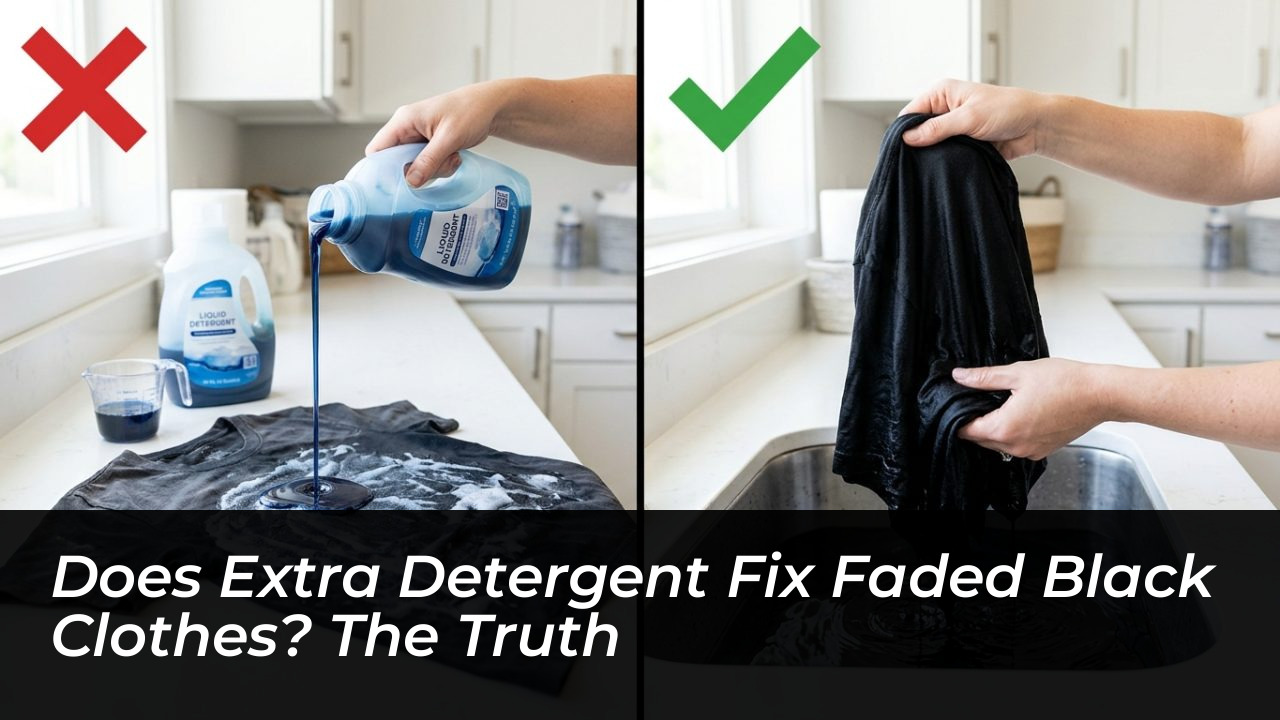

Pouring extra detergent into the wash to brighten faded black clothes is a widespread laundry myth. Rather than deepening dark hues, excessive soap leaves behind a cloudy chemical residue that settles deep within textile fibers. This microscopic film creates an artificial grey haze, making your favorite black garments look prematurely worn out. When dark clothing loses its rich tone, the culprit is frequently soapy buildup, surface fuzz, or mechanical friction rather than actual, permanent dye loss. Correcting this routine misconception instantly revitalizes wardrobe staples without requiring an immediate trip to the clothing store.
Black clothing remains a foundational wardrobe element because it matches everything and simplifies daily dressing. Yet keeping these pieces saturated requires a clear understanding of how textile fibers react to mechanical wash stress, water temperatures, and chemical residues. Understanding the root cause of garment degradation allows you to apply targeted fixes that restore deep pigmentation safely and effectively.
Why Dark Garments Lose Their Saturation
Color retention is heavily dictated by how a garment was originally dyed and the exact composition of its fibers. Natural materials such as cotton and linen interact differently with textile dyes than synthetic fibers like polyester and spandex, directly influencing how long deep pigments lock into the weave. However, garment degradation is rarely just a manufacturing defect.
The physical mechanics of routine laundry cycles actively strip dark shades over time. According to Kellsie Zapata, founder of Zapata’s Cleaning Services, “Every time you wash something, you’re exposing the fabrics to agitation and friction, and over time that can slowly pull some of the dye out of the fibers.” High water temperatures and aggressive dryer heat accelerate this breakdown. Washing garments in hot water expands textile fibers and releases trapped dye, turning crisp charcoal and jet-black items into lackluster grey.
How to Diagnose Wear Versus True Color Loss
Before attempting to fix a dull garment, you need to verify whether the fabric has genuinely lost its dye or has simply accumulated a dulling layer of film. A quick side-by-side inspection reveals the underlying issue. Examine both the outer surface of the fabric and a protected area, such as an inside seam or inner hem.
If the material feels smooth and structurally intact but looks lighter on the outside, the piece has experienced surface residue or minor fading. However, Jenna Arkin, chief innovation officer at ECOS, notes that “Dye can replace color, but it won’t repair worn-out fabric.” If you detect pronounced thinning, pilling, or fraying around high-stress areas like the collar and armpits, the issue is structural wear and tear. Dyeing damaged textiles will temporarily darken the shade, but it will never restore compromised material integrity.
Diagnostic and Corrective Action Matrix
- Detergent or oil buildup: Wash with a measured enzymatic detergent to strip film.
- Surface pilling and fuzz: Use a fabric shaver or lint roller to smooth fibers.
- Faded natural fibers (cotton/linen): Submerge the item in standard household fabric dye.
- Faded synthetic blends (polyester/spandex): Treat with specialized synthetic fiber dye formulations.
- Frayed, thin, or torn fabric: Retire the garment, as structural wear cannot be dyed away.
A Step-by-Step Restoration Strategy
If your garment suffers from a dull film rather than total dye loss, washing it correctly is the fastest way to bring back its true black tone. Utilizing an enzymatic detergent helps break down stubborn body oils and microscopic residues that create an artificial haze over dark threads. When an item is structurally sound but truly devoid of pigment, re-dyeing serves as the most effective home solution.
- Wash the garment first: Never apply dye to dirty fabric. Launder the item thoroughly to remove oils and residues before treatment.
- Identify the textile blend: Check the interior care label. Natural fibers accept all-purpose dyes, whereas polyester or spandex blends demand dedicated synthetic dye formulations.
- Prepare a roomy dye bath: Mix the dye with hot water in a container large enough to prevent the fabric from bunching tightly.
- Agitate continuously: Submerge the fabric and stir constantly so the dye solution coats every seam, fold, and crease uniformly.
- Rinse and rewash: Rinse the garment under clean water until the runoff is clear, then run it through a standard wash cycle. Always spot-test the dye mixture on a hidden hem before full immersion.
While re-dyeing dramatically deepens faded shades, it is designed to restore richness rather than return an aged piece to factory-new condition.
The Prevention Playbook for Dark Laundry
Preventing pigment loss requires far less effort than reviving damaged cloth. Minimizing friction during the wash cycle stands as your first line of defense. Always turn dark shirts and pants inside out before loading them into the machine drum. This simple adjustment ensures that unavoidable surface friction occurs on the hidden interior rather than the visible exterior.
Wash dark clothing exclusively with matching colors on a short, gentle cycle. Avoid combining lightweight black tees with heavy items like denim jeans or outerwear jackets, as coarse textiles create abrasive contact that shears color away from finer knits. Detergent control is equally critical. Measuring liquid detergent precisely prevents excess soap from settling into fibers as a cloudy film. Pair this with cold water wash settings to keep textile fibers tight and lock pigments firmly inside.
When the wash cycle finishes, skip the heated dryer. Air-drying prevents heat-induced fading, provided garments are hung indoors away from direct ultraviolet sunlight, which functions as a natural bleaching agent on dark cloth. Re-evaluating your wash routine is the fastest way to protect dark fabrics from dulling residues and abrasive friction.
Proper laundry care isn’t about using more soap; it’s about eliminating abrasive friction, controlling water temperature, and preventing chemical buildup.
Frequently Asked Questions
Does pouring extra detergent make clothes cleaner?
No. Pouring extra detergent does not clean clothes better. Instead, the excess soap fails to rinse out completely, leaving a dull, powdery residue that attracts dirt and makes dark fabrics look faded.
Can coffee or tea really restore faded black clothes?
Yes, temporarily. Brewing strong black coffee or tea and adding it during the rinse cycle deposits natural plant pigments onto natural fibers, giving black garments a quick, non-toxic refresh.
How can I prevent my black jeans from fading in the wash?
Always turn black jeans inside out, wash them in cold water on a gentle cycle, use a minimal amount of mild detergent, and line dry them away from direct sunlight.
Does white vinegar help preserve dark colors?
Yes. Adding a quarter cup of white vinegar to the rinse cycle helps strip away soap residue and mineral buildup, which naturally revives the vibrant appearance of dark fabrics.
Why do black clothes turn grey over time?
Black clothes turn grey due to a combination of mechanical friction that breaks down surface fibers, hot water that releases dye, and accumulated detergent residue that clouds the dark weave.