
Scrubbing bathroom grime with aggressive commercial sprays often leaves behind noxious fumes without fully removing caked-on soap scum. Tackling tubs, sinks, and shower stalls remains one of the most frustrating household chores due to the rapid accumulation of body oils and mineralized soap deposits. Yet, according to official guidance published by the U.S. Environmental Protection Agency (EPA) in its home guide titled Green Cleaning: Non-toxic cleaning recipes for your home, an effective scouring paste requires nothing more than everyday pantry staples.
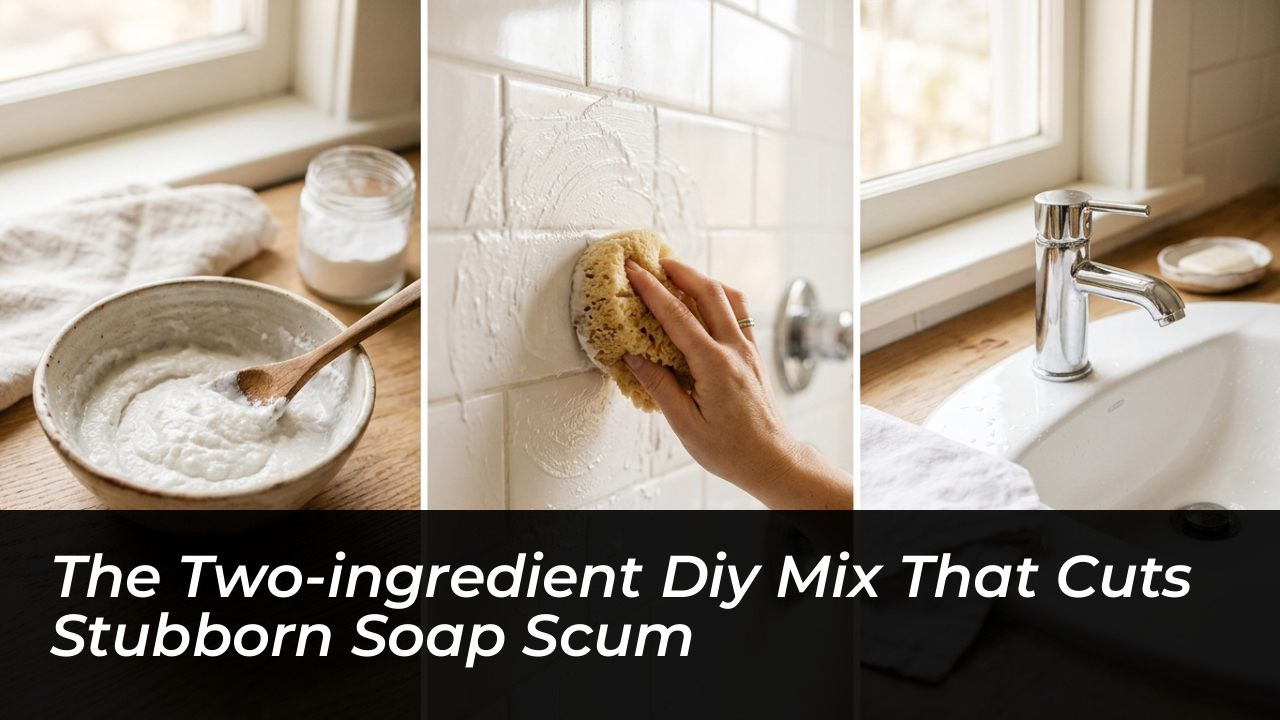
The simple, non-toxic fix recommended by federal guidelines pairs a half-cup of standard baking soda with liquid detergent to create an instant abrasive paste that cuts grime on contact. Rather than letting corrosive chemicals sit for an hour, this straightforward DIY bathroom cleaning scrub lifts residue immediately through mechanical friction and degreasing action.
The Science Behind Baking Soda and Liquid Detergent
When combined, baking soda and liquid soap create a thick, frosting-like paste that attacks bathroom buildup from two different angles. Baking soda operates as a gentle abrasive agent, utilizing its micro-crystalline structure to scrub away hardened surface grime without scratching delicate finishes. Liquid detergent serves as the binding and emulsifying agent. It encapsulates grease, skin oils, and water-insoluble residue, allowing the abrasive particles to slide across the grime and loosen it from the underlying surface.
Baking soda functions as a mild abrasive that facilitates residue removal through mechanical friction, while detergent breaks down grease and accumulated oils. This dual-action approach mimics professional-grade cleaning principles without introducing volatile organic compounds into your indoor living space.
Busting the Waiting-Time Myth
A widespread misconception in DIY cleaning suggests that homemade pastes must sit on tile or porcelain for 30 to 60 minutes to break down stains. In reality, this scrub relies on kinetic action rather than chemical degradation. The EPA guide notes that you should scrub and rinse immediately rather than allowing the paste to dry out on the surface. The combination of baking soda and detergent creates a creamy cleaner that loosens dirt on household surfaces instantly.
Step-by-Step: Mixing and Applying the Cleaner
To get optimal results, mix only the exact amount needed for your immediate cleaning session. Storing pre-mixed paste in open containers can cause the water content to evaporate, hardening the mixture into an unusable brick.
- Measure 1/2 cup of baking soda into an open bowl or wide-mouth container.
- Slowly pour in liquid soap or dish detergent while stirring constantly until the mixture reaches a thick, creamy consistency similar to cake frosting.
- Add between 5 and 10 drops of pure essential oil, such as lavender or rose, if a natural fragrance is desired.
- Scoop the paste directly onto a damp sponge.
- Scrub the targeted area with firm, circular strokes, then immediately rinse the surface thoroughly with clean water to wash away loosened dirt and residue.
Approved Applications and Surface Guidelines
While this mild abrasive paste works wonders on standard fixtures, understanding where it performs best protects your home installations from unintended wear. The EPA document specifically approves this formula for four primary household zones:
Bathtubs: Removes stubborn bathtub rings and mineralized soap scum rings.
Bathroom Sinks: Lifts toothpaste deposits, makeup smears, and dried water spots.
Shower Stalls: Cleans textured floors and walls without producing hazardous airborne fumes.
Formica Countertops: Safely cuts through sticky grease and cosmetic residue without dulling laminate.
By keeping the ingredients basic, you bypass the eye irritation and chemical residues associated with industrial cleaning solutions while achieving a streak-free clean. Simple adjustments to everyday cleaning habits save money while cutting down on indoor air pollutants.
Have you tested this non-toxic scrub on your shower or sink? Share your favorite non-toxic home maintenance routines or experiences with DIY cleaners in the comments below.