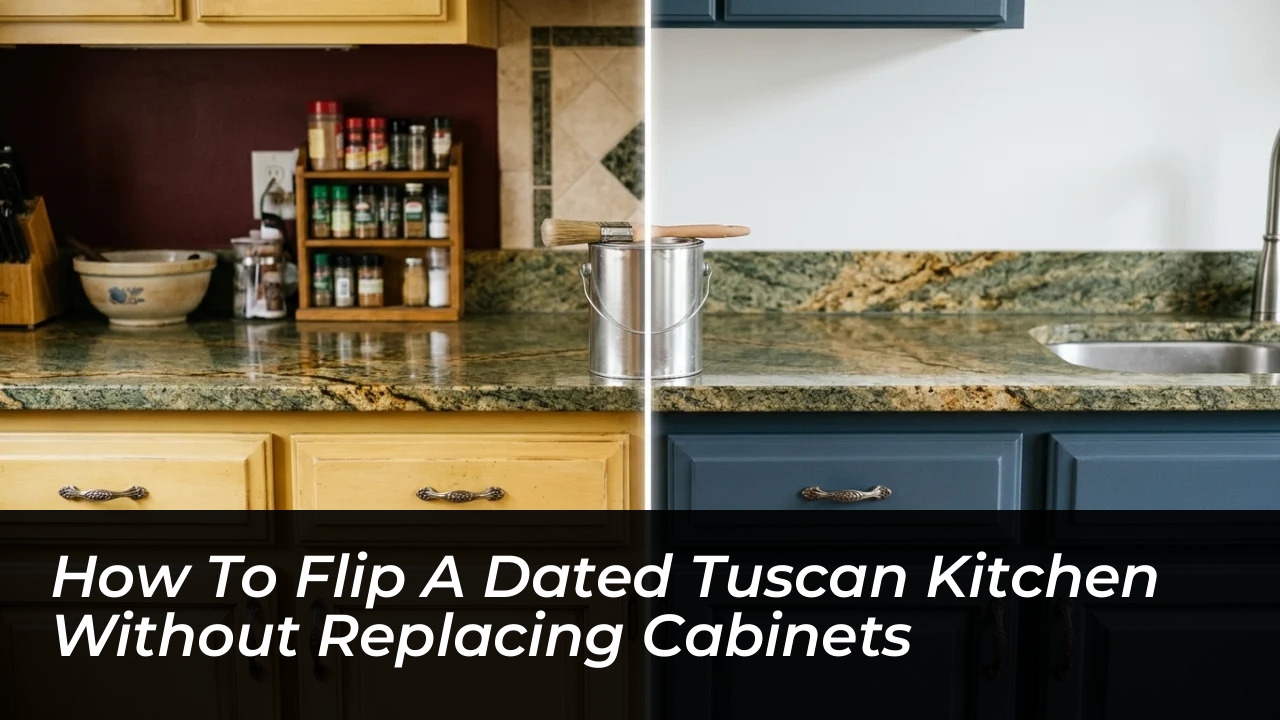

A viral kitchen renovation shows that you do not need a total demolition to update a dated builder-grade kitchen. By using color theory and strategic lighting instead of structural teardowns, one homeowner transformed a heavy, late-2000s Tuscan kitchen. The project created a moody, sophisticated space without replacing a single cabinet or countertop.
The Anatomy of a Mid-2000s Tuscan Kitchen
Between 2005 and 2012, builders frequently installed a specific “Tuscan” design package. This style featured intense warm tones and heavy decorative details. In this home, the original layout included:
- Buttery yellow glazed cabinetry
- Saturated burgundy accent walls
- Ornate range hoods with heavy corbels
- A cherry-stained pantry tower
- A tropical ceiling fan with woven bamboo blades
Because these features created a heavy, singular aesthetic, homeowners often feel forced to replace everything at once. However, this project proves that a space usually feels dated due to color conflicts rather than a poor layout.
Targeted Interventions: The Strategy
The transformation relied on three precise, budget-friendly steps that avoided custom carpentry costs:
- Cabinetry Coating: Painters applied Benjamin Moore’s Providence Blue to all perimeter cabinets and the cherry pantry tower. This deep slate blue sits opposite yellow on the color wheel, neutralizing the room’s warm yellow undertones.
- Wall Neutralization: A crisp, neutral shade covered the dark burgundy accent wall and yellow window trim. This change eliminated visual noise immediately.
- Lighting Swap: The installer removed the bulky bamboo fan and heavy wrought-iron globe pendants. Minimalist terracotta dome ceiling lights took their place, clearing sightlines and adding subtle warmth.
The Color Science Behind the Shift
Removing the buttery yellow and burgundy paint instantly changed how the remaining materials appeared. For example, the gold-veined green granite countertops previously felt outdated. Next to dark blue paint, they look rich, moody, and natural.
Similarly, the detailed corbels and large range hood once looked like builder-grade excess. Against the deep blue finish, they resemble classic English pub-style joinery.
Why This Strategy Beats a Gut Renovation
During the project, online comments urged the homeowner to sand the island, replace the granite counters, or install flat-panel doors. Preserving the original footprint saved thousands of dollars in material, fabrication, and installation fees. The final result delivers a custom, high-end look that respects the original home design while fitting modern tastes.
Key Lessons for Your Next Project
- Evaluate Color Relationships: Before hiring contractors, test paint swatches. Neutralizing warm, competing colors can instantly refresh existing woodwork.
- Fix Room Scale with Lighting: Replacing oversized light fixtures improves visual flow and makes ceilings feel higher.
- Unify Mismatched Features: Painting separate elements, like a standalone pantry tower, to match main cabinets creates a cohesive, custom appearance.
Many dated kitchens simply suffer from poor color balance. Homeowners can achieve a dramatic, budget-friendly update by working with their current layout instead of starting from scratch.