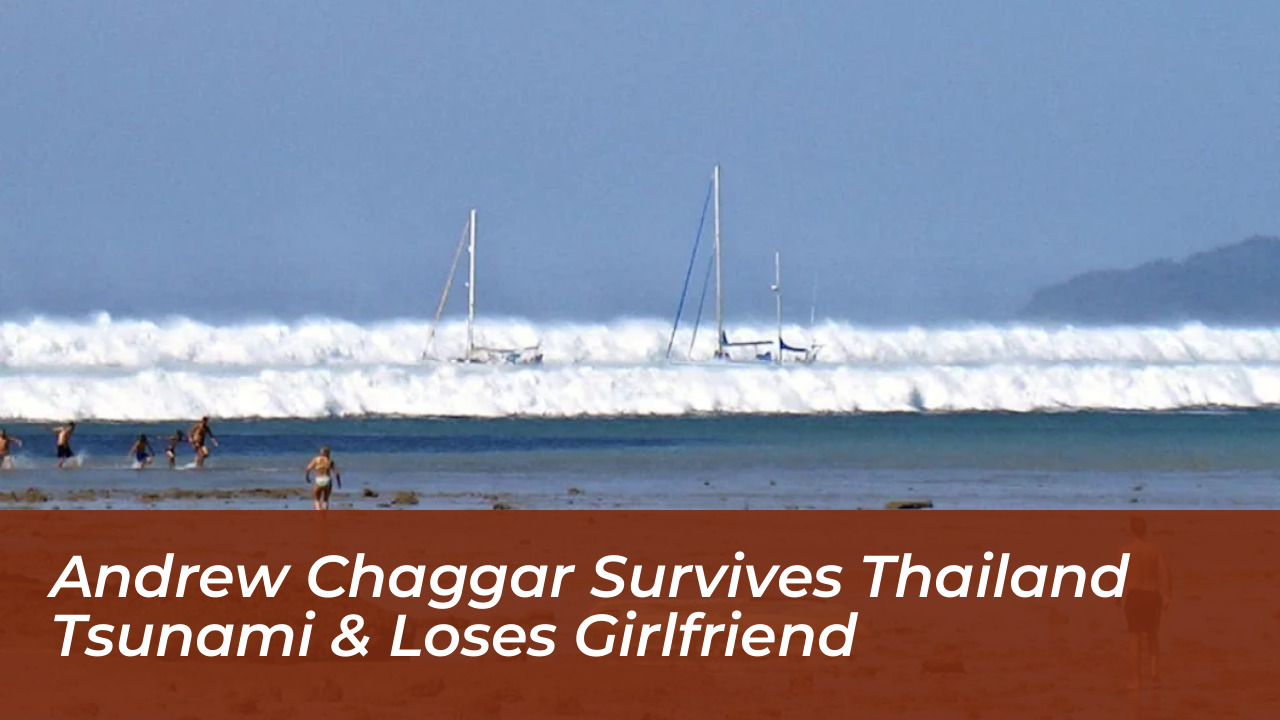

On December 26, 2004, a routine morning in a beachfront bungalow in Khao Lak, Thailand, instantly transformed into a catastrophic fight for survival for 27-year-old Andrew Chaggar and his girlfriend, Nova. The couple had spent years saving up for a year-long round-the-world trip, journeying through China, Vietnam, and Cambodia before deciding to spend the Christmas holidays in Southeast Asia. Instead, they became caught directly in the path of the devastating Indian Ocean tsunami.
Waking Up to a Natural Disaster
According to the National Oceanic and Atmospheric Administration (NOAA) and the British Red Cross, the deadly disaster claimed nearly 230,000 lives across the Indian Ocean region, including more than 8,000 in Thailand alone. Chaggar recalled waking up to a thunderous noise that he compared to a jet engine building up for take-off, accompanied by the violent shaking of their beachfront accommodation.
Staying in a small complex of about ten bungalows positioned roughly 30 meters from the shoreline, Chaggar and Nova could not see the approaching water from their windows. Nova, standing on the opposite side of the bed, looked frightened as she asked what was happening. Chaggar barely had time to stand up before the first wave struck the row of buildings like falling dominoes.
“I literally remember being in the bungalow and, the next minute, basically waking up in the water,” Chaggar shared in an interview with LADbible Stories. He described being tossed around violently, comparing the experience to “being in a washing machine full of nails.” The fierce current carried massive debris, including metal, glass, bricks, and cars, leaving him at the mercy of the elements.
How Severe Injuries Saved His Life
As the turbulent waters swept Chaggar away from the wreckage of the bungalows, an oil drum struck his head, leaving a distinct scar, and knocked him back underwater. When he surfaced again, the surging water carried him inland toward a hotel construction site consisting only of concrete floors and pillars without walls.
Amid the chaotic torrent, Chaggar’s left leg became tightly pinned against a concrete pillar by heavy floating debris. While this entrapment caused severe physical trauma and broke his collarbone, Chaggar firmly believes that being trapped ultimately saved his life. Had his leg not been wedged against the pillar, the receding backwash likely would have dragged him out into the open bay, where massive whirlpools proved fatal for numerous other victims.
Trapped and in agonizing pain, Chaggar spent roughly four hours stranded at the construction site. He survived a second terrifying wave that stopped a mere six inches below his position. Eventually, two Western strangers rescued him and helped him to safety, despite warnings that another wave might strike.
The Long Path of Grief and Recovery
While Chaggar dealt with his physical wounds by spending days on morphine in an overwhelmed hospital that resembled a war zone, the psychological toll proved far heavier. For months, he did not know the fate of Nova, who had vanished in the rushing waters.
Tragically, about six months after the disaster, police and family liaison officers informed Chaggar that Nova had died. Her identity was confirmed through a partial dental match, a DNA sample taken from an old hairbrush, and a photograph of a necklace he had meticulously described.
The tragedy profoundly altered the course of Chaggar’s life. Inspired by his harrowing experience, he returned to university to pursue a master’s degree in international development with a focus on disaster response. He subsequently founded the charity International Disaster Volunteers (IDV), leading it for a decade before moving on to work with other humanitarian organizations and becoming a public speaker.
Years later, Chaggar has rebuilt his life. He is married, has two children, and maintains an extraordinary bond with Nova’s parents, whom his children affectionately call Grandma and Granddad. Through this enduring family connection, Nova remains a cherished part of their lives.
Frequently Asked Questions
Who is Andrew Chaggar?
Andrew Chaggar is a British survivor of the 2004 Indian Ocean tsunami who gained widespread media attention after sharing his story of survival and loss with LADbible Stories.
What happened to Andrew Chaggar during the 2004 tsunami?
While vacationing in Khao Lak, Thailand, with his girlfriend Nova, a massive tsunami wave destroyed their beachfront bungalow. Chaggar was swept into debris-filled waters, suffered severe injuries when his leg was pinned to a concrete pillar, and was rescued after four hours.
Did Andrew Chaggar’s girlfriend survive the tsunami?
Tragically, Nova did not survive. Her death was officially confirmed roughly six months after the disaster through a partial dental match, DNA testing, and verification of her necklace.
How did Chaggar’s injuries save his life?
Chaggar believes that having his leg pinned against a concrete pillar by debris prevented him from being pulled back out into the open bay, where dangerous whirlpools caused many people to drown.
What did Andrew Chaggar do after surviving the tsunami?
Chaggar redirected his life toward humanitarian work, earning a master’s degree in international development, founding the charity International Disaster Volunteers, and becoming a speaker.