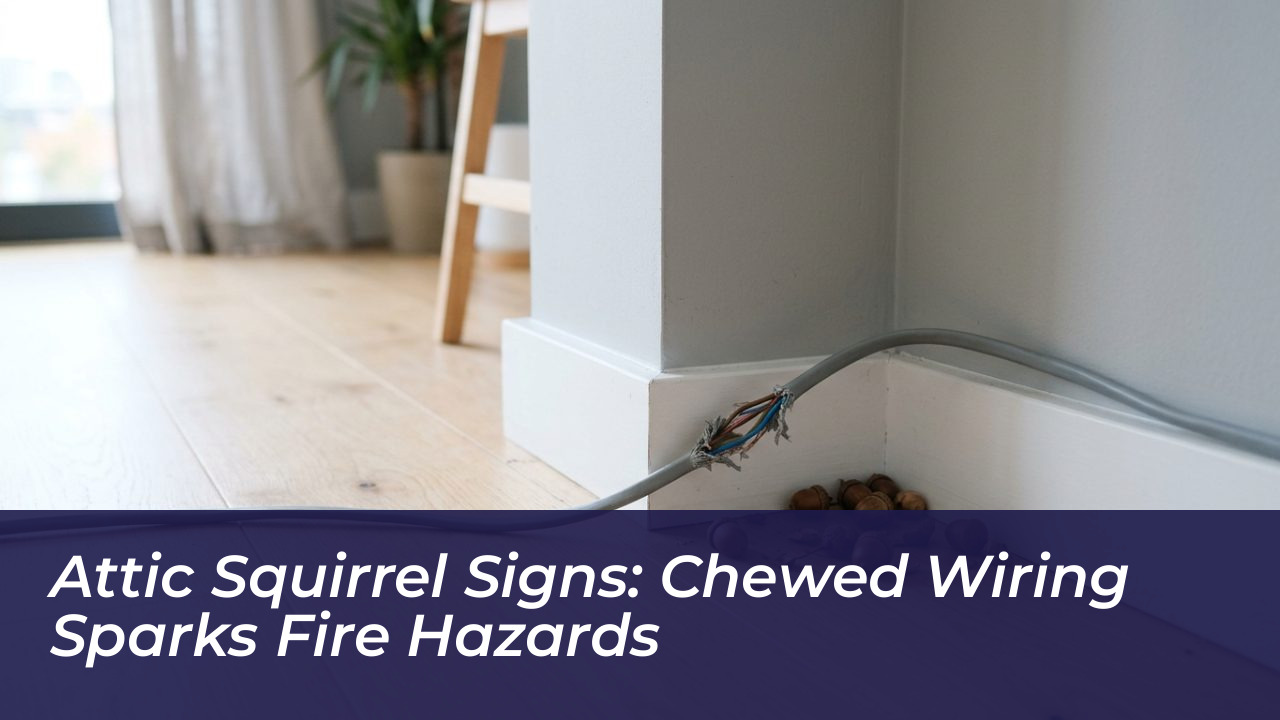

Newly released home inspection guidelines have brought renewed attention to a hidden danger inside residential roofs: squirrels in the attic. While persistent scratching overhead is often dismissed as a minor nuisance, professional building inspectors and wildlife safety experts emphasize that these rodents rapidly gnaw through electrical wire jackets. This exposes live copper and creates immediate structural fire hazards. Recognizing the earliest warning signs of an infestation is critical to stopping biological contamination and electrical risks before remediation becomes extensive.
Tree squirrels-including gray, red, and flying species-frequently seek out dry, sheltered roof spaces containing soft insulation for nesting. Once established, an unchecked infestation quickly ruins building materials as rodents tear through fiberglass batting and chew holes directly into structural woodwork. Beyond physical destruction, animal waste accumulates over time, turning attic crawl spaces into unsanitary environments capable of transmitting harmful bacteria and vector-borne illnesses directly above living quarters.
Identifying the Warning Signs Behind Attic Scrabbling
Attic pests leave distinct sensory clues long before homeowners ever spot an actual animal. In addition to regular scrabbling overhead, telltale signs include cached stashes of nuts and acorns, torn insulation, tracks left across dusty floorboards, and a sharp, persistent odor of urine. Homeowners can often pinpoint the exact species invading the roof space simply by tracking the timing and tone of the sounds.
Gray squirrels maintain diurnal habits, remaining actively mobile during the day, whereas flying squirrels move almost exclusively under cover of darkness at night. The sounds themselves range from the muffled rolling of dropped acorns across floorboards to relentless gnawing on timber and structural plastics. Adult squirrels frequently emit sharp chirruping calls, while litters of young pups sound surprisingly similar to baby birds chirping inside wall voids and soffits.
Key Indicators of Attic Rodent Activity
- Chewed electrical wiring: Exposed live copper and elevated house fire risk.
- Accumulated droppings and urine: Salmonella spread and persistent ambient odors.
- Daytime scurrying sounds: Active gray squirrel movements during early morning and late afternoon.
- Nighttime attic noises: Flying squirrel colony activity after dark.
- Late winter and late summer chirping: Active breeding seasons with dependent litters.
- Overhanging tree branches: Direct roof bridges within jump range.
Chewed Wires Present an Immediate Fire Hazard
Squirrels continuously chew on hard materials to wear down their rapidly growing teeth. Electrical wiring insulation-specifically the soft plastic jacket on Romex or armored cables-is a favorite target. According to recent inspection protocols, roughly a quarter of attic rodent occupations involve wire damage.
Exposed copper or stripped wire jackets in an attic create an active electrical fire risk. If homeowners discover chewed wires during a visual inspection, they must halt further investigation immediately. Experts advise contacting a licensed electrician alongside a wildlife professional the same day to evaluate damaged circuits and secure the power supply before any animal removal takes place.
The Breeding Season Dilemma and Ineffective Deterrents
Many homeowners initially attempt to drive animals out using ultrasonic sound machines, bright lights, or commercial chemical repellents. However, routine deterrence methods consistently fail against established wild rodents. While specialized repellents can occasionally reduce surface chewing, they rarely force a determined animal to abandon a protected indoor nest.
Trapping and relocating wildlife also presents steep legal and practical hurdles. Numerous local municipalities explicitly prohibit off-site trapping and relocation without dedicated licensing. Exclusion timing is equally vital:
- Gray squirrels typically produce two distinct litters each year, nesting heavily in late winter (February-March) and again during late summer (July-August).
- Trapping or sealing an attic during these peak breeding windows frequently traps nursing mothers outside, leaving helpless kits stranded indoors.
- Wildlife rehabilitators suggest waiting until the babies are eight to ten weeks old and capable of leaving the home independently.
- A separated mother squirrel will tear aggressively through exterior siding and roof eaves to reach her young, causing severe structural damage.
Safe Removal and Home Exclusion Steps
Eliminating wildlife permanently requires combining mechanical eviction devices with thorough exterior home maintenance. Once dependent kits are mobile or adult rodents are isolated, sealing all structural entry points ensures the attic space stays completely secure.
Practical Steps to Secure the Structure
- Install humane exclusion equipment: Utilize heavy-duty cage traps or install professional one-way exclusion doors over active entry holes, allowing rodents to exit to forage while permanently blocking their return.
- Seal structural gaps: Thoroughly inspect rooflines, eaves, and dormers. Fasten durable flashing over exposed gaps, repair damaged exterior siding, and install robust wire mesh screening across all chimney caps and attic gable vents.
- Create a physical perimeter: Cut back overhanging tree limbs so that branches remain at least 10 feet away from gutters and roof planes, eliminating easy leaping routes.
- Eliminate outdoor attractants: Move backyard bird feeders far away from foundations and convert to dedicated squirrel-proof hardware.
- Sanitize and inspect utilities: After confirming that all squirrels are gone, put on protective clothing and an effective dust mask to remove soiled insulation and sanitize droppings.
Addressing attic pest noises early prevents extensive structural restoration work and protects critical building wiring from hidden fire threats. Regular exterior inspections along eaves, fascia boards, and rooftop vents will help property owners spot tiny entry gaps before wild animals establish their seasonal nests.