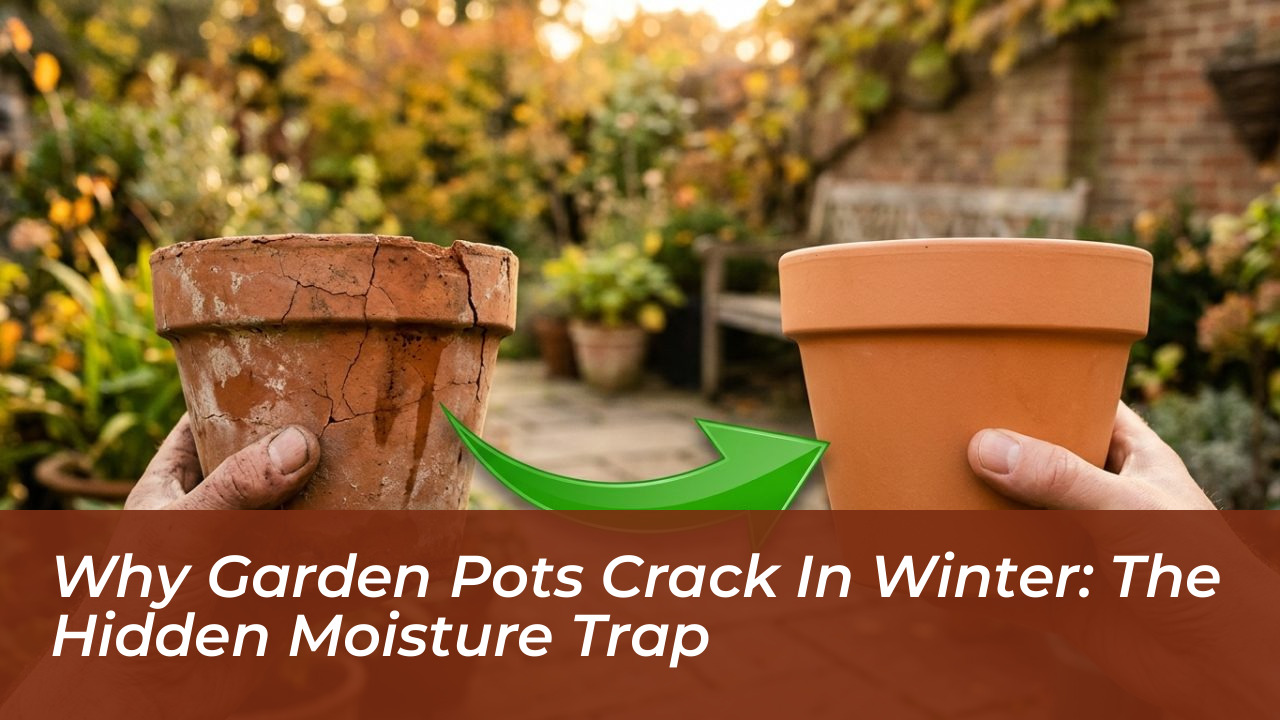

Every spring, many gardeners face a frustrating discovery: favorite ceramic planters, clay containers, and decorative pots split down the middle or shattered into pieces. While it is easy to write off this damage as bad luck, the root cause lies in basic physics and a hidden moisture trap inside everyday planters. Understanding why garden pots break down when the weather cools can save you time, money, and frustration year after year.
The Science Behind the Cracks: The Freeze-Thaw Cycle
Water expands when it freezes. This fundamental law of physics is the primary destroyer of outdoor planters during autumn and winter. When crisp air replaces summer warmth, any moisture trapped inside your soil from rain, regular watering, or ambient humidity turns to ice.
As that water freezes, it expands outward, pushing against the interior walls of the container with immense physical force. Sometimes the pot can handle the structural stress. Often, however, the pressure surpasses the strength of the material, resulting in a visible fracture or complete failure.
The problem is made worse by temperature fluctuations. A mild autumn day might hover around 50°F, only for temperatures to plummet below freezing overnight, then climb back up the next afternoon. Each freeze-thaw cycle forces the pot through repeated expansion and contraction. This weakens the material until microscopic stress fractures turn into gaping cracks.
Which Garden Planters Are Most Vulnerable?
Not all pots respond equally to dropping temperatures. The material of your container dictates its winter survival rate:
- Unglazed Terracotta: This is the most vulnerable material. By nature, unglazed clay is porous like a sponge, absorbing water directly from the air, soil, and environment. When that stored moisture freezes, the pot cracks easily.
- Standard Glazed Ceramic: While the outer glaze offers some initial protection against direct absorption, moisture still finds its way through unglazed bottoms or microscopic flaws, making them prone to cracking in harsh climates.
- Thin-Walled Plastics: Ultraviolet exposure during the summer degrades plastic polymer chains, making them brittle. When cold weather hits, these weakened walls warp and snap under pressure.
- Metals: Metal containers conduct temperature swings rapidly, subjecting plant roots and the container itself to severe thermal shock.
Conversely, materials like heavy concrete, stone, fiberglass, and resin perform much better. Fiberglass and resin are entirely non-porous, meaning they cannot absorb water, and their slight flexibility allows them to accommodate minor expansion without breaking.
The Hidden Moisture Trap: Soil and Porous Walls
Many gardeners leave empty or planted containers sitting directly on cold patios or damp earth throughout the autumn transition. This creates a dual moisture trap.
First, porous container walls pull moisture upward from wet ground through capillary action. Second, residual potting soil holds a significant volume of water. When left upright without proper drainage-or if drainage holes become clogged with dead roots and debris-water collects at the base of the pot. When temperatures drop below 32°F, this pooled water freezes and expands upward and outward, locking the container into a destructive pressure zone.
Practical Steps to Prevent Planter Damage
Protecting your garden containers from cold-weather damage does not require complicated equipment. Implementing a few straightforward maintenance strategies can dramatically extend the lifespan of your outdoor gear:
- Elevate Everything: Raise your pots off the ground using bricks, wooden blocks, or dedicated pot feet. This breaks the thermal connection between the cold earth and your container while allowing excess water to drain freely away instead of pooling at the base.
- Tip Empty Pots Over: If a container is empty for the winter, clean out all old soil, dry the interior, and turn the pot on its side. This simple action prevents autumn rains and melting snow from collecting inside, entirely eliminating the freeze-thaw cycle risk. Place a small stone on either side to keep rolling winds from knocking them over.
- Reduce Water Content: For plants that remain outdoors through the cooler months, reduce watering frequency significantly. Dormant plants need minimal moisture, and drier soil means less water available to freeze and expand.
- Insulate Vulnerable Pieces: Wrap fragile ceramic or clay pots in breathable materials like burlap, frost cloth, or bubble wrap. This buffers extreme temperature swings and minimizes rapid freezing.
- Store Indoors Where Possible: Relocate valuable or highly vulnerable terracotta pots into a sheltered garage, shed, or covered porch before the first deep freeze arrives.
Checking Your Gear During the Seasonal Transition
Taking stock of your garden containers and outdoor accessories during the autumn shift helps you separate salvageable items from genuine waste. Sun-weakened plastic containers and heavily fractured ceramic planters should be discarded or repurposed rather than stored empty, ensuring you start the next planting season with reliable, sturdy gear.