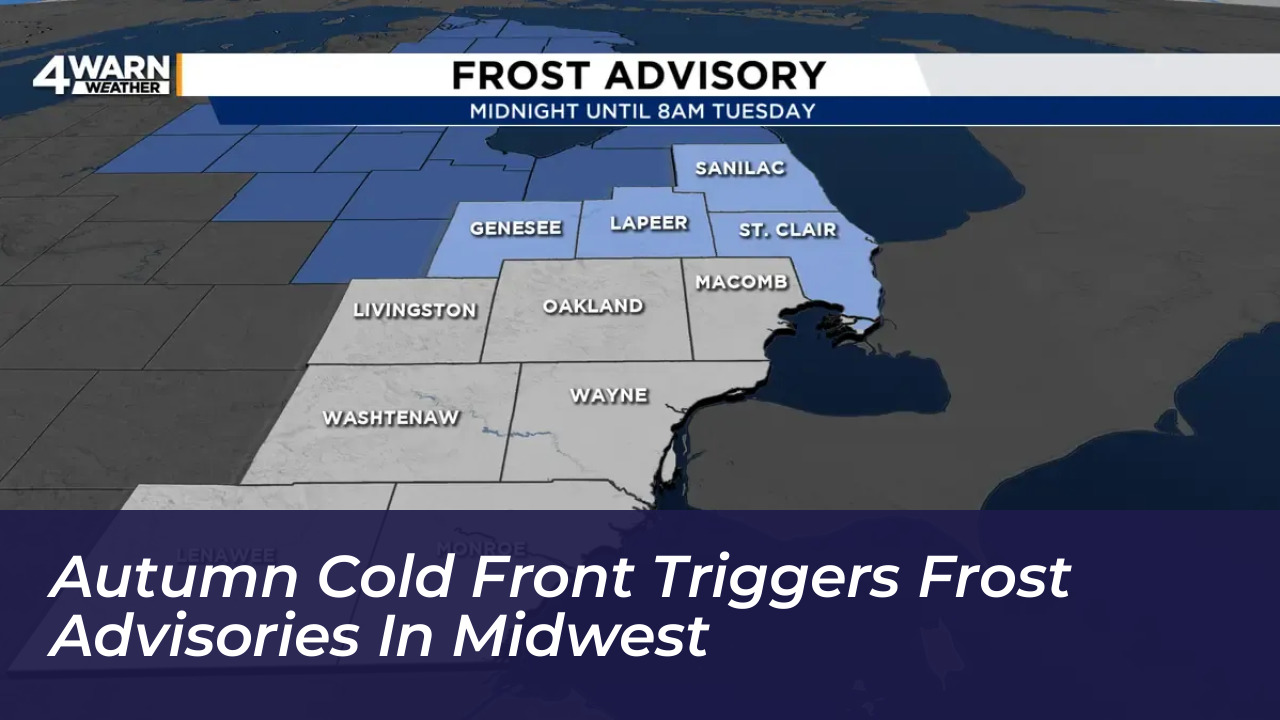



A sweeping autumn cold front brought the season’s first major threat of frost to parts of the Midwest, Northeast, and Mid-Atlantic regions. Overnight temperatures dropped toward the freezing mark across several states. National Weather Service meteorologists issued widespread frost alerts as low-lying inland communities braced for sub-40-degree conditions.
In Southeast Michigan, the National Weather Service established a Frost Advisory covering Sanilac, Genesee, Lapeer, and St. Clair counties from midnight through 8 a.m. Temperatures were expected to plunge as low as 32 degrees Fahrenheit. Residents in these affected zones were urged to safeguard sensitive vegetation or bring outdoor plants inside before temperatures reached freezing thresholds overnight.
Impact on Communities and Agriculture
Northern and inland areas faced sharply frosty conditions. Meanwhile, nearby urban centers like Metro Detroit maintained slightly milder lows near 40 degrees under mostly clear skies. Cooler air pushing into the region from Canada is driving this unseasonably brisk weather pattern.
Weather experts emphasize the critical differences between cold weather alerts:
- Frost Advisory: Issued when temperatures are cold enough that ground frost could occur, potentially harming sensitive vegetation even if air thermometers read slightly above freezing.
- Freeze Warning: A more severe alert activated when temperatures are expected to drop below 32 degrees Fahrenheit for an extended period, threatening crops and outdoor water infrastructure.
Safety Measures and Precautions
Agricultural extension offices and weather officials have advised farmers and gardeners to take immediate protective measures. Gardeners should cover delicate blooms or relocate potted plants indoors. Homeowners in vulnerable zones must also protect outdoor plumbing and sprinkler systems from potential freeze damage.
As autumn progresses, meteorologists expect additional cold fronts to sweep across the country. These systems will bring more characteristic chilly weather to northern and eastern states.

Frequently Asked Questions
What causes an early autumn frost?
An early autumn frost is typically triggered by a cold front pushing down cold air masses from northern regions or Canada. Clear skies and calm winds combine with this air mass to allow rapid heat loss overnight.
What is the difference between a frost advisory and a freeze warning?
A frost advisory indicates temperatures cold enough to form frost. This can occur right at ground level even if air temperatures stay slightly above 32 degrees. A freeze warning means sustained temperatures below 32 degrees are expected.
How can I protect my plants from frost?
You can protect sensitive outdoor plants by bringing them inside, covering them with breathable fabric, burlap, or frost cloth overnight, and watering the soil beforehand to help retain heat.
Are these early frost temperatures normal?
Northern regions and higher elevations frequently see late September and early October frosts. However, unseasonably strong early fronts can occasionally drop temperatures below normal averages for specific areas.