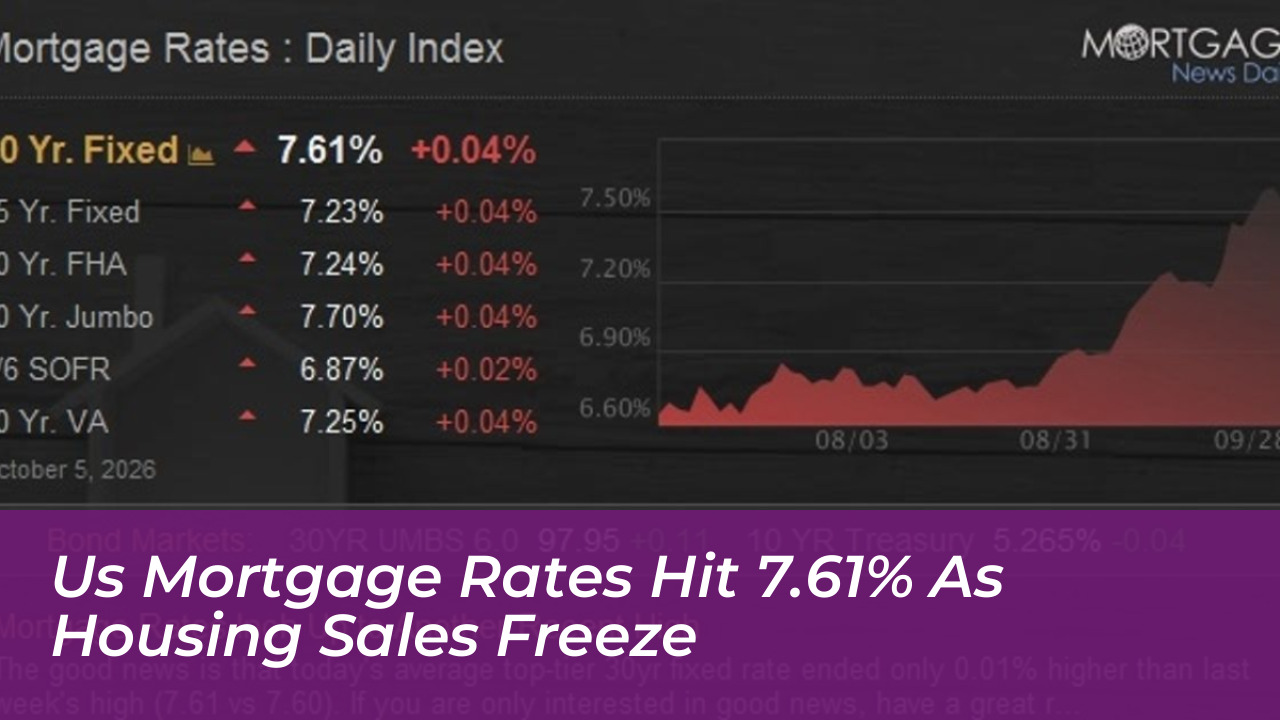



Average US 30-year fixed mortgage rates rose to 7.61 percent, marking a new recent high and compounding severe financial pressures on prospective homebuyers across Massachusetts and the nation. The sharp increase follows months of steep rate hikes driven by bond market reactions to persistent inflation, rising national debt, and geopolitical tensions in the Middle East. Higher yields demanded by investors have effectively pushed thousands of prospective buyers out of the housing market, leading to an early and pronounced fall sales freeze.
In Greater Boston, skyrocketing interest rates have driven monthly mortgage payments for median-priced homes to $5,168, up significantly from $2,554 in August 2021 when interest rates averaged around 3 percent. The sharp uptick has left sales stalled in communities such as Worcester, where buyers face drastically higher borrowing costs and diminished purchasing power.
The Spike: Why Mortgage Rates Crossed 7.5%
The acceleration in borrowing costs is directly tied to surging US Treasury yields. The 10-year US Treasury yield-which underpins the 30-year fixed mortgage rate-reached multi-year highs as investors demanded higher returns to absorb mounting government debt and hedge against inflation fueled by energy market volatility. Brent crude oil prices and ongoing conflicts have kept inflation expectations elevated, prompting the Federal Reserve to maintain a cautious, hawkish stance.
According to federal lender Freddie Mac and industry tracking data, the psychological barrier of a 7 percent-and now nearly 7.6 percent-mortgage rate has fundamentally altered market dynamics. Anthony Smith, a senior economist at Realtor.com, noted that existing home sales hit yearly lows while pending sales turned negative year-over-year.
- Surging Treasury Yields: Investor demand for higher yields on government debt has directly inflated consumer borrowing rates.
- Inflation and Energy Prices: Geopolitical tensions and energy shocks have kept inflation well above the Federal Reserve’s target comfort zone.
- Stagnant Purchasing Power: Wage growth has failed to keep pace with the combined impact of elevated home prices and soaring interest rates.
The Housing Market Freeze: Buyers and Sellers at an Impasse
The dramatic rise in financing costs has triggered an early fall stall across the US housing sector. Mortgage application activity has dropped sharply, with refinance demand leading the decline. Meanwhile, the seasonally adjusted Purchase Index and pending sales figures reflect a market running roughly 30 percent below pre-pandemic activity levels.
Sellers are now facing difficult strategic decisions. While inventory remains modestly higher than a year ago-offering remaining active buyers slightly more leverage-many homeowners are hesitant to list properties and forfeit their existing low-rate mortgages. Those who do enter the market are increasingly forced to choose between slashing listing prices or pulling their homes off the market entirely.
“For sellers, the question now is whether they respond by slashing prices or delisting their home altogether. The stall in fall is coming early this year,” said Jake Krimmel, senior economist at Realtor.com. “Elevated mortgage rates are restricting how much potential demand can actually translate into closed sales.”
Broader Economic and Political Implications
The housing affordability crisis has expanded beyond real estate circles into a major economic and political flashpoint. With everyday costs remaining high and homeownership sliding further out of reach for average Americans, consumer sentiment has taken a hit. Analysts note that voter frustration regarding the economy and high living expenses continues to shape national political discourse as federal leaders struggle to steady the bond market and tame inflation.

Industry experts suggest that any meaningful recovery in housing demand will depend on inflation decisively cooling, which would allow the bond market to stabilize and pave the way for lower mortgage rates. Until then, the market remains locked in a high-rate holding pattern.
Frequently Asked Questions
What is the current average US 30-year fixed mortgage rate?
The average US 30-year fixed mortgage rate recently reached 7.61 percent, driven by surging government bond yields and persistent inflationary pressures.
How have higher mortgage rates impacted monthly payments?
In high-cost areas like Greater Boston, monthly mortgage payments for median-priced homes have surged to $5,168, compared to roughly $2,554 when average rates hovered around 3 percent in 2021.
Why are mortgage rates rising despite Federal Reserve policies?
While Federal Reserve actions influence monetary policy, 30-year mortgage rates are directly tied to the 10-year US Treasury yield. Investor reactions to national debt, persistent inflation, and geopolitical conflicts have pushed yields higher regardless of direct rate adjustments.
How are homesellers reacting to the current market freeze?
Sellers face tough choices as buyer demand drops. Many are opting to reduce listing prices, offer concessions, or delist their properties altogether rather than capitulate to a sluggish, high-rate market.
Are mortgage applications and home sales declining?
Yes. Mortgage application activity, pending sales, and touring activity are all running below previous year levels, with signed sales contracts sitting approximately 30 percent below pre-pandemic norms.