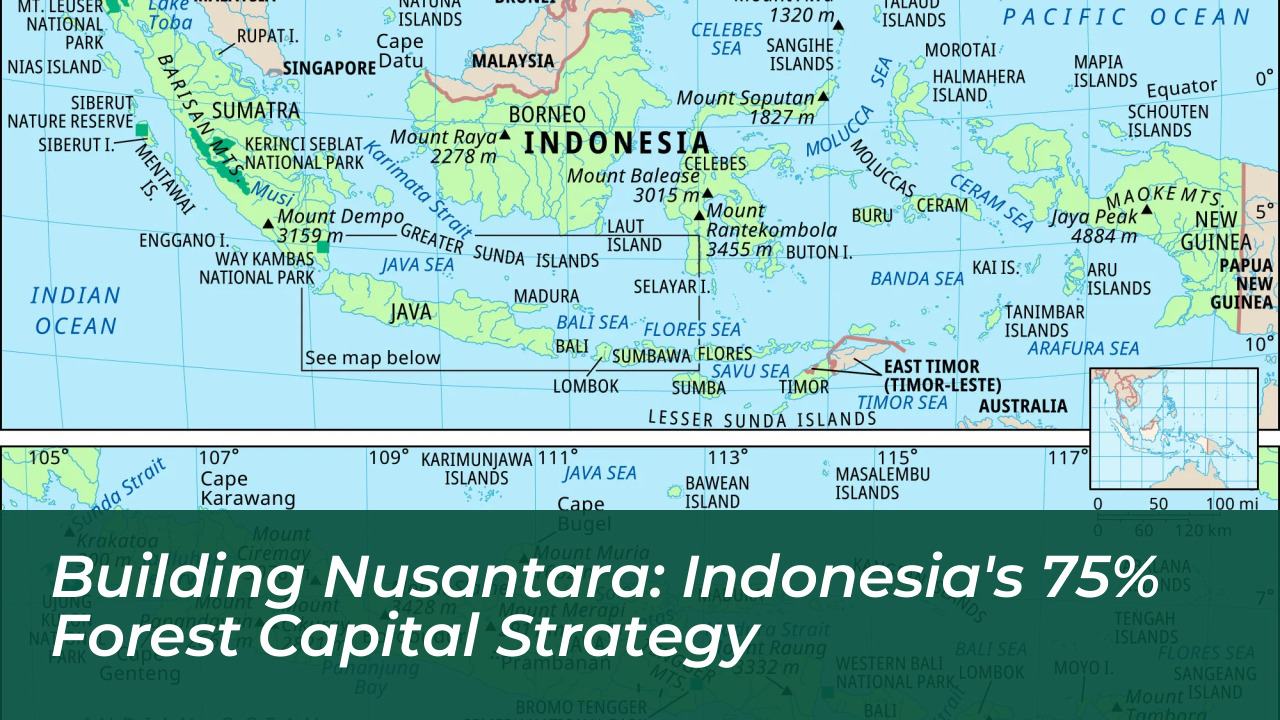

Indonesia is engineering a monumental urban shift by building its future capital, Nusantara, around a strict environmental mandate. This mandate leaves more than 75% of its 250,000-hectare strategic area completely green. Rather than razing the landscape for concrete high-rises, planners are using time-tested ecological integration to relocate administrative power from sinking, overcrowded Jakarta to the lush terrain of East Kalimantan on Borneo. The multibillion-dollar relocation project began groundwork in 2022. It balances high-tech infrastructure with strict conservation zones. By weaving government hubs directly into preserved forest canopies and agricultural belts, officials aim to establish an active political center by 2028. They also want to prove that modern metropolises can thrive without obliterating native biomes. Achieving that balance requires more than just planting trees around administrative offices. The underlying blueprint demands an entirely self-sustaining energy framework engineered to reach net-zero carbon output.
Inside Borneo’s 250,000-Hectare Strategic Plan
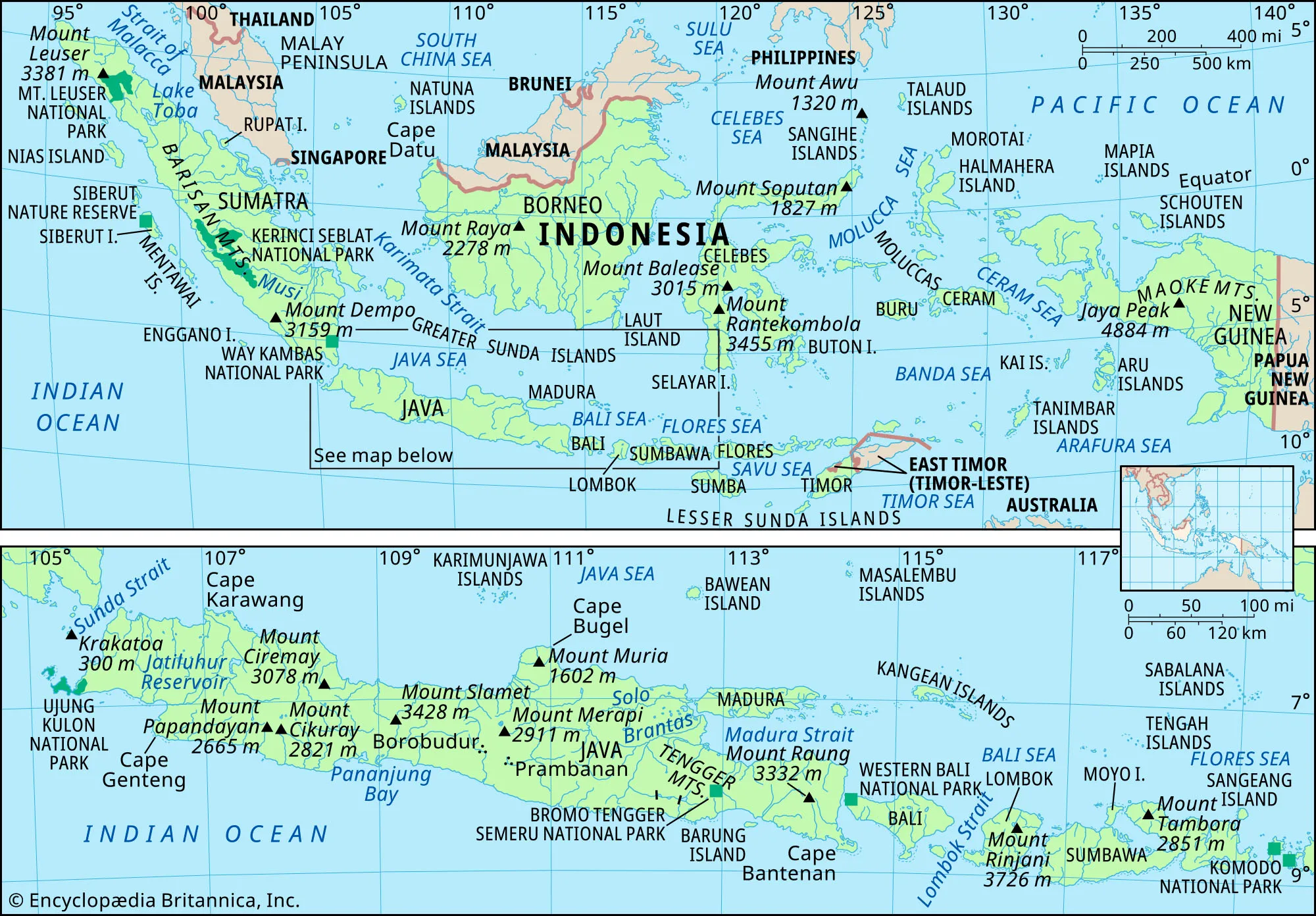
The site in East Kalimantan was chosen deliberately for its geographical advantages. It sits within practical reach of established regional hubs like Balikpapan and Samarinda. This proximity provides ready access to regional airports, road infrastructure, and natural water basins necessary to sustain a burgeoning administrative population. Despite the immense footprint covering roughly 618,000 acres, the Nusantara Capital Authority has committed to keeping the vast majority of the zone undeveloped. The designated boundaries reserve over three-quarters of the total land area for protected forest reserves, green corridors, and localized food production parcels.
Key structures are already coming online as construction advances in phased zones. Operational milestones include the central Nusantara state mosque, set to host landmark community gatherings. Meanwhile, government facilities, housing complexes, and schools take shape across the central core. A common misconception is that building a jungle metropolis requires total land clearance. However, long-term urban stability depends on maintaining intact forest hydrology and native canopy cover.
Smart City Architecture and Environmental Criteria
Nusantara is designed from the ground up as a smart metropolis. It is governed by strict municipal guidelines that regulate indoor environmental quality, ventilation, and energy footprints. In August 2023, the governing authority codified these mandates into an official regulatory manual for all commercial, residential, and civic construction. To qualify for development permits, architects and construction contractors must satisfy rigorous benchmarks focused on resource optimization:
- Energy optimization: High-efficiency HVAC systems, natural cross-ventilation, and strict envelope insulation standards.
- Water stewardship: On-site water recycling, rainwater harvesting, and runoff management to protect surrounding river catchments.
- Indoor climate management: Architectural designs that reduce ambient heat naturally, cutting artificial cooling loads.
- Integrated infrastructure: Direct connectivity to clean public transit loops, reducing private vehicle dependency across the core.
The Roadmap to Net-Zero Emissions by 2045
Under the official Nusantara Net Zero Strategy 2045, the new capital is legally bound to transition toward 100% renewable power. The Asian Development Bank developed this strategy, and the Australian government provided funding assistance. This target forms the core of the city’s climate strategy and dictates how municipal services operate day to day. The net-zero framework coordinates policy across six primary operational sectors: clean energy generation, forest and land conservation, circular waste processing, low-carbon agriculture, industrial oversight, and urban transit systems.
Project Milestones and Targets
- Target year for political capital operation: 2028
- Long-term project completion window: 2045
- Minimum land reserved for green space: Over 75%
- Renewable energy generation share: 100%
- Net-zero emissions deadline: 2045
Separating Fact from Fiction in Indonesia’s Capital Relocation
Skeptics often assume that the construction of Nusantara represents an unchecked clearing of pristine wilderness for high-density skyscrapers. However, official master plans dictate that the administrative core occupies only a compact fraction of the designated region. This leaves surrounding tracts under strict ecological preservation. Another widespread misconception holds that the move abruptly abandons Jakarta overnight. In reality, the migration functions on a multi-decade timeline. Government ministries will migrate in gradual phases toward the 2028 operating baseline. Meanwhile, broader civic, educational, and commercial districts continue their planned build-out through 2045.
Sustainable urban relocation succeeds only when ecological restoration occurs alongside physical construction, ensuring critical ecosystems remain functional. The balance between jungle preservation and smart infrastructure makes Indonesia’s bold relocation one of the most monitored mega-developments in modern urban planning. With phased deadlines running through 2045, the real test lies in whether the strict 75% forest threshold can withstand ongoing commercial expansion.