“`html
FAA Authorizes SpaceX Starship Orbit Test Flight for Monday
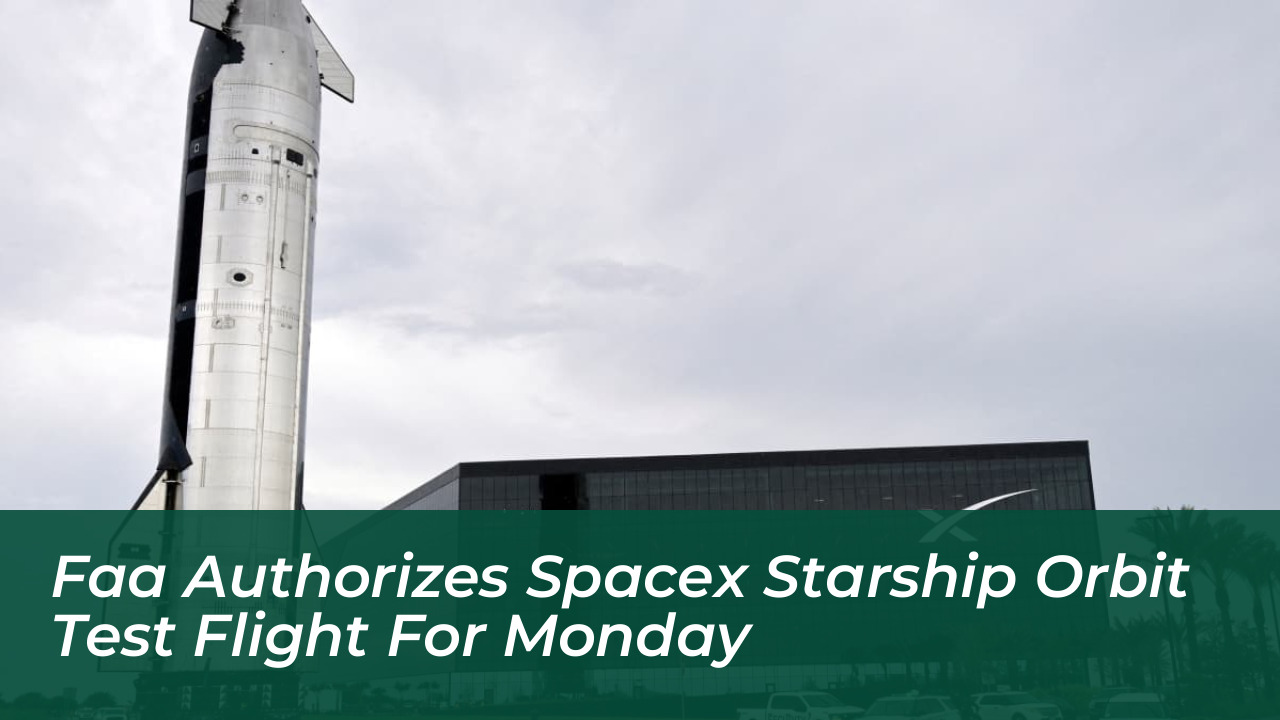
Federal regulators have granted formal approval for SpaceX to execute its milestone orbital test flight of the Starship-Super Heavy system, clearing the way for a launch attempt from Starbase, Texas. The Federal Aviation Administration (FAA) confirmed the regulatory sign-off, authorizing comprehensive launch and reentry operations for the mission.
The mission targets a 75-minute launch window opening at 8:15 a.m. ET on Monday. Unlike the 13 prior test flights-which focused primarily on suborbital trajectories, stage separation mechanics, and heat shield survivability-this upcoming flight marks a critical transition toward operational capability, aiming to achieve full Earth orbit and deploy a commercial payload.
Regulatory Milestone and Phased Authorization
Securing the FAA license represents a major hurdle cleared for the aerospace manufacturer. To accommodate the complex flight profile, the FAA structured the authorization using updated regulatory frameworks that distinctly separate initial liftoff and suborbital ascent (Order A-1) from orbital reentry, controlled descent, and Pacific Ocean splashdown operations (Order A-2).
This phased oversight reflects the increasing maturity of the Starship program. Regulators and company engineers have worked closely to ensure that safety systems, telemetry tracking, and contingency abort procedures meet stringent commercial spaceflight standards before attempting a full orbital insertion.
Commercial Objectives and Starlink V3 Expansion
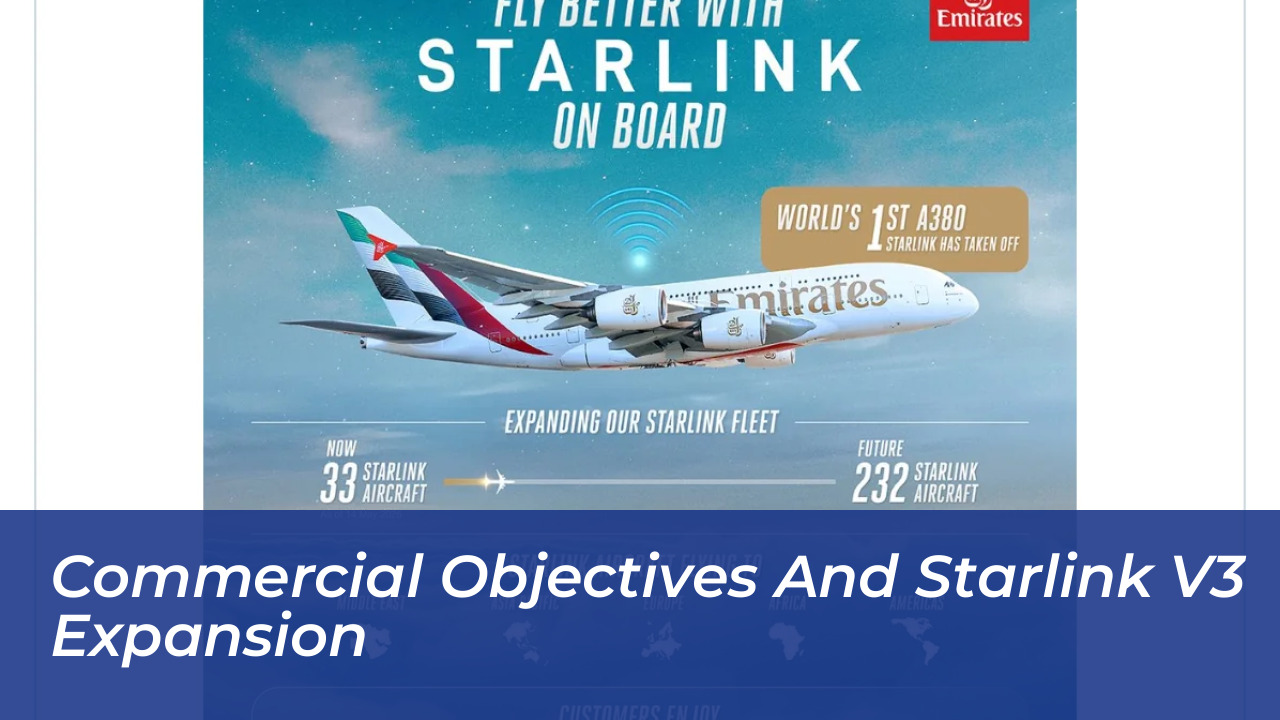
Beyond testing the spacecraft’s orbital capabilities, the mission carries significant commercial utility. Starlink continues to serve as the primary revenue and growth engine for SpaceX, which currently commands a dominant position in low-Earth orbit with roughly 11,000 active satellites, far outpacing competitors like Eutelsat OneWeb.
On this flight, Starship will attempt to deploy a batch of 26 next-generation Starlink Version 3 internet satellites. These upgraded spacecraft are substantially larger, generate twice the electrical power of their predecessors, and are engineered to deliver significantly higher bandwidth and reduced latency to global subscribers.
Mission Profile and Trajectory
The flight profile is designed to rigorously test Starship’s systems across multiple operational environments:
- Ascent and Initial Coast: Following liftoff from Starbase and successful hot-staging separation from the Super Heavy booster, Starship will ascend on a passively safe suborbital trajectory toward the Indian Ocean. This allows flight controllers to conduct thorough systems checks during an initial coast phase.
- Orbital Insertion: Provided vehicle telemetry remains nominal, Starship will execute an orbital insertion burn using a single Raptor sea-level engine, establishing the spacecraft in Earth orbit.
- Payload Deployment: Once safely in orbit, the vehicle will open its payload bay doors to release the 26 Starlink V3 satellites into their designated operational plane.
- Deorbit and Splashdown: Following an extended coast phase to evaluate long-duration space-environment endurance, the ship will perform a targeted deorbit burn, culminating in a controlled splashdown in the South Pacific Ocean.
Successful execution of this flight profile will pave the way for more frequent orbital missions, rapid cadence testing, and future iterations aimed at rapid reusability for both commercial deployment and Artemis lunar architecture.
“`