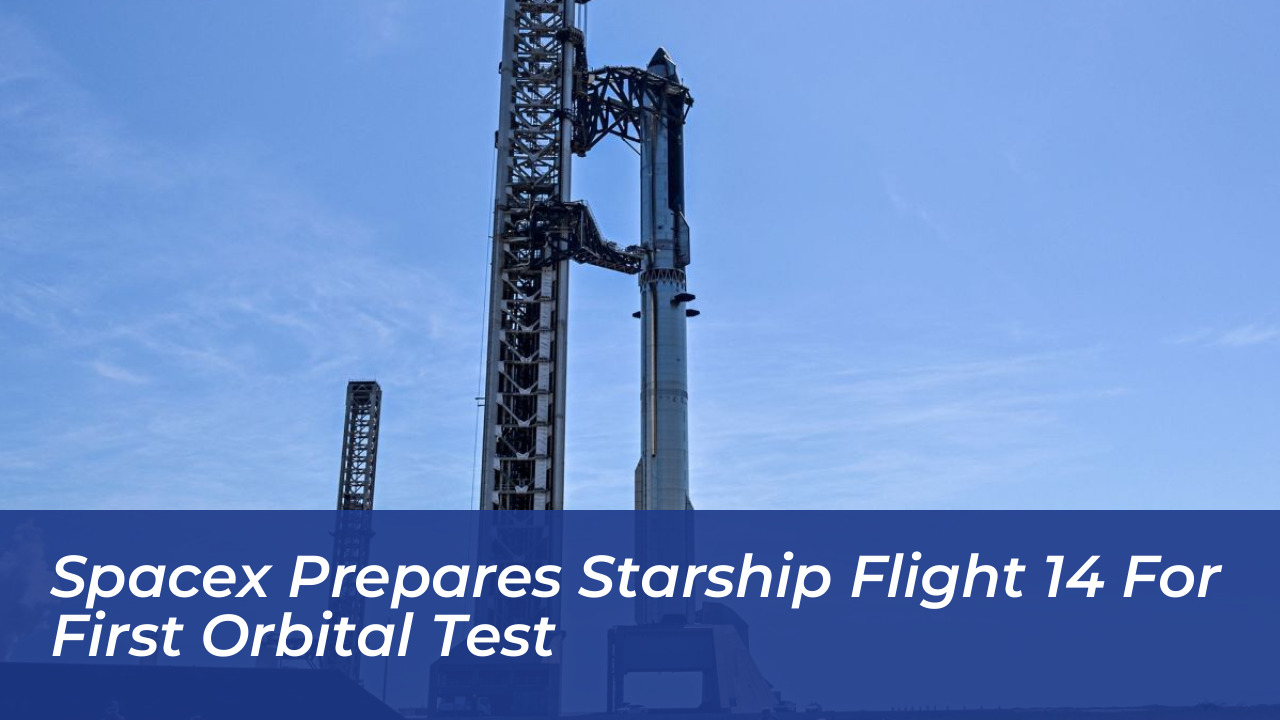
SpaceX is preparing to launch its massive Starship rocket on its 14th test flight from its facilities in Starbase near Boca Chica, Texas, on September 28, 2026. The 75-minute launch window opens at 8:15 a.m. ET, marking the vehicle’s first attempt to reach full Earth orbit and deploy operational satellites.
The nearly 10-hour mission plans to carry Starship approximately 170 miles high to circle the Earth six times before a controlled splashdown off the coast of Chile. During its orbital phase, the spacecraft will deploy 26 Version 3 Starlink internet satellites, three of which feature cameras to monitor heat shield tiles in space.
Mission Profile and Launch Details
Unlike previous missions, SpaceX will not attempt to recover either the Super Heavy first-stage booster or the upper spacecraft on dry land. Instead, both vehicles are targeted for controlled ocean splashdowns. The Super Heavy booster will practice a landing burn over the Gulf of Mexico using hardware and software updates to prevent engine ice clogging encountered during prior tests.
Flight 14 utilizes Block 3 vehicles, pairing Super Heavy Booster 21 with Starship Ship 41 on Orbital Launch Pad 2. Booster 21 completed a full-duration static fire on August 28, 2026, while Ship 41 finished a six-engine static fire on August 21.
Strategic Importance for Starlink and NASA
Success during Flight 14 would demonstrate five critical capabilities for future operations: orbital insertion, payload deployment, extended in-orbit flight, controlled deorbit, and atmospheric reentry. These milestones serve as foundational building blocks for NASA’s Artemis lunar landings, which rely on a Starship human landing system, as well as SpaceX’s long-term Mars colonization goals.
- Target Launch Date: September 28, 2026
- Launch Window: 75-minute window opening at 8:15 a.m. ET
- Primary Payload: 26 Version 3 Starlink satellites
- Booster Splashdown: Gulf of Mexico
- Spacecraft Splashdown: Pacific Ocean west of Chile
The new V3 satellites, manufactured in Redmond, Washington, are equipped with larger solar arrays that generate twice the power of earlier iterations. They are designed to transmit data more rapidly to Starlink subscribers, reinforcing the satellite internet division as SpaceX’s primary revenue generator.
Flight Safety and Contingency Plans
Starship will begin its flight on a passively safe suborbital free-return trajectory, offering a built-in abort option during the early stages of the mission without requiring additional maneuvers. The vehicle is equipped with more than 500 sensors to measure temperature, pressure, and acceleration, supplying continuous telemetry data to flight controllers.
If the vehicle remains healthy, approximately 25 minutes into the mission, a Raptor sea-level engine will perform a circularization burn to achieve orbit. Deploying the 26 Starlink V3 satellites is scheduled to begin roughly 34 minutes after liftoff, concluding with a final deorbit burn and ocean splashdown at the end of the nearly 10-hour flight.