Receipts pile up in drawers, in coat pockets and in the bottom of bags, and by the time you need one, it is gone. A receipt tracker fixes that with one simple habit: write the receipt down the day it comes home, and tick the Kept box when the receipt is filed away.
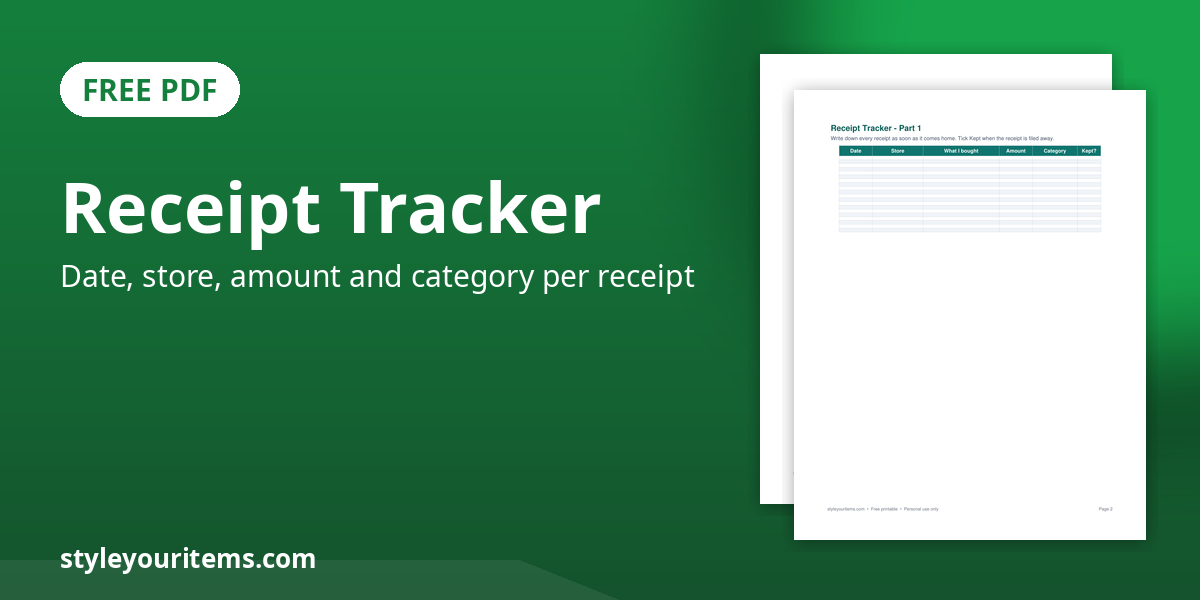
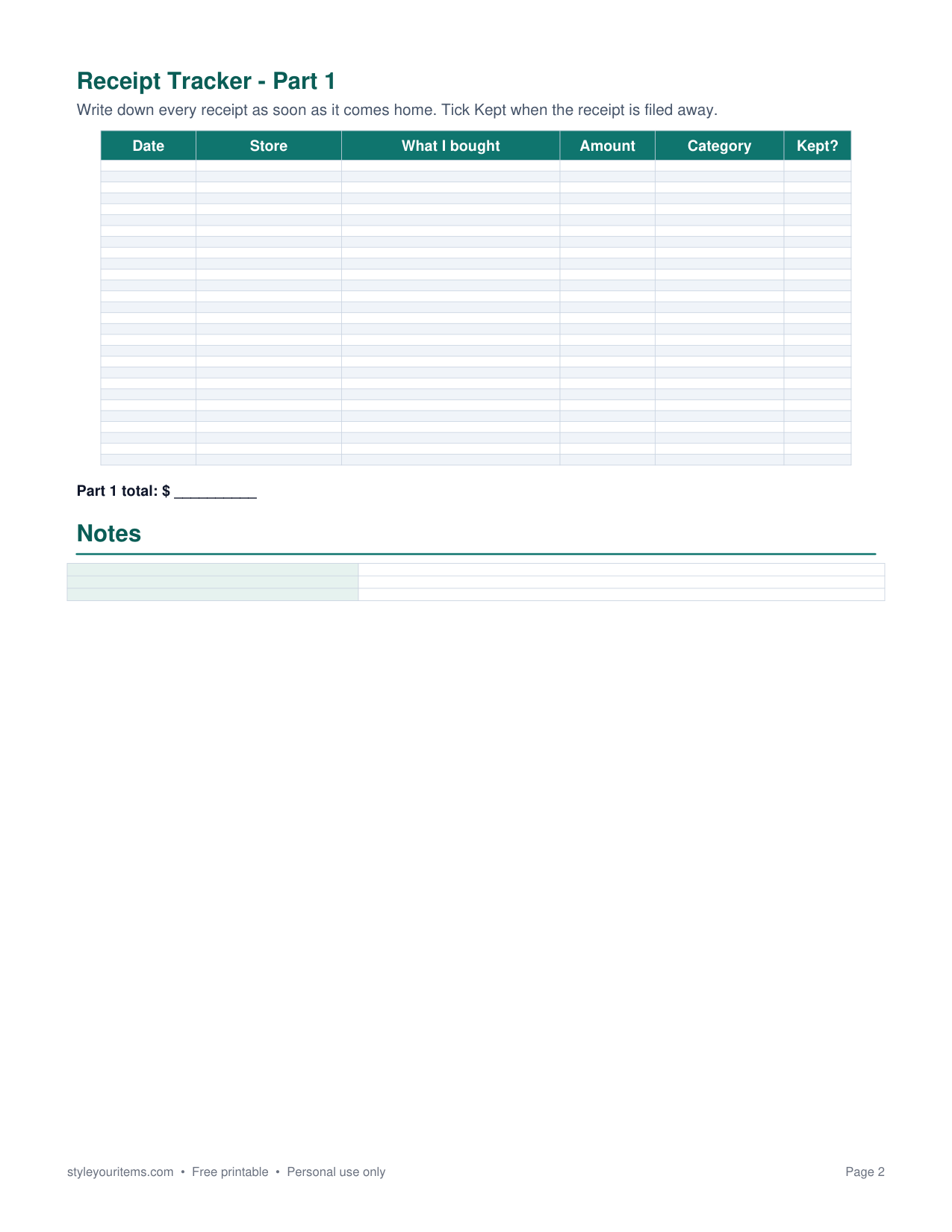
This free printable receipt tracker PDF has two log pages with 28 lines each, so 56 receipts in one print, plus a monthly totals page. Each line has columns for the date, the store, what you bought, the amount, the category and a Kept tick. A part total line and a notes box sit under each log page. It pairs well with our free printable expense tracker, and you can browse the full Money & Budget collection for more.
A filled-in week of receipts
Here is what one week of the log looks like when it is filled in. Seven receipts, seven lines, and one total that tells you what the week really cost.
| Date | Store | What I bought | Amount | Category |
|---|---|---|---|---|
| Jul 6 | Fresh Mart | Weekly groceries | $84.20 | Groceries |
| Jul 7 | Shell | Petrol | $32.00 | Car |
| Jul 8 | Target | School shoes | $45.99 | Kids |
| Jul 9 | CVS | Toothpaste and soap | $12.40 | Home |
| Jul 10 | Amazon | Phone charger | $18.95 | Tech |
| Jul 11 | Fresh Mart | Fruit and bread | $23.60 | Groceries |
| Jul 12 | Cineplex | Two movie tickets | $28.00 | Fun |
| Week total | $245.14 |
The week total is the number that matters. Groceries alone were $107.80 across two shops, which is more than a third of the week. That is the kind of thing you only see when every receipt is written down in one place. The free printable bill tracker covers the fixed bills that never come with a paper receipt, so the two sheets together show the whole month.
Five habits that keep receipts from piling up
- Empty your pockets every evening. Receipts go straight from pocket to the log, then into the folder. A receipt that spends the night in a coat pocket is a receipt that gets washed.
- Write the category while you still remember the trip. “Groceries” is obvious at the till and a mystery three weeks later. The category column is what makes the monthly totals page useful.
- Tick Kept only when the receipt is filed. An unticked line means the paper receipt is still loose somewhere. At the end of the week, every line should be ticked or the receipt is missing.
- Keep one folder, not five. A single envelope or folder by the front door beats a drawer full of loose paper. The log tells you what is in it, so you never have to dig through it.
- Photograph receipts for big purchases. The paper fades, but a phone photo does not. Write “photo” in the notes box so you know where the copy lives.
How to use the monthly totals page
- Add up each month from the log pages. At the end of the month, add the amounts for that month and write the total on the totals page, with the number of receipts filed.
- Compare the months side by side. Twelve rows, one per month. A month that jumps out usually has one big receipt behind it, and the log tells you which one.
- Carry the year total forward. The year total row at the bottom is the number for tax time, insurance claims and warranty checks. It only works if every month is filled in.
- Start a fresh print each year. The log pages hold 56 receipts, which covers most households for a few months. Print fresh pages when they fill up and keep the old ones behind the totals page.
Car costs are the receipts people lose most often, so the free printable car expense log keeps fuel and repairs in their own sheet, and the free printable coupon tracker is the matching sheet for the savings side of the same shopping trips.
Questions people ask
How long should I keep receipts?
Keep everyday receipts for a month, or until the return window closes. Keep receipts for appliances, electronics and furniture for as long as the warranty lasts. The Kept tick tells you which ones are still in the folder.
What if I lose a receipt?
Leave the line in the log with the amount and store, and write “lost” in the notes box. The record is still useful, and the missing tick reminds you the paper is gone.
Can I use this for business receipts?
Yes, for small business use. Write the business category in the Category column and keep the paper receipts with the log at tax time. For anything formal, check what your tax office needs, since rules differ by country.
More Free Printables
- Free Printable Expense Tracker PDF
- Free Printable Monthly Budget Planner PDF
- Free Printable Coupon Tracker PDF
- Free Printable Bill Tracker PDF
What a faded receipt is really worth
Paper fades, ink fades, and a receipt left in a sunny car window is gone in a summer. That is why the log matters more than the paper. The paper proves you bought something. The log proves when you bought it, where you bought it, and how much it cost, in writing that will still be readable next year. Write the line on the day you spend the money, while the store name and the item are still fresh, and the fading paper stops being a problem.
| Kind of receipt | What to do with the paper | What to write in the log |
|---|---|---|
| Everyday shopping | Keep the paper until the month ends, then let it go | Tick Kept only after the line is written in the log. |
| A purchase with a warranty | Photograph it the same day, and keep the paper with the box | Write the item and the date in the What I bought column, so the photo has a backup. |
| A receipt for work or tax | File it at once, in the one folder, and tick Kept | Note the category clearly, because that is the line you will look for at tax time. |
The Kept column is the quiet hero of this tracker. A tick does not mean you spent the money. It means the paper is somewhere you can find it, and the line in the log is the map to it. An unticked line, a month later, is a question you cannot answer, so tick as you file, not at the end of the month.
A receipt you cannot read is a receipt you do not have.
A five-minute Sunday routine
Pick Sunday evening, when the week is ending and the pockets are empty. Lay out the receipts from the week, write each one on the next free line, add the category, and tick Kept as each paper goes into the folder. Add the week total in the Part total box at the bottom of the page, and write one line in the notes box: the shop you visited most, or the category that grew. Five minutes, once a week, is all it takes to keep 56 lines from turning into a drawer full of paper.
At the end of the year, the monthly totals page does the rest. Twelve rows, one per month, and a year total at the bottom. The receipts themselves can be thrown away by then, for the everyday ones at least, but the log stays. That is the point of the tracker. The paper fades, the log does not.