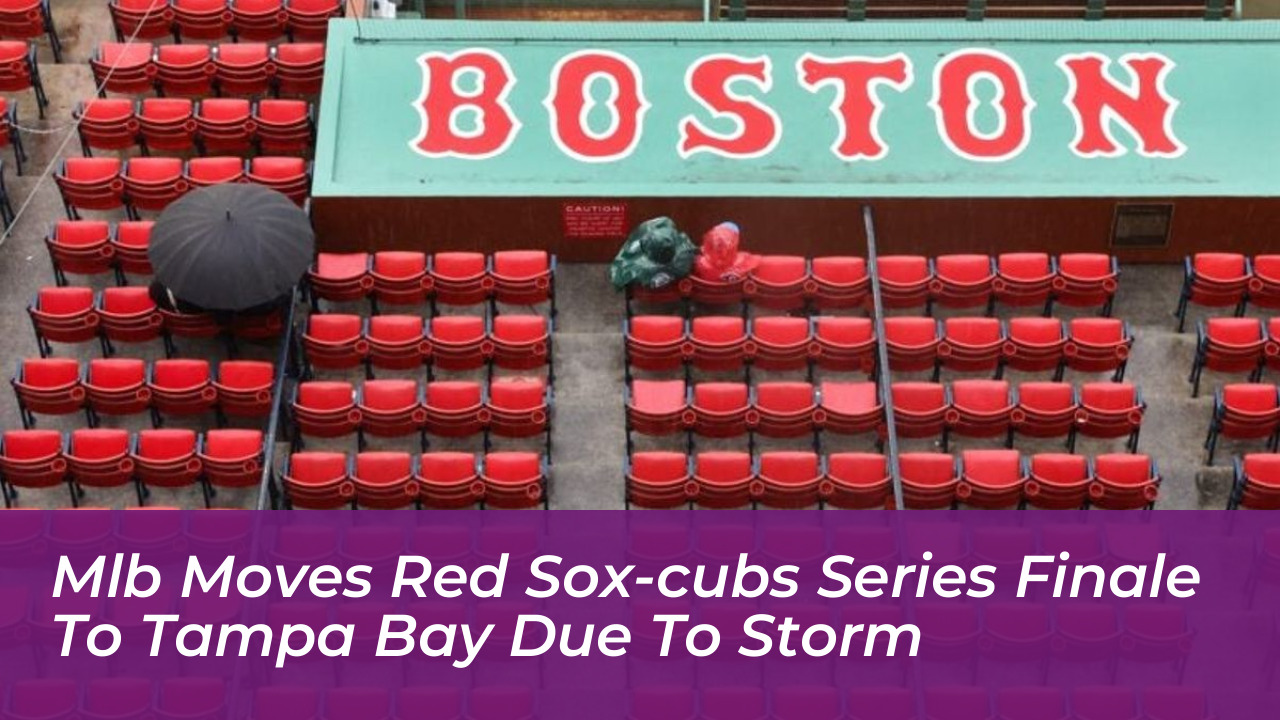
Major League Baseball faced severe scheduling disruptions in late September 2026 as a powerful nor’easter threatened the northeastern United States with heavy rain, high winds, and coastal flooding. League officials orchestrated an emergency pivot to safeguard players, personnel, and fans while preserving the integrity of the regular season’s final weekend. Navigating extreme meteorological events requires fast action, especially when pennant races hang in the balance.
- Emergency Relocation to Tropicana Field
- The Nor’easter Threat in New England
- Shifting the Red Sox and Cubs Finale
- Logistics of an Emergency Cross-Country Pivot
- The Rapid Execution Timeline
- Ticket Protocols and Fan Communication
- Postseason Implications and Competitive Integrity
- Chicago Cubs Wild Card Push
- Preserving the Final Rest Day
- Historical Precedents for Emergency Relocations
- Notable Weather Relocations in MLB History
- Stadium Operations and Fan Experience in St. Petersburg
- Operational Hurdles Overcome
- Wrapping Up the 162-Game Marathon
- Comprehensive Analysis of Emergency Weather Protocols
- Frequently Asked Questions
- Why was the Red Sox and Cubs series finale moved to Florida?
- How did the relocation affect the Chicago Cubs postseason preparation?
- What ticketing options were provided to fans who purchased seats for Fenway Park?
Emergency Relocation to Tropicana Field
Major League Baseball faced severe scheduling disruptions in late September 2026 as a powerful nor’easter targeted the northeastern United States with heavy rain, high winds, and coastal flooding. League officials and club executives orchestrated emergency schedule adjustments. The primary objective involved safeguarding players, personnel, and fans while maintaining competitive integrity across the league as the regular season drew to a close.
The cascading weather system disrupted multiple venues in the region. Alongside the challenges at Fenway Park, the New York Yankees had to convert their series finale against the Baltimore Orioles into a Friday doubleheader. However, the Boston Red Sox and Chicago Cubs matchup carried heightened stakes due to tightly contested National League postseason races, demanding a more drastic logistical pivot.
The Nor’easter Threat in New England
- Severe coastal storm targets New England with destructive winds and flooding.
- Fenway Park and surrounding regional venues face unplayable conditions.
- New York Yankees also forced to shift their schedule, creating a Friday doubleheader against Baltimore.
Shifting the Red Sox and Cubs Finale
- Boston Red Sox and Chicago Cubs matchup carries high postseason stakes.
- Final game of the series moves from Fenway Park to Tropicana Field in St. Petersburg, Florida.
- Game slot shifts to a Sunday afternoon start time of 3:05 p.m. ET inside the weather-controlled dome.
Logistics of an Emergency Cross-Country Pivot
Moving an MLB game across the country with less than 48 hours notice requires unprecedented coordination between ballclubs, league operations, and stadium personnel. To bypass the destructive path of the nor’easter, Major League Baseball officially relocated the final game of the Red Sox and Cubs series to Tropicana Field in St. Petersburg, Florida. Originally scheduled for a Saturday night slot at Fenway Park, the game moved to a Sunday afternoon start time inside the weather-controlled dome of the Rays home stadium.
This decision required rapid coordination between both ballclubs, league operations, and stadium personnel in St. Petersburg. Tampa Bay Rays leadership expressed strong support for the league emergency plan. The Rays organization acknowledged the solidarity shown by other MLB franchises when Tropicana Field sustained roof damage from Hurricane Milton in 2024, making the return favor a meaningful gesture of baseball community support.
The Rapid Execution Timeline
- Friday doubleheader played at Fenway Park, resulting in a Boston sweep (4-3 and 2-0).
- Teams and traveling parties depart Boston immediately following Friday night’s game.
- Sunday finale executes smoothly with the Red Sox serving as the designated home team in Florida.
Ticket Protocols and Fan Communication
- Red Sox issue automatic full refunds for all tickets purchased directly through the franchise within seven days.
- New tickets for the St. Petersburg venue made available instantly via official MLB channels.
- Tampa Bay Rays organization offers full logistical support, returning hospitality shown when Tropicana Field sustained roof damage from Hurricane Milton in 2024.
Postseason Implications and Competitive Integrity
Maintaining a fair playing field for October baseball drives the league urgent decision-making during weather crises. While the Boston Red Sox had already secured the American League fifth seed, the Chicago Cubs entered the final weekend locked in a ferocious battle for National League Wild Card positioning. The Cubs competed tightly with the Philadelphia Phillies and San Diego Padres for crucial home-field advantage heading into the postseason rounds.
Playing the final game indoors eliminated the risk of a chaotic Monday makeup game in Boston. A Monday postponement would have completely wiped out the scheduled off-day for both teams right before the postseason began on Tuesday. Preserving that rest day maintained fairness for the Cubs pitching staff and overall postseason readiness.
Chicago Cubs Wild Card Push
- Cubs locked in a fierce National League Wild Card race with Philadelphia and San Diego.
- Crucial home-field advantage implications hang in the balance during the final weekend.
Preserving the Final Rest Day
- Moving indoors eliminates the risk of a chaotic Monday makeup game in Boston.
- Postponing to Monday would wipe out the scheduled off-day right before the postseason starts on Tuesday.
- Uninterrupted rest protects the Cubs pitching staff and overall competitive readiness.
Historical Precedents for Emergency Relocations
While shifting regular-season games due to severe weather remains uncommon, Major League Baseball has activated emergency relocation protocols on several notable occasions. League history contains several notable weather-driven exceptions where teams had to pack their bags on short notice to keep the schedule intact.
These emergency shifts protect the integrity of the 162-game schedule. When Mother Nature disrupts traditional ballparks, alternative indoor or southern venues stand ready to host games under extreme circumstances.
Notable Weather Relocations in MLB History
- 2017 Hurricane Harvey: Texas Rangers and Houston Astros series moves to Tropicana Field.
- 2017 Hurricane Irma: Tampa Bay Rays and New York Yankees series shifts to Citi Field in New York.
- 2008 Hurricane Ike: Chicago Cubs and Houston Astros series relocates to Milwaukee.
- 2007 Spring Snow: Los Angeles Angels and Cleveland Indians series shifts to Milwaukee.
- 2004 Hurricane Ivan: Montreal Expos and Florida Marlins series moves to Chicago.
Stadium Operations and Fan Experience in St. Petersburg
Activating an unexpected neutral-site game demands instant mobilization from local operational units and stadium staff. Relocating an MLB regular-season game across the country with less than 48 hours notice creates massive operational hurdles. Ticketing systems, security protocols, broadcasting setups, and stadium operations teams in St. Petersburg had to mobilize instantly.
The venue opened specific seating bowls, primarily the 100 and 200 levels, to accommodate fans traveling down from the Northeast alongside local baseball enthusiasts. For the Chicago Cubs, navigating the abrupt travel schedule capped off a uniquely chaotic 2026 campaign. Despite the logistical hurdles, reaching the indoor confines of Tropicana Field guaranteed that the final game of the marathon was completed on schedule, paving the way for a fair start to October baseball.
Operational Hurdles Overcome
- Ticketing systems, security protocols, and broadcasting setups reconfigured on short notice.
- Tropicana Field opens specific seating bowls, primarily 100 and 200 levels, for traveling fans and local supporters.
Wrapping Up the 162-Game Marathon
- Logistical hurdles successfully cleared for the Chicago Cubs during a chaotic 2026 campaign.
- Indoor venue guarantees completion of the regular season on schedule, paving the way for a seamless transition into October baseball.
Comprehensive Analysis of Emergency Weather Protocols
Major League Baseball continuously refines its emergency response strategies to handle extreme weather phenomena efficiently. Modern meteorological tools allow league executives to track developing storms days before impact. Collaborative planning between stadium operations and travel coordinators ensures minimal disruption to team schedules. This proactive approach guarantees player safety and maintains the competitive balance required for a fair pennant race.
Franchises across the league maintain standing agreements regarding alternative venues and neutral-site hosting availability. When severe weather strikes a host city, backup domes or southern ballparks activate immediately. These rigorous protocols safeguard the 162-game schedule from unpredictable environmental threats. Fans benefit from transparent communication and swift ticketing solutions during unexpected venue changes.
Seamless execution during sudden relocations highlights the resilience and adaptability of professional sports operations. Broadcasters, stadium staff, and traveling teams synchronize their efforts within hours to deliver a flawless game experience. Such robust contingency planning secures the long-term stability of the regular season schedule against climate uncertainties.
Frequently Asked Questions
Why was the Red Sox and Cubs series finale moved to Florida?
A powerful nor’easter threatened New England with severe weather, forcing the league to relocate the game indoors.
How did the relocation affect the Chicago Cubs postseason preparation?
Moving the game indoors protected their crucial final off-day and kept their pitching staff fully rested.
What ticketing options were provided to fans who purchased seats for Fenway Park?
The Red Sox issued automatic full refunds for original ticket purchases while making new seats available for purchase in Florida.