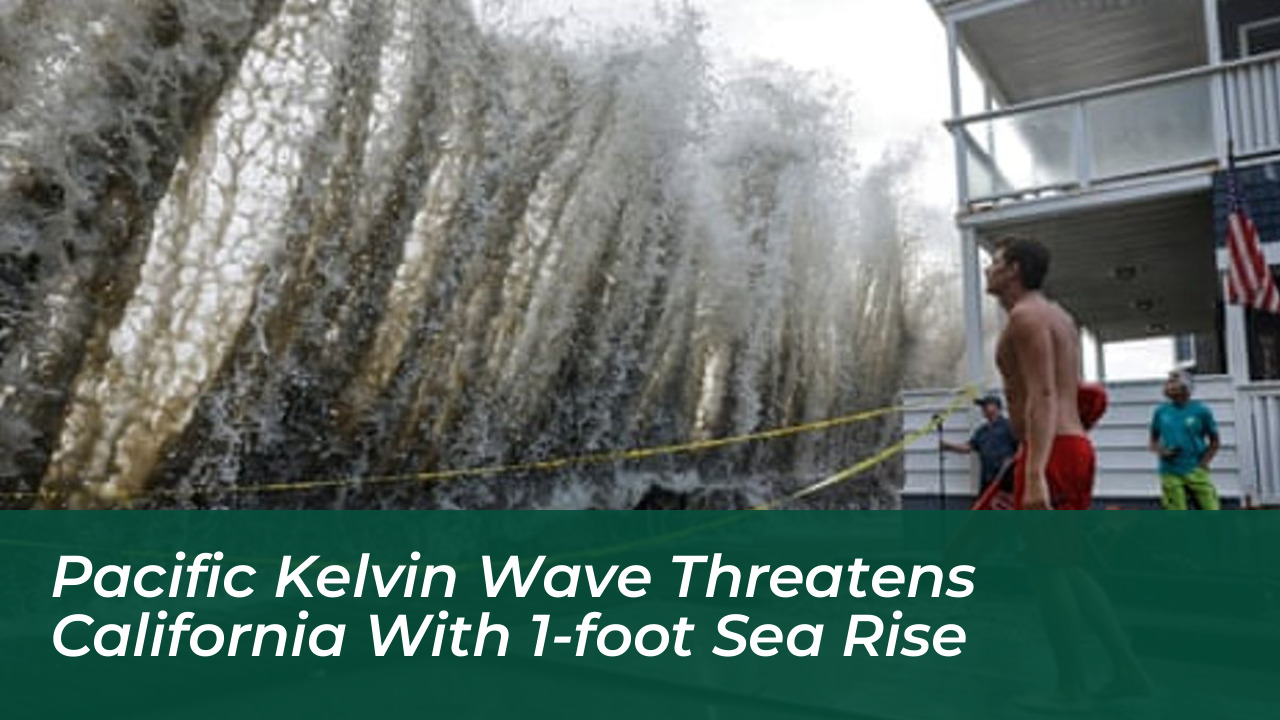
A slow-moving, planetary-scale ocean phenomenon known as a Kelvin wave is advancing toward the California coastline. It threatens to increase regional sea levels by up to one foot during the upcoming winter months. Scientists and oceanographers warn that a powerful El Niño climate pattern is actively magnifying the potential for severe storm surges, rapid coastal erosion, and widespread flooding across the Pacific shoreline.
- The Mechanics of a Pacific Kelvin Wave
- Amplified Threats from an Exceptionally Strong El Niño
- California State Government Mobilizes Emergency Resources
- Frequently Asked Questions
- What is a Kelvin wave?
- How much will sea levels rise in California?
- When is the Kelvin wave expected to arrive?
- Why is this El Niño particularly dangerous?
- How are local authorities preparing for the threat?
The massive surge of warm water originated in the western Pacific Ocean when tropical trade winds weakened and reversed direction. This atmospheric shift released a massive, built-up volume of warm water that reached the northern tip of South America in late August before tracking north toward the United States. Oceanographers expect the wave’s regional influence to persist through the winter and well into early next year as El Niño conditions trap elevated ocean temperatures directly along the coast.
The Mechanics of a Pacific Kelvin Wave
Unlike standard surface waves that crash along a beach, a Kelvin wave operates on a massive planetary scale, spanning thousands of miles beneath the surface. According to data from the National Oceanic and Atmospheric Administration (NOAA) and NASA’s Jet Propulsion Laboratory, these subsurface disturbances transport massive amounts of thermal energy and warm water across the equatorial Pacific.
Severine Fournier, a research scientist studying ocean circulation at NASA’s Jet Propulsion Laboratory, explained that these waves can be tracked easily along the equator. When the warm water reaches the continental boundary of South America, it cannot continue moving eastward. Consequently, the water disperses north and south along the coastline, elevating sea levels across broad stretches of the Pacific coast.
Researchers note that global sea levels have already risen approximately eight inches over the past century along the California coast. This existing baseline means that the incoming Kelvin wave will stack additional water on top of an already elevated ocean floor, magnifying the dangers of high tides and normal coastal hazards.
Amplified Threats from an Exceptionally Strong El Niño
The current climate cycle is shaping up to be one of the strongest El Niño events in modern observational history. Climate readings have already surged past previous temperature records for the phenomenon months before its expected seasonal peak.
Nate Mantua, a research scientist at NOAA’s Southwest Fisheries Science Center, noted that while Kelvin waves are natural events that have occurred for thousands of years, the compounding factors this year are exceptional. Mike Jacox, a research oceanographer at the center, compared the effect to raising the floor on all that happens, meaning every high tide, storm surge, and swell starts from a higher baseline.
Historical data from previous super El Niño winters-such as those in 1983, 1998, and 2015-2016-demonstrate that severe storms combined with elevated water levels cause substantial property damage, highway closures, and rapid beach loss. The highest predicted astronomical tides for the upcoming season are scheduled around late November, late December, and late January, creating critical windows of vulnerability if major winter storms hit simultaneously.
California State Government Mobilizes Emergency Resources
In response to the compounding oceanic and atmospheric threats, California state officials have initiated aggressive preventative measures. Governor Gavin Newsom declared a state of emergency to mobilize resources, streamline bureaucratic red tape, and position emergency response equipment prior to major winter storms.
State preparations and infrastructure defenses include:
- Staging heavy road-closure and snow-removal equipment along exposed coastal and mountain highways via Caltrans.
- Preparing the California National Guard for immediate flood response and search-and-rescue operations.
- Urging coastal homeowners and residents to inspect vulnerable properties, clear drainage systems, and address erosion risks before severe weather arrives.
- Coordinating through the California Coastal Commission to evaluate high-risk low-lying areas.
Kate Huckelbridge, executive director of the California Coastal Commission, emphasized that past events show the most destructive damage occurs when intense storms align precisely with peak high tides. Residents living in low-lying coastal zones are strongly encouraged to monitor local weather warnings, secure private property, and prepare early for a potentially hazardous winter season.
Frequently Asked Questions
What is a Kelvin wave?
A Kelvin wave is an extremely long, slow-moving subsurface ocean disturbance spanning thousands of miles. Driven by weakened trade winds during El Niño, it carries massive volumes of warm water eastward across the Pacific and then northward along the Americas, raising regional sea levels.
How much will sea levels rise in California?
Scientists estimate that the incoming Kelvin wave could temporarily raise baseline sea levels along the California coast by up to one foot, with elevated water conditions lasting for several months.
When is the Kelvin wave expected to arrive?
The wave began moving up the west coast of North America after reaching South America in late August, and its impacts are expected to peak and persist throughout the fall, winter, and early next year.
Why is this El Niño particularly dangerous?
This year’s El Niño is forecasted to be among the strongest on record. It combines higher baseline sea levels from global climate change, warmer coastal waters, increased storm frequency, and higher potential for severe storm surges.
How are local authorities preparing for the threat?
California Governor Gavin Newsom declared a state of emergency, allowing state agencies to stage emergency equipment, ready the National Guard for rescues, clear administrative hurdles, and urge coastal residents to reinforce property drainage.