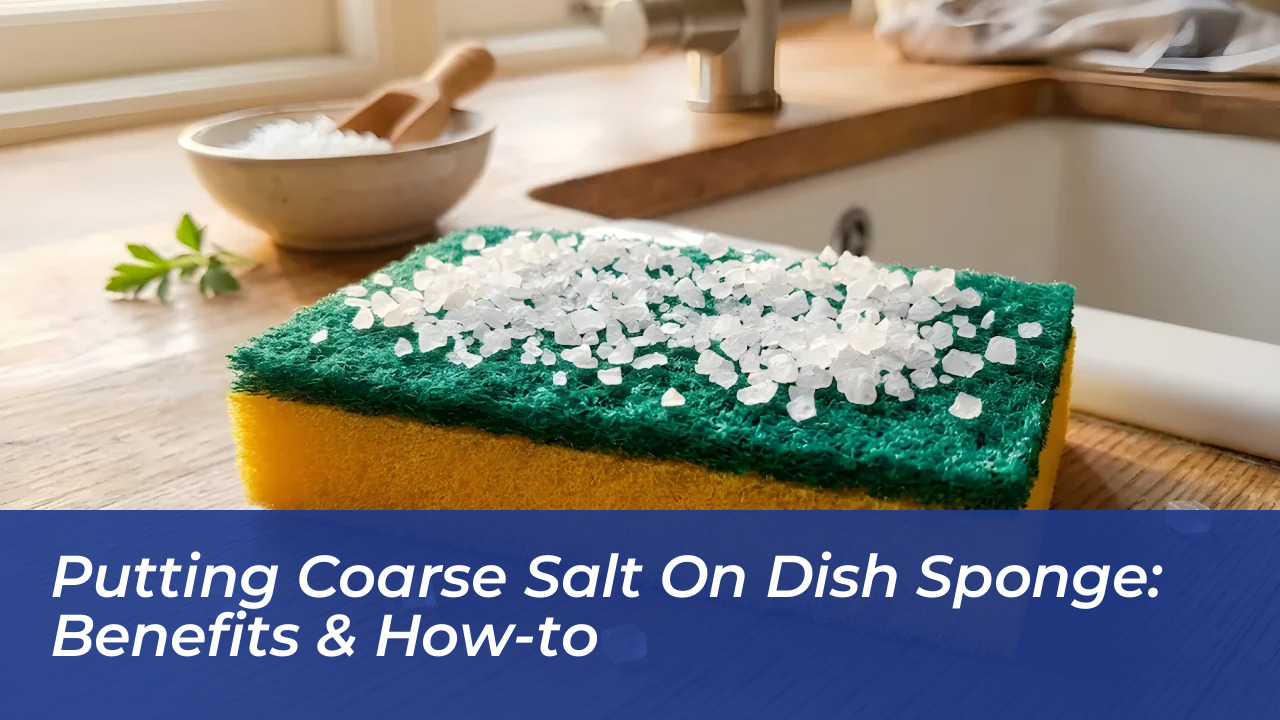

A simple, affordable, and increasingly popular trick suggests adding an unexpected ingredient to your daily cleaning routine: coarse salt. While typically reserved for cooking, coarse salt can help you wash dishes, tackle stubborn grease, and maintain better kitchen hygiene.
This method involves placing a small amount of coarse salt directly on the sponge alongside your regular dish soap. Using it does not completely replace specialized cleaning products, but it significantly enhances their effects and simplifies household chores.
What Putting Coarse Salt on the Sponge is Good For
Coarse salt has a naturally abrasive texture that makes it useful for lifting stuck-on dirt without harsh chemical agents. Its primary dishwashing applications include:
- Removing tough residue: It helps loosen baked-on food from pots, pans, casserole dishes, and baking sheets.
- Boosting cleaning power: The physical texture reinforces the action of dish soap, cutting through greasy films on plates and cutlery.
- Eliminating odors: Salt neutralizes lingering food odors on kitchen utensils and the sponge itself.
- Scrubbing away buildup: It cleans sinks and surfaces where mineral deposits or daily grime accumulate.
The Science Behind the Salt Hack
The effectiveness of this hack relies on two properties of salt: friction and osmosis. When you scrub with a salted sponge, the grains create a mild exfoliating effect. This breaks the bond between food residue and cookware without scratching standard materials.
Additionally, salt has hygroscopic properties, meaning it attracts and absorbs moisture. In a damp kitchen environment, drawing out moisture reduces conditions where bacteria and mildew thrive, keeping cleaning tools fresh for longer periods.
Step-by-Step: How to Use Coarse Salt on Your Sponge Properly
To apply this cleaning trick safely without damaging your kitchen tools, follow these steps:
- Wet your kitchen sponge thoroughly with warm water.
- Add a small spoonful of coarse salt directly onto the scrubbing side of the sponge.
- Apply your regular dish soap over the salt.
- Gently scrub the pots, pans, or surfaces that require extra cleaning power.
- Rinse the item thoroughly with clean water to remove any lingering salt or soap residue.
For a deeper clean, you can soak your sponge overnight in a saltwater solution. Make this by dissolving a quarter cup of salt in a bowl of warm water to refresh materials and neutralize trapped odors.
Precautions to Keep in Mind
While this method is safe and practical for everyday stainless steel and ceramic items, keep a few important exceptions in mind:
- Avoid delicate surfaces: Do not use coarse salt on nonstick pans, delicate glassware, or highly polished steel, because the abrasive grains can cause permanent scratches.
- Remember it is not sterilization: While salt helps reduce odors and moisture, it does not fully sterilize a sponge. You should still sanitize your sponges regularly or place them in the microwave if they contain no metal parts.
- Replace your sponge regularly: Even with regular salt treatments, kitchen sponges harbor bacteria over time and should be replaced every two weeks to maintain kitchen hygiene.