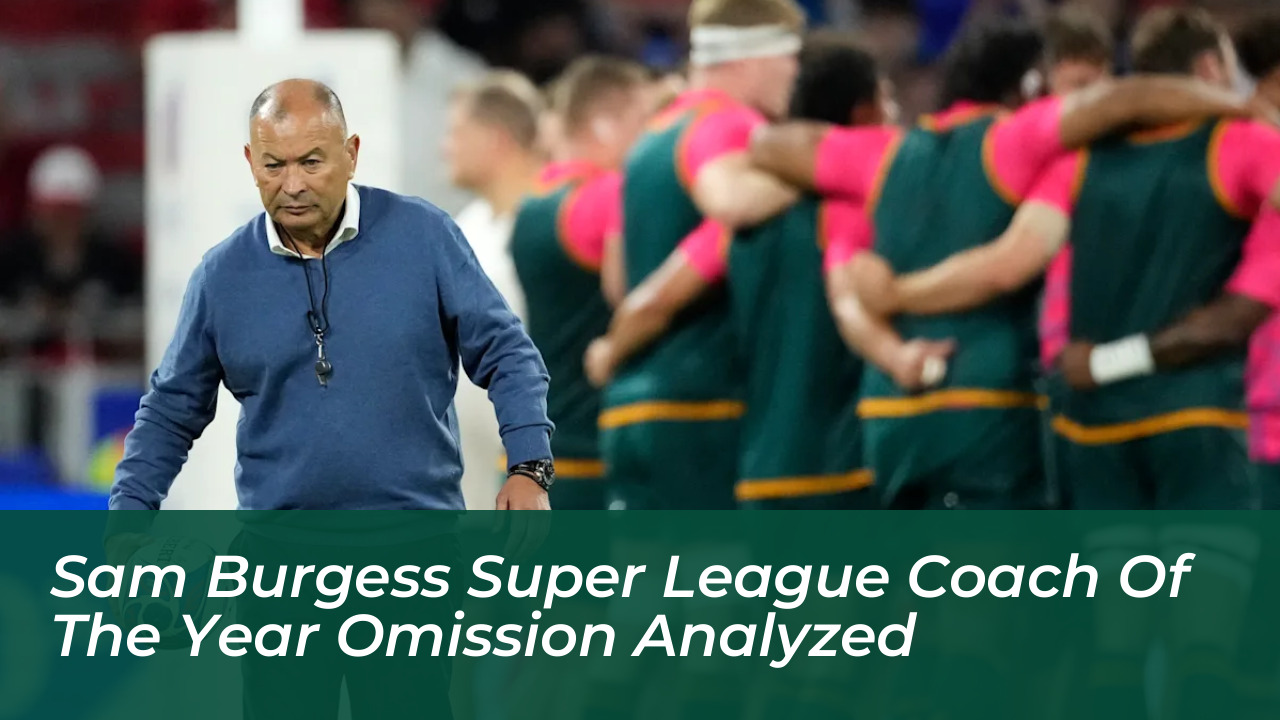
The announcement of the Super League Coach of the Year shortlist always triggers lively discussions across rugby league circles. However, the exclusion of Sam Burgess following an impressive campaign with Warrington Wolves caught many supporters and analysts completely off guard. Guiding a squad to the upper echelons of the ladder typically guarantees recognition, making his absence from the ballot a major talking point.
- Decoding the Super League Coach of the Year Selection Process
- How the Peer Review Voting System Works
- Key Criteria Evaluated by Head Coaches
- Analyzing the 2026 Shortlist: Arthur, Houles, and Peet
- Brad Arthur and Leeds Rhinos
- Sylvain Houles and Toulouse Olympique
- Matt Peet and Wigan Warriors
- Sam Burgess and Warrington Wolves: The 2026 Campaign Breakdown
- League Table Success and Structural Stability
- Knockout Rugby and Cup Runs
- Why Did Sam Burgess Miss the Cut?
- The Weight of Pre-Season Expectations
- The Over-Achievement Metric
- Peer Dynamics and Tactical Perceptions
- The Long-Term Trajectory of Warrington Wolves Under Burgess
- Cultural Shift and Accountability
- Integrating Emerging Academy Talent
- Frequently Asked Questions
- Who determines the Super League Coach of the Year nominees?
- Who made the final shortlist for the award?
- Where did Warrington Wolves finish in the league standings under Sam Burgess?
- What are the primary criteria for the Coach of the Year award?
This peer review selection process relies entirely on confidential votes cast by opposing managers. Because the final three-man ballot reflects the opinions of those directly involved in the tactical grind, the omission sparked extensive debate about how rival bosses evaluate success. Understanding this decision requires a close look at pre-season expectations, peer voting dynamics, and the specific metrics that shaped the final shortlist.
The race for the prestigious coaching accolade showcased tight margins across the competition. While silverware distribution and relative over-achievement heavily influenced the voters, the debate surrounding Sam Burgess highlights the complex criteria defining elite professional rugby league management today.
Decoding the Super League Coach of the Year Selection Process
How the Peer Review Voting System Works
The Betfred Super League Coach of the Year award stands out because a democratic peer review mechanism drives the entire selection. All 14 head coaches across the top-flight competition cast confidential ballots for their contemporaries. Voters weigh performance, squad management, over-achievement, and tactical progression throughout the rigorous regular season.
This exclusive voting pool ensures that the nominees earn recognition directly from individuals who understand the relentless pressure of elite coaching. Rival managers watch every match, analyze video footage, and battle directly on the pitch. Consequently, peer recognition holds unique weight within professional rugby league circles, as it represents the ultimate professional respect from direct competitors.
Key Criteria Evaluated by Head Coaches
When head coaches fill out their ballots, they analyze specific metrics beyond simple league standings. Voters examine squad resources, budget constraints, injury crises, and pre-season expectations. A manager who steers a modest roster into the playoffs often receives more peer appreciation than someone maintaining the status quo with a heavily funded powerhouse.
Tactical progression also plays a massive role in the voting mindset. Coaches look for visible improvements in defensive structures, attacking fluency, and player development. This distinction between raw league ladder performance and relative over-achievement often explains why certain high-profile managers miss out despite strong league finishes.
Analyzing the 2026 Shortlist: Arthur, Houles, and Peet
Brad Arthur and Leeds Rhinos
Brad Arthur earned his spot on the shortlist by transforming the Leeds Rhinos into formidable runners-up. The experienced tactician injected defensive steel and tactical clarity into the West Yorkshire club, securing their strongest regular-season finish since 2017. His ability to extract maximum output from a revamped roster deeply impressed rival coaches across the competition.
Under Arthur, the Rhinos shed their inconsistency and developed a ruthless edge during crucial summer fixtures. Rival bosses noticed this structural evolution, translating into widespread support on the Coach of the Year ballot.
Sylvain Houles and Toulouse Olympique
Sylvain Houles steered Toulouse Olympique through a monumental French campaign that earned universal praise. Navigating the elite competition requires immense logistical and physical resilience, particularly for an overseas club facing grueling travel schedules.
Houles maximized his squad depth and validated their tactical capability on the grand stage. Earning a spot among the finalists reflects the profound respect his peers hold for the stability and competitive spirit he instilled in the French outfit.
Matt Peet and Wigan Warriors
Matt Peet continued his remarkable tenure at the helm of the Wigan Warriors, anchoring his position on the ballot through relentless trophy accumulation. Peet successfully captured both the Challenge Cup and the League Leaders Shield, positioning the Cherry and Whites for a historic treble.
Consistency defines Peet’s coaching philosophy. By maintaining exceptionally high performance standards across multiple competitions, he secured the undeniable backing of his fellow coaches.
Sam Burgess and Warrington Wolves: The 2026 Campaign Breakdown
League Table Success and Structural Stability
Sam Burgess directed the Warrington Wolves to a stellar third-place finish in the regular-season standings, establishing a robust defensive identity. From early spring through to the final round, the Wire maintained top-tier consistency and proved difficult to break down.
The former England international instilled physical discipline and tactical clarity at the Halliwell Jones Stadium. Supporters and analysts anticipated that securing a top-three finish would comfortably land Burgess on the final shortlist, making his exclusion a surprise to external observers.
Knockout Rugby and Cup Runs
Beyond the regular-season ladder, Burgess successfully guided Warrington to two major semi-final appearances. Reaching the penultimate stages of both major knockout competitions demonstrates an ability to prepare squads for high-stakes, high-pressure environments.
While the club encountered late-season challenges and ultimately missed out on securing ultimate silverware, the overall trajectory displayed clear upward momentum. Assessing these deep cup runs highlights the competitive foundation established during the campaign.
Why Did Sam Burgess Miss the Cut?
The Weight of Pre-Season Expectations
Decoding why Burgess missed the final three-man shortlist requires analyzing the psychological weight of pre-season expectations. Clubs forecasted to struggle near the bottom of the table give their managers a distinct advantage in peer voting.
When a lower-projected team over-delivers, rival coaches take immediate notice of the stark contrast. Established powerhouse clubs expected to challenge near the summit face different baselines, meaning strong finishes are often viewed as meeting expectations rather than defying them.
The Over-Achievement Metric
Voters frequently lean toward teams that dramatically exceed external projections. While Warrington enjoyed a strong campaign, pre-season forecasts viewed them as competitive playoff contenders rather than relegation candidates.
This subtle nuance in peer voting explains why managers steering underdog clubs often capture more ballots. The voting pool rewards unprecedented leaps up the table over steady consolidation among the elite.
Peer Dynamics and Tactical Perceptions
Head-to-head encounters heavily color a coach’s assessment of their rivals. Tactical chess matches, specific defensive traps, and gritty league battles leave lasting impressions in the minds of opposing managers.
If a rival coach outmaneuvered Warrington in a pivotal late-season fixture, that recency bias can influence their confidential ballot. The microscopic details of individual matches often outweigh the final numbers printed on the league table.
The Long-Term Trajectory of Warrington Wolves Under Burgess
Cultural Shift and Accountability
Examining the broader scope of Sam Burgess’s tenure reveals a disciplined rebuilding project aimed at long-term success. Taking over a Warrington side that previously battled inconsistency, Burgess implemented a rigorous physical and mental standard.
His approach leans heavily on internal accountability, reduced unforced errors, and emotional control during high-pressure fixtures. Players understand their roles clearly, fostering an environment where accountability drives weekly preparation.
Integrating Emerging Academy Talent
Building a sustainable club requires nurturing young players into first-team environments. Burgess actively integrated academy prospects into senior matchday squads, building foundational stability for future campaigns.
This commitment to youth development ensures that Warrington maintains a steady talent pipeline. While the Coach of the Year nomination eluded him this season, the structural culture taking root at the club points toward sustained competitiveness in the years ahead.
Frequently Asked Questions
Who determines the Super League Coach of the Year nominees?
A confidential peer poll determines the nominees and eventual winner. All 14 Betfred Super League head coaches cast votes for their contemporaries.
Who made the final shortlist for the award?
The official three-man shortlist features Brad Arthur of Leeds Rhinos, Sylvain Houles of Toulouse Olympique, and Matt Peet of Wigan Warriors.
Where did Warrington Wolves finish in the league standings under Sam Burgess?
Warrington secured a highly respectable third-place finish in the regular-season standings, alongside reaching two major semi-finals.
What are the primary criteria for the Coach of the Year award?
Voters evaluate overall squad progression, tactical innovation, league position relative to resources, and performance consistency across the 27-round regular season.