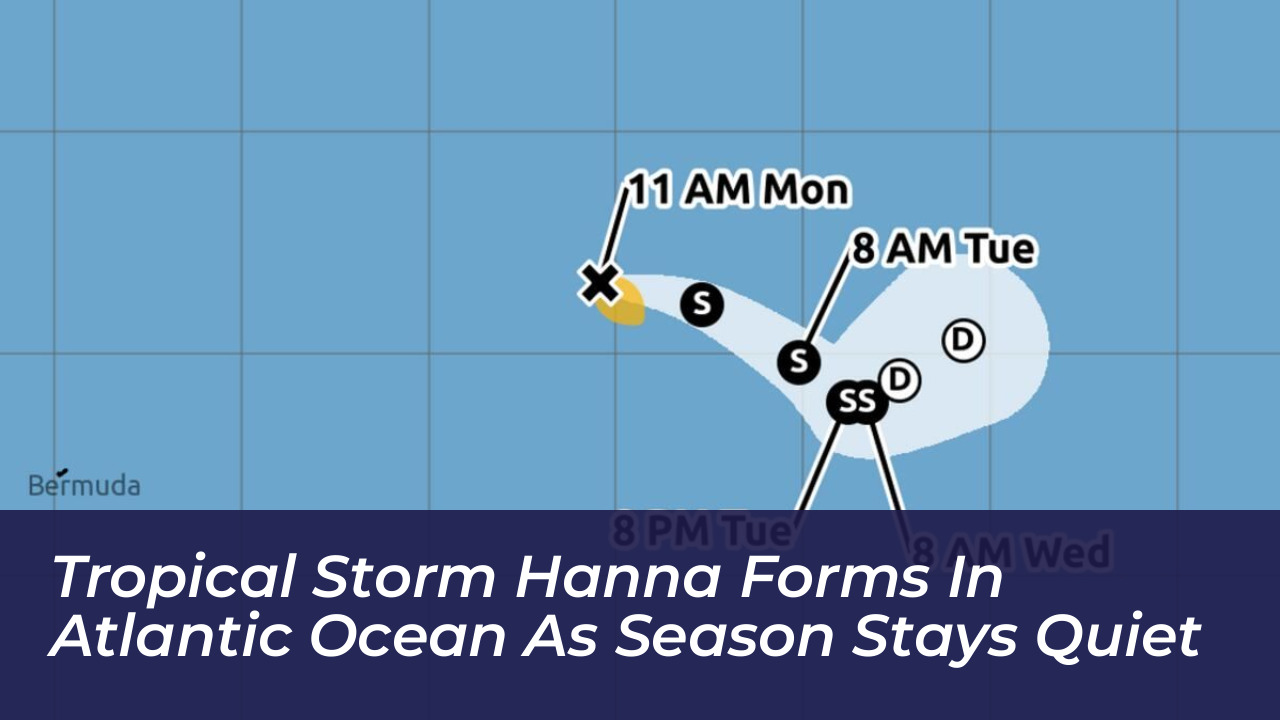
Tropical Storm Hanna formed on Monday in the central Atlantic Ocean, packing maximum sustained winds of 45 mph while remaining safely away from any landmasses. According to the National Hurricane Center, the system developed roughly 870 miles east-northeast of Bermuda, marking the eighth named storm of the 2026 Atlantic hurricane season.
Meteorologists have issued no coastal watches or warnings. Forecast models project the system will remain over open waters without significantly changing in intensity. The organized storm evolved from a trough of low pressure and is expected to continue tracking eastward.
An Unusually Quiet Atlantic Hurricane Season
Hanna’s formation arrives during a notably subdued stretch for the Atlantic basin. Climate scientists attribute this broader lull to a strong El Niño pattern, which generates unfavorable upper-level wind conditions that disrupt tropical storm formation.
So far in 2026, the Atlantic basin has recorded eight tropical storms and zero hurricanes. In a typical year, the region sees roughly 14 to 15 named storms-including seven to eight hurricanes-by the time the official hurricane season concludes on November 30.
Contrasting Activity in the Pacific Basin
While the Atlantic remains remarkably quiet, the eastern Pacific basin has experienced above-average activity. While Atlantic storms face severe wind shear from El Niño, the Pacific has already produced numerous systems, including multiple major hurricanes.
Meanwhile, other compact systems continue to churn across open waters. Tropical Depression Fay has also persisted in the open ocean, fluctuating in intensity since its formation due to persistent environmental winds.
Tracking and Forecasting Tools
Forecasters at the National Hurricane Center rely on advanced satellites operated by the National Oceanic and Atmospheric Administration (NOAA) alongside high-performing numerical weather prediction models to track systems like Hanna.
Because Hanna is projected to stay weak and track away from populated areas, meteorologists do not anticipate any severe land impacts. However, ongoing satellite monitoring will continue for the duration of the system’s life cycle.