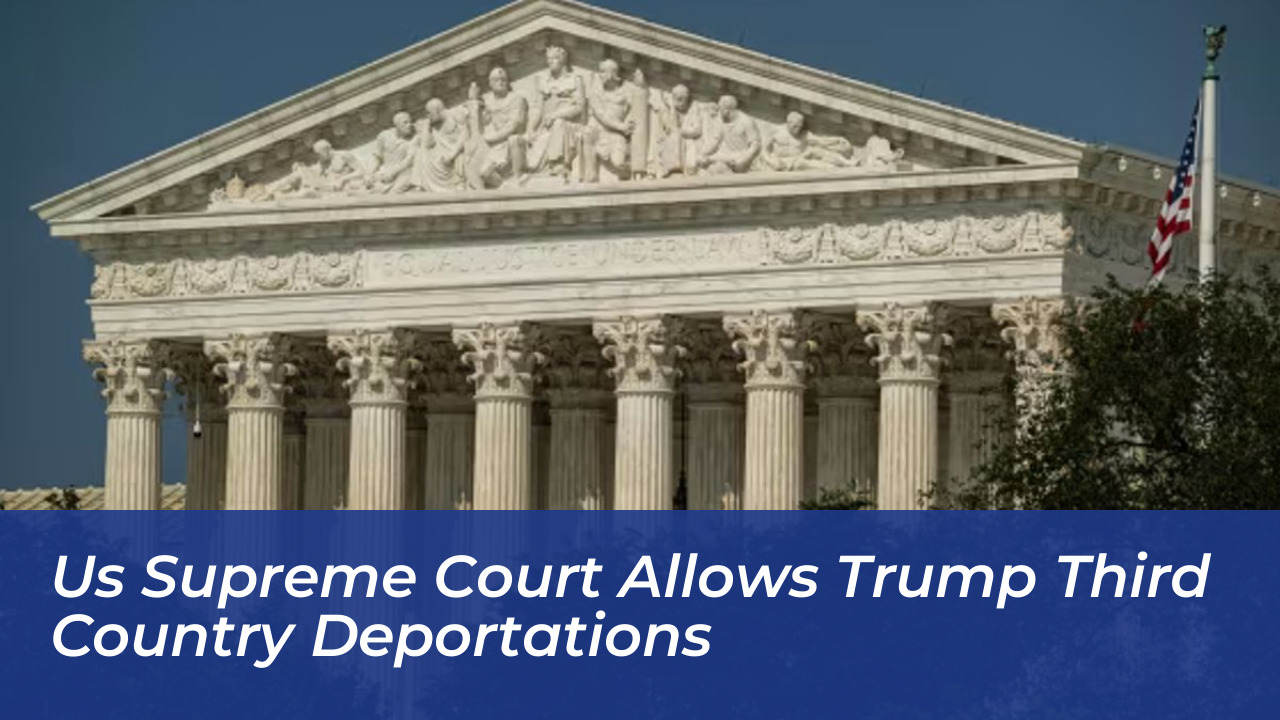
The U.S. Supreme Court granted an emergency request on September 29, 2026, allowing the Trump administration to resume deporting immigrants to third countries while ongoing legal challenges proceed. The brief unsigned order featured dissents from the court’s three liberal justices and scheduled oral arguments on the policy for December, aiming for a final decision by the end of June.
- Background on the Third-Country Removal Policy
- Legal Arguments From Both Sides
- Lower Court Rulings and Next Legal Steps
- Frequently Asked Questions
- What did the U.S. Supreme Court decide regarding deportations?
- Who dissented from the Supreme Court’s order?
- Which countries have received deported migrants under this policy?
- What were the lower court’s objections to the policy?
- When will the Supreme Court hear oral arguments on the case?
This judicial action temporarily blocks a previous ruling from the 1st U.S. Circuit Court of Appeals. The lower court had found the deportation procedure unlawful because it failed to provide migrants with a proper opportunity to raise safety concerns and fear of persecution under federal immigration law.
Background on the Third-Country Removal Policy
Since President Donald Trump began his second term in January 2025, the administration has utilized third-country deportations as a core component of its immigration enforcement strategy. Under this policy, migrants are removed to nations other than their homelands when their home countries refuse to accept them back or when the administration deems alternative removals necessary.
Data from the Migration Policy Institute indicates that approximately 15,000 people were deported to third countries in 2025 alone. While Mexico has received the vast majority of these individuals, thousands of migrants have also been sent to nations such as South Sudan, Eswatini, and Rwanda. The Justice Department maintains that thousands more are currently eligible for removal.
Legal Arguments From Both Sides
The administration has strongly defended the practice in its filings. Government attorneys told the justices that the procedure serves as an essential tool to remove certain aliens, including some of the worst criminal aliens, whose home countries reject repatriations. The Justice Department argued in its emergency appeal that while certain aliens may benefit from stalling their removal, the nation does not.
Conversely, attorneys representing the migrants challenging the policy presented a starkly different narrative. They stated that the mechanism is frequently used to deport longtime U.S. residents-many without criminal histories-resulting in severe consequences. Legal representation for the migrants documented grave and irreversible harms, which reportedly include disappearances, beatings, and s*xual assaults following relocation. Additionally, more than a dozen United Nations human rights experts have urged the administration to halt the practice.
Lower Court Rulings and Next Legal Steps
The latest Supreme Court intervention follows a series of conflicting lower-decision disputes. The Department of Homeland Security previously canceled a flight scheduled to transport 70 migrants to three distinct countries after an appeals court largely backed a ruling by Boston-based U.S. District Judge Brian Murphy.
Judge Murphy’s ruling determined that the administration cannot simply rely on another nation’s assurances that transferred migrants will be safe from persecution or torture. Instead, the judge mandated that migrants must receive a meaningful chance to prove they would face direct harm in the third country.
With the Supreme Court’s emergency stay now in place, third-country deportations will legally resume while the legal teams prepare for oral arguments this coming December.
Frequently Asked Questions
What did the U.S. Supreme Court decide regarding deportations?
The Supreme Court granted an emergency request allowing the Trump administration to resume deporting migrants to third countries while legal challenges against the policy move forward.
Who dissented from the Supreme Court’s order?
The court’s three liberal justices dissented from the brief unsigned order.
Which countries have received deported migrants under this policy?
While Mexico has received the vast majority of individuals, thousands of migrants have also been sent to third nations such as South Sudan, Eswatini, and Rwanda.
What were the lower court’s objections to the policy?
A federal judge previously ruled the procedure unlawful because it did not give migrants a proper opportunity to raise safety, persecution, or torture concerns under federal law.
When will the Supreme Court hear oral arguments on the case?
The Supreme Court scheduled oral arguments regarding the third-country deportation policy for December, with a final decision anticipated by the end of June.