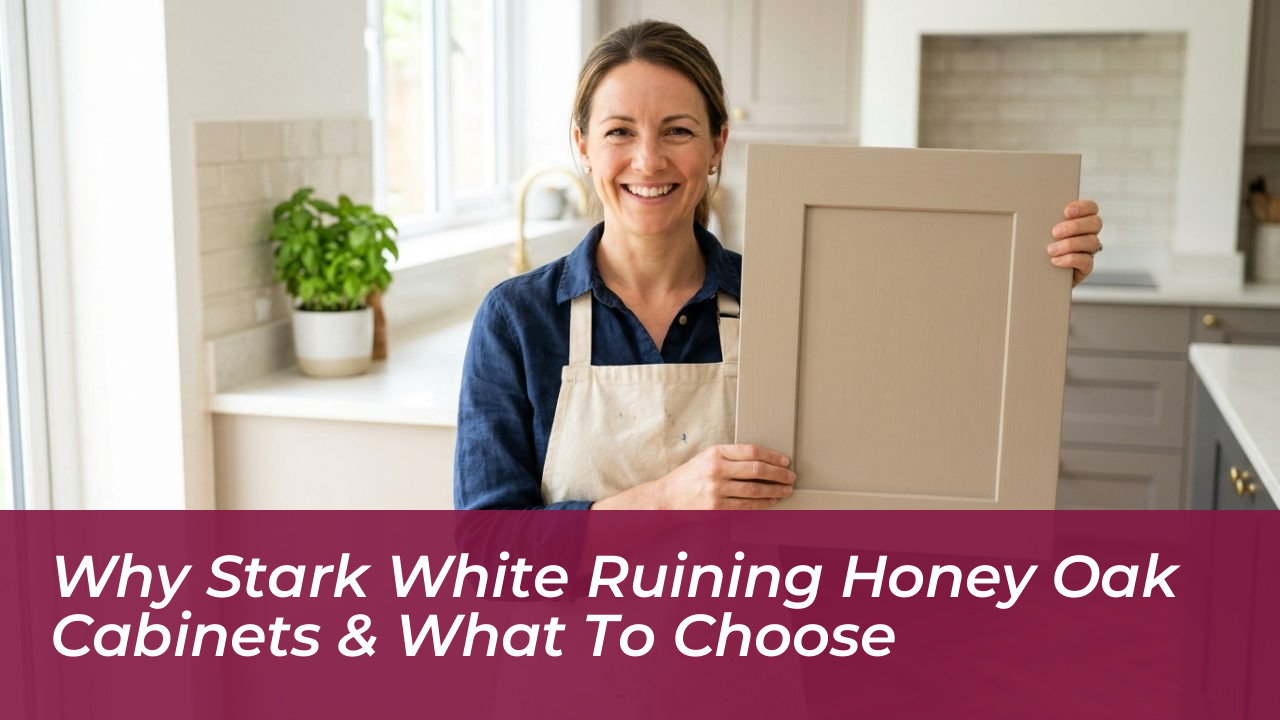

Defaulting to bright white paint when updating dated honey oak cabinets creates a harsh, flat contrast. This makes surrounding surfaces clash and gives the entire space a cheap remodel aesthetic. Instead of dropping tens of thousands of dollars on a full gut renovation or reaching for cold white primer, pairing structural wood with a soft, warm neutral like Dulux Gentle Fawn preserves solid craftsmanship while completely modernizing the home.
The standard instinct for mid-2000s oak is total demolition. The aggressive orange undertones reflect indoor lighting, dating the architecture faster than nearly any other feature. When homeowners avoid the dumpster, they almost always make the second most common mistake: coating every door in stark gallery white. That reflex ignores how cabinet colors interact with flooring, stone, and natural daylight.
The Problem With the White Paint Reflex
Bright white feels like the safest choice on paper because design boards and home flipping shows have pushed it for over a decade. Yet when applied over substantial shaker doors in a room with warm elements, cold white reads clinical. If you pair crisp white doors with warm flooring or veined stone, the cabinets do not look clean. Instead, they make everything around them look dirty or disconnected.
In successful professional renovations, homeowners avoid both expensive extremes. The original solid oak shaker carcasses, drawers, and layout remain completely intact. Rather than ordering an entire room of replacement boxes, hiring a professional spray specialist or using a meticulous DIY method with a quiet, dusty beige bridges the gap. This shade sits comfortably between warm taupe and soft stone.
Why Undertones Dictate Cabinet Success
A balanced kitchen design centers on coordinating elements, such as warm wood-look herringbone flooring and creamy quartz countertops laced with subtle gold veining. Placing cold white paint against gold-veined quartz and warm floors causes an immediate visual split.
Gentle Fawn and similar warm neutrals function because they bridge those surfaces rather than competing against them. The veined quartz surface serves as the ideal counterweight to a matte beige finish, while gold striations pick up the subtle warmth in the paint, preventing the monochrome sterility common in modern flips.
Key Remodel Elements for Honey Oak Upgrades
- Original Millwork: Retain solid shaker frames and carcasses to save thousands in structural costs.
- Selected Paint Tone: Choose a matte finish warm neutral like Dulux Gentle Fawn instead of stark white.
- Industrial Coating: Utilize hard-curing spray formulations or high-grade waterborne alkyds like Benjamin Moore Advance.
- Countertops: Pair with creamy white quartz featuring soft gold veins rather than stark white marble.
- Cabinet Hardware: Install burnt steel knobs on doors and cup pulls on drawers for tactile depth.
Why Spraying Outperforms Traditional Hand Rolling
A durable kitchen cabinet transformation requires industrial-grade chemistry and rigorous preparation. Rolling or brushing enamel onto open-grain oak often produces visible brush marks and an uneven texture that signals an amateur finish.
Every square inch of adjacent space requires meticulous masking before spray equipment ever enters the room. Glass fronts, countertops, electrical outlets, ceilings, and floors must be completely sealed with heavy sheeting and specialized tape. The spray job lives or dies on the prep work. Meticulous masking prevents overspray and ensures the final factory-smooth matte coat cures into a durable, chip-resistant shield.
The Two-Tone Hardware Strategy Designers Rely On
A common error during cabinet makeovers is installing identical bar pulls across every single opening. High-end custom cabinetry relies on mixed hardware functional zones to create depth. Every hinged door can feature a subtle, round burnt steel knob, while all horizontal drawer fronts receive centered cup handles finished in the identical coating.
Outdated chrome plumbing can be retired in favor of a matte black gooseneck faucet. Paired with carved drainer grooves in quartz countertops and an undermount sink basin, the wet wall takes on an architectural feel without requiring layout alterations.
Reframing Existing Appliances Without Structural Changes
Homeowners often believe built-in wall ovens require brand-new custom surrounds to look current. When painted in a muted tone rather than stark white, existing tall runs blend cleanly into the background. The original oven housings and cutouts do not need to move an inch. By muting the surrounding oak frames, existing stainless double ovens appear integrated rather than stranded in heavy wood.
Assessing your cabinet carcasses before commissioning a gut job reveals whether solid wood frames can be preserved. Test paint swatches against your existing floor and planned stone rather than relying on bright white defaults to achieve a timeless, high-end kitchen aesthetic.