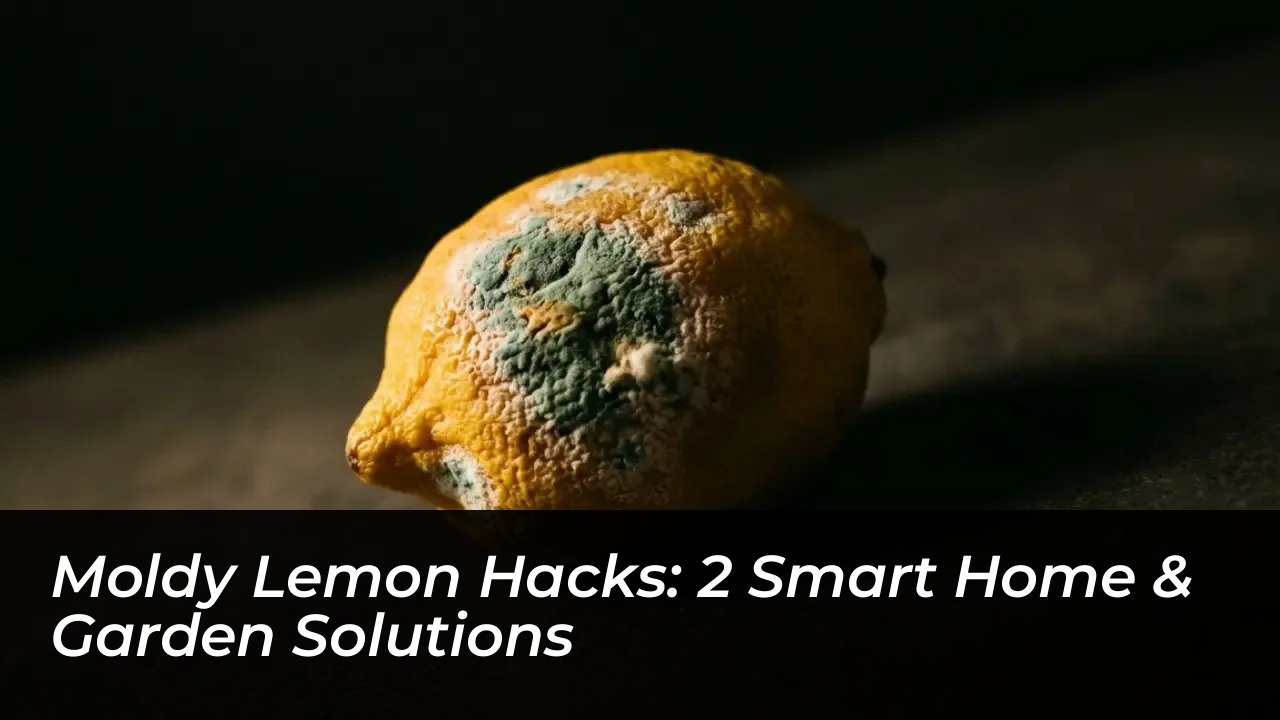

Finding a moldy lemon in the kitchen pantry usually means heading straight for the trash can. However, before tossing the spoiled fruit into the bin, homeowners can look at practical ways to repurpose what would otherwise become household waste. While mold does not enhance the fruit’s potency, the remaining organic matter can be creatively utilized for two common garden and household situations.
It is important to understand that these DIY practices have strict limitations and do not replace controlled agricultural solutions or professional pest control. Even so, repurposing food scraps is a sustainable approach to waste reduction. Here is a close look at why a spoiled lemon still holds utility and how you can safely put it to work.
Why a Moldy Lemon Can Still Be Useful in the Garden
A spoiled lemon preserves natural aromatic compounds found in citrus fruits that can be unpleasant to certain insects. These volatile compounds remain present even after white or green mold begins to colonize the peel. Additionally, the fruit’s organic matter can safely feed a home composting system when added under the right conditions.
Visible mold does not render the lemon completely unusable for a well-managed compost bin. Fungi and microorganisms are a standard part of natural biological decomposition. However, gardeners must avoid common misconceptions-such as burying lemon pieces directly next to -loving plants expecting a reliable soil pH correction. This casual DIY trick does not provide precise control over soil acidification.
How to Use a Spoiled Lemon Against Ants in the Garden
The first technique involves preparing an infused liquid from the moldy lemon and applying it exclusively outdoors where ants travel. Because mold requires careful handling, safety precautions should be observed from start to finish.
- Supplies needed: One spoiled lemon, clean water, a sealable container, and protective gloves to prevent direct contact with the mold.
- Step-by-step preparation: Place the moldy lemon inside the container and cover it completely with water. Seal the container tightly and let it sit undisturbed for 24 to 48 hours in a safe spot away from children and pets.
- Application: After the resting period, carefully remove and discard the fruit, and wash your hands thoroughly. Use a small amount of the liquid exclusively outdoors, applying it carefully along outdoor trails where ants travel.
Important note: Avoid spraying sensitive plants directly with the solution. Check back over the subsequent days to see if insect activity decreases. While citrus aromatic compounds can deter certain insects, real-world effectiveness varies significantly.
How to Add Lemons to Home Compost
The second alternative is adding small amounts of the moldy lemon to an active, well-managed home composting system, rather than burying pieces directly around delicate plant root systems.
- Safe handling: Wear gloves if the lemon has heavy mold growth. Only cut the fruit if you can do so cleanly without spreading spoiled spores across kitchen countertops.
- Integration: Add the lemon piece to the compost bin alongside a diverse mix of other organic kitchen scraps and yard waste.
- Balancing materials: Immediately cover the citrus waste with brown materials, such as dry autumn leaves or unlaminated cardboard suitable for composting.
- Mixing: Thoroughly mix the materials to avoid concentrating all the citrus in one isolated spot within the pile. Wait until the entire composting process has completely broken down all scraps before applying the finished compost to garden plants.
Household composting easily handles moderate amounts of citrus fruit. The mold present on the surface simply joins the natural decomposition process already driven by beneficial fungi and microorganisms.
Limits of DIY Lemon Techniques
While these practices successfully divert organic waste from landfills, it is essential to distinguish between sustainable reuse and attributing magical properties to a homemade remedy. Mold does not automatically transform a standard lemon into a hyper-effective bug repellent. The water infusion serves primarily as an interesting experiment rather than a guaranteed pest control protocol.
Similarly, burying pieces of lemon right next to a struggling plant is not a reliable method to lower soil pH. Transforming ordinary garden soil into the highly acidic environment required by specific botanical species demands controlled amendments that a simple kitchen trick cannot provide. These two alternatives are simply clever ways to squeeze a final use out of organic matter before tossing it out, keeping expectations grounded in agricultural reality.