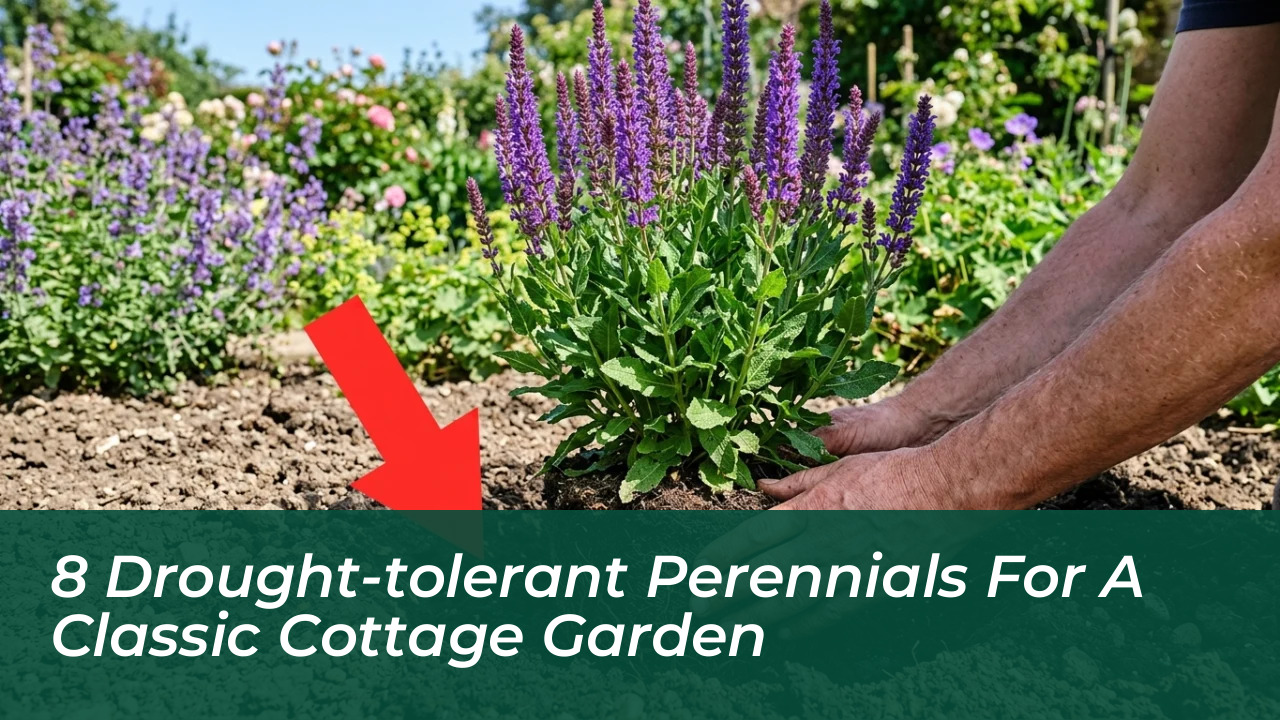

Switching to drought-tolerant perennials allows gardeners to maintain the romantic abundance of a classic English cottage garden even during intense summer heatwaves. While traditional borders often collapse under prolonged heat and dry weather, an intentional palette of eight resilient species delivers lush blooms, height, and color without demanding constant irrigation. Many growers assume water-wise landscaping requires gravelly desert designs, but Charlotte McGrattan, hardy nursery stock buyer at Hillier Garden Centres, notes that resilient perennials can preserve the relaxed, colorful aesthetic of a classic border while standing up to severe moisture deficits.
Timing plays a crucial role in establishing these resilient beds. Nick Mann, environmentalist and founder of Habitat Aid, points out that planting in autumn gives root networks the necessary runway to establish before the onset of dry spring conditions: “By planting in October, you’re giving root systems time to establish over winter which, if all goes well, should result in stronger, healthier plants and a more impressive display the following year.” In the United States, fall planting aligns well across multiple growing zones, though gardeners should always verify local first-frost dates before getting starts into the soil.
Front-of-Border Color and Architectural Spikes
Achieving soft edges along pathways requires durable varieties that handle high heat exposure. Catmint (Nepeta) delivers gray-green foliage and violet flowers without flagging in extreme conditions. Dr. Russell Sharp, founder of Eutrema, highlights cultivars like ‘Walker’s Low’ and ‘Purrsian Blue’ for front borders and path edging. These require full sun, well-draining soil, and an 18 to 24-inch spacing envelope. While new transplants need consistent watering during dry autumn periods, established roots require minimal intervention.
Where gardeners once relied on thirsty delphiniums or lupines for vertical drama, perennial salvia provides a sturdy, upright alternative that resists drying out. Sharp points to Salvia nemorosa ‘Caradonna’ for structural upright spikes supported by dark stems. Salvias require full sun and excellent drainage, particularly avoiding winter waterlogging to prevent root rot.
Mid-Border Texture and Deep Moisture Gathering
To fill out open spaces between vertical spikes, yarrow (Achillea) produces broad, flat flower clusters that act as a natural companion to salvias and ornamental grasses. Achillea serves as a direct, water-wise substitute for garden phlox in fast-draining soils. Cultivars like ‘Terracotta’ supply warm apricot shades, while ‘Moonshine’ offers pale yellow heads. Lean soil is critical: fertilizing yarrow causes stems to soften and flop over.
Coneflower (Echinacea) handles sustained drought through biological adaptations beneath the surface. McGrattan notes that its extensive taproot reaches moisture reserves situated far below shallow topsoil, ensuring steady flowering through extended heatwaves. Sedums offer textural variation with clusters of star-shaped flowers in cream, pink, and red hues that darken as autumn approaches. Their succulent foliage stores water efficiently, allowing them to anchor hot spots, containers, and gravel edges where soft-stemmed plants wither.
Sculptural Accents and Airy Movement
For the driest microclimates within a property, sea holly (Eryngium) delivers dramatic metallic stems and spiky blue heads. Cultivars such as ‘Big Blue’ excel in sandy or gravelly beds and raised plots where drainage is absolute. Sea holly anchors deep via a long taproot, meaning plants must be sited permanently rather than transplanted later.
Macedonian scabious (Knautia macedonica) introduces loose, burgundy pincushion heads that float between heavier architectural perennials. Sharp recommends providing 16 inches of spacing around each crown to permit natural motion, noting that an autumn start builds deep root systems capable of powering through hot summer spells. Wild marjoram (Origanum vulgare) rounds out the selection. Mann champions this aromatic perennial for its dense clusters of pink flowers that bloom for weeks throughout midsummer, providing edible foliage while tolerating lean conditions.
Perennial Comparison for Resilient Borders
Matching species to specific soil limitations ensures successful establishment:
- Catmint (Nepeta): Front-of-border pathways; requires 18-24 inches of spread.
- Salvia (‘Caradonna’): Vertical spike structure; alternative to thirsty delphiniums.
- Yarrow (Achillea): Lean soil filler; broad flat clusters replace sensitive phlox.
- Coneflower (Echinacea): Deep-rooted mid-border anchor that withstands heatwaves.
- Sedum: Late-season sculptural blooms for gravel beds and containers.
- Sea Holly (Eryngium): Extreme drought accents; produces non-transplantable taproots.
- Macedonian Scabious: Airy burgundy filler; benefits from 16-inch open spacing.
- Wild Marjoram: Aromatic culinary groundcover with multi-week summer blooms.
Steps for Establishing Resilient Cottage Beds
A systematic planting process in autumn maximizes root network density before spring growth begins:
- Select sunny plots: Choose areas receiving full sun exposure and evaluate drainage to ensure ground does not hold stagnant standing water over winter.
- Adjust soil nutrients down: Avoid heavy manure or high-nitrogen fertilizers that cause species like yarrow to flop or weaken.
- Map appropriate spacing: Provide 16 inches for airy spreaders like scabious and up to 24 inches for creeping catmint.
- Saturate roots initially: Water new root balls thoroughly upon planting, monitoring for temporary dry autumn windows until ground freezes.
Selecting regionally suited, deep-rooting species keeps traditional garden aesthetics intact without heavy utility bills. Check your local regional frost schedule to ensure transplants have several weeks to ground their root systems ahead of freezing temperatures. Leave your thoughts in the comments below and tell us which water-wise perennials perform best in your summer garden beds.