
Dealing with stubborn weeds pushing through patio pavers, gravel pathways, and driveway cracks is a frustrating seasonal ritual for property owners. Many gardeners turn to household vinegar as a natural alternative to synthetic chemical herbicides. They watch green leaves shrivel into brown husks within twenty-four hours, only for vigorous shoots to return two weeks later. The secret to breaking this endless cycle of regrowth lies in a simple kitchen addition: standard liquid dish soap.
The Hidden Flaw in Plain Vinegar Sprays
White vinegar operates strictly as a contact herbicide. The acetic scorches the outer cell membranes of leaves and tender stems, triggering rapid moisture loss and visible browning. Yet beneath the pavers, the primary root structure remains entirely undamaged. Because the root system stays healthy, established weeds rapidly marshal stored energy reserves to push out fresh foliage.
This contact-only limitation turns walkway maintenance into an endless chore requiring treatments every few days to keep pathways clear. Relying solely on plain liquid sprays runs straight into nature’s moisture defenses. Wild vegetation has developed thick, water-repellent leaf coatings designed to shed rainfall, which naturally deflects homemade water-based treatments before they can absorb.
The Science of Surfactants: How Dish Soap Breaks Leaf Barriers
Dishwashing detergent acts as a powerful surfactant. These chemical compounds reduce the surface tension of liquids, actively dismantling the slick, waxy cuticle that protects outer leaf surfaces. Stripping away that lipid layer causes unassisted plants to rapidly dehydrate on their own.
When blended with acidic compounds, the surfactant acts as a delivery vehicle. Instead of beading into droplets that roll into the gravel, the liquid spreads uniformly across the entire leaf, holding the treatment firmly against plant tissue until it absorbs directly into the vascular channels. This ensures the active ingredients stay where they are needed most to maximize foliar damage.
Step-by-Step Homemade Hardscape Formula
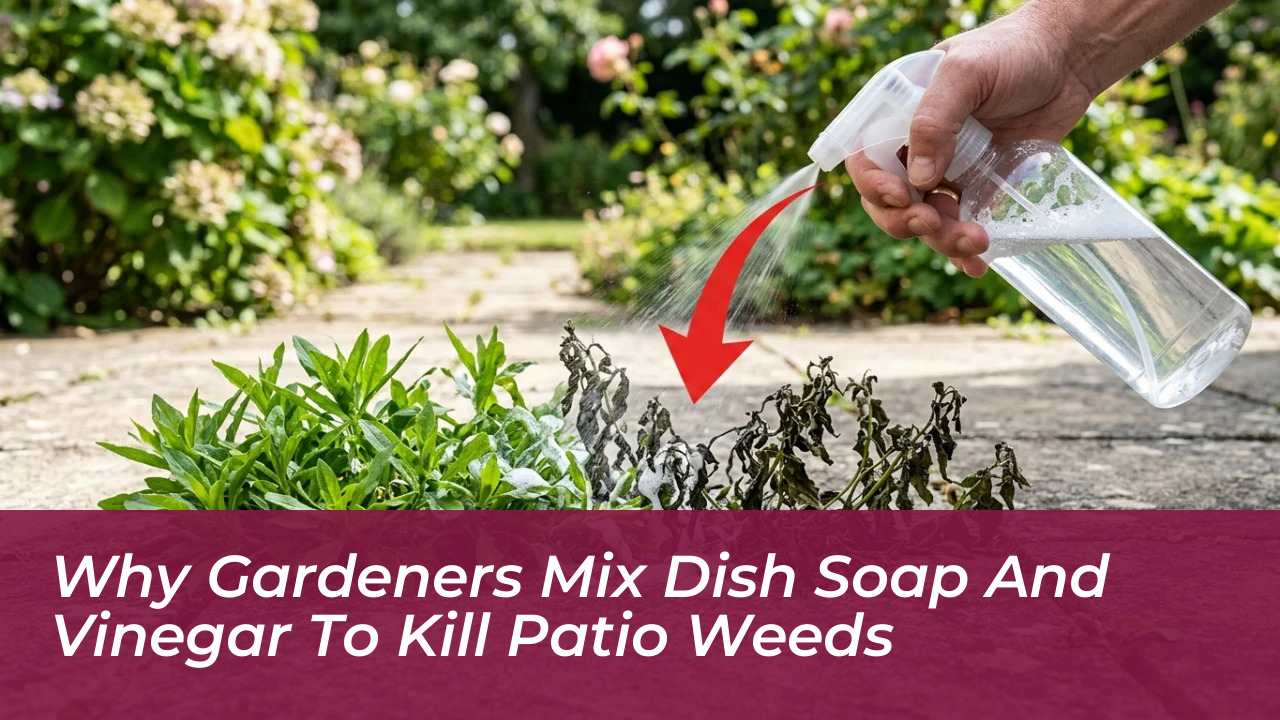
Preparing the mixture requires precise ratios to ensure maximum leaf adherence without needlessly oversaturating outdoor surfaces with suds. Measure 1 quart of clean tap water into a standard garden pump sprayer or handheld spray bottle. Add 1 cup of standard white vinegar to provide the acidic burn. Gently stir in 1 tablespoon of concentrated liquid dish soap, avoiding vigorous shaking to prevent excessive foaming. Target the spray nozzle directly onto unwanted growth during warm, sunny, and dry conditions to speed up tissue desiccation.
Application Rules: Protecting Lawns and Soil Ecology
While kitchen-based ingredients avoid the synthetic chemical loads of commercial herbicides, improper application can cause unintended landscape damage. Soap compounds can break down soil physical structure, reducing its natural capacity to absorb and retain moisture over time.
Similarly, homemade recipes circulating online frequently suggest adding table salt to the mixture. Adding sodium chloride carries severe environmental risks, permanently sterilizing the surrounding ground and killing beneficial soil organisms long after the weeds have vanished. Treat this household formulation as an occasional, targeted intervention strictly meant for hard surfaces rather than an everyday cure-all for standard garden borders.
Treatment Zone Application Safety and Guidelines
- Patios, Pavers & Driveways: Safe for direct, targeted spot spraying on dry, sunny days.
- Gravel Paths & Mineral Walkways: Recommended for persistent clumps; keep run-off away from edges.
- Turf Grass & Lawns: Unsafe; soap solutions will scorch desired turf and harm root zones.
- Vegetable Beds & Flower Borders: Strictly avoid; alters fragile soil structure and risks food crops.
Keeping the spray contained exclusively to paving cracks ensures your pathways remain clear without compromising nearby garden vitality. Always apply the solution mid-morning on a clear day when temperatures exceed 65°F to maximize the solar desiccation effect.