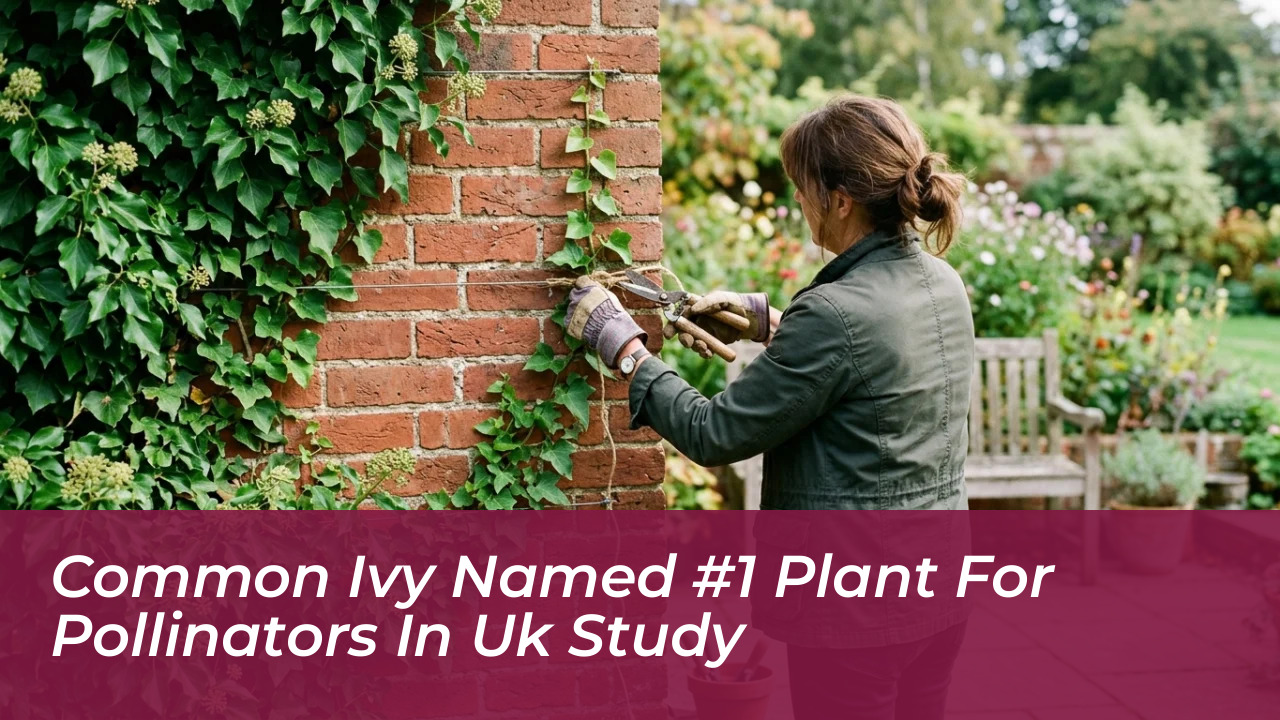

Common ivy has officially been crowned the number-one plant for visiting insects. It claimed the highest average number of pollinator visits in an eight-year monitoring study tracking 14 widely grown flowers. The research confirms that the late-summer and autumn floral display of this climbing vine provides a critical, nectar-rich lifeline during months when few other plants remain in bloom.
The UK Pollinator Monitoring Scheme (PoMS) conducted the project using standardized 10-minute citizen science observations recorded annually from April 1 to September 30 since 2017. PoMS is a collaborative initiative backed by the UK Centre for Ecology & Hydrology (UKCEH), the Joint Nature Conservation Committee (JNCC), and Butterfly Conservation. Although many homeowners treat the aggressive vine as ordinary groundcover or a persistent garden nuisance, the observational data shows it outranked every traditional favorite tested. This finding prompts a significant shift in backyard wildlife management recommendations.
The Scientific Hierarchy: Which Blooms Draw the Most Insects?
The eight-year data revealed clear patterns in floral preference across thousands of timed counts. During each 10-minute survey, common ivy averaged an impressive 22 visits by flying insects, narrowly edging out competing flora. Behind the climbing vine, the runners-up for total insect popularity were hogweed at an average of 20 visits, followed by bramble, buddleja, knapweeds, and thistle, which each averaged 14 visits.
Each of these floral resources plays a distinct seasonal role. Ivy’s unique blooming schedule fills an essential late-season gap for wildlife preparing for colder months.
“We already recommend ivy as a great plant to grow because it is an important resource for breeding Holly Blue butterflies and nectaring Commas and Red Admirals,” said Jo Milborrow, Butterfly Monitoring Officer at Butterfly Conservation. “So the fact that this easy-to-grow native species is also the number one plant for pollinating insect visits is a fantastic discovery-we would recommend people to start growing ivy today!”
Summary of Top Pollinator Plants
- Common Ivy (Hedera): Highest average total insect visits (22 per 10-minute count) with vital late-season nectar.
- Hogweed: Ranked second overall, averaging 20 visits per monitoring session.
- Bramble, Knapweeds & Thistle: Highly dependable mid-to-late summer food sources averaging 14 visits.
- Buddleja (Butterfly Bush): Draws four times as many butterflies and moths as other top-ranking plants, though requiring careful management.
The Butterfly Bush Paradox: Invasive Threats vs. Pollinator Value
While buddleja earned significant marks by drawing four times as many butterflies and moths as other top-scoring flowers, conservation scientists emphasize caution. Buddleja is an aggressive non-native species capable of disrupting surrounding ecosystems if allowed to spread freely into native habitats and rail corridors.
To safely manage buddleja without damaging local flora, conservation specialists recommend a strict management protocol:
- Deadhead the shrub immediately as soon as flowers begin to fade.
- Prune spent blooms cleanly before seed development occurs to prevent aggressive self-seeding.
- Supplement landscaping with native caterpillar host plants, including bird’s-foot trefoil, garlic mustard, and nasturtiums, ensuring butterflies can complete their full reproductive lifecycle.
Long-Term Insect Trends Highlight Garden Sanctuaries
Beyond individual flower preferences, the broader eight-year dataset highlights urgent ecosystem pressures across Great Britain. Hoverfly populations declined by approximately one-third in both overall abundance and species diversity across all three surveys evaluated. Total counts of all insects combined, alongside bumblebee tallies, also saw contractions in two out of the three study frameworks.
Yet, deliberate backyard planting offers real, measurable benefits. In counts concentrated predominantly in residential gardens, populations of honeybees, non-hoverfly flies, and beetles all demonstrated noticeable increases. This confirms that residential green spaces increasingly serve as essential ecological refuges.
“Sadly, these figures from the UK Pollinator Monitoring Scheme add yet more evidence of worrying declines among our insects… However, growing flowers for pollinators like ivy, and caterpillar foodplants such as nasturtiums, are simple and really effective actions we can take to make a tangible difference.” – Jo Milborrow, Butterfly Conservation
Volunteers interested in contributing to the UK Pollinator Monitoring Scheme can participate by conducting 10-minute Flower-Insect Timed (FIT) Counts on any patch of flowers between April 1 and September 30. Gardeners looking to support local biodiversity are encouraged to look past conventional definitions of weeds and embrace resilient, nectar-heavy native plants like common ivy.