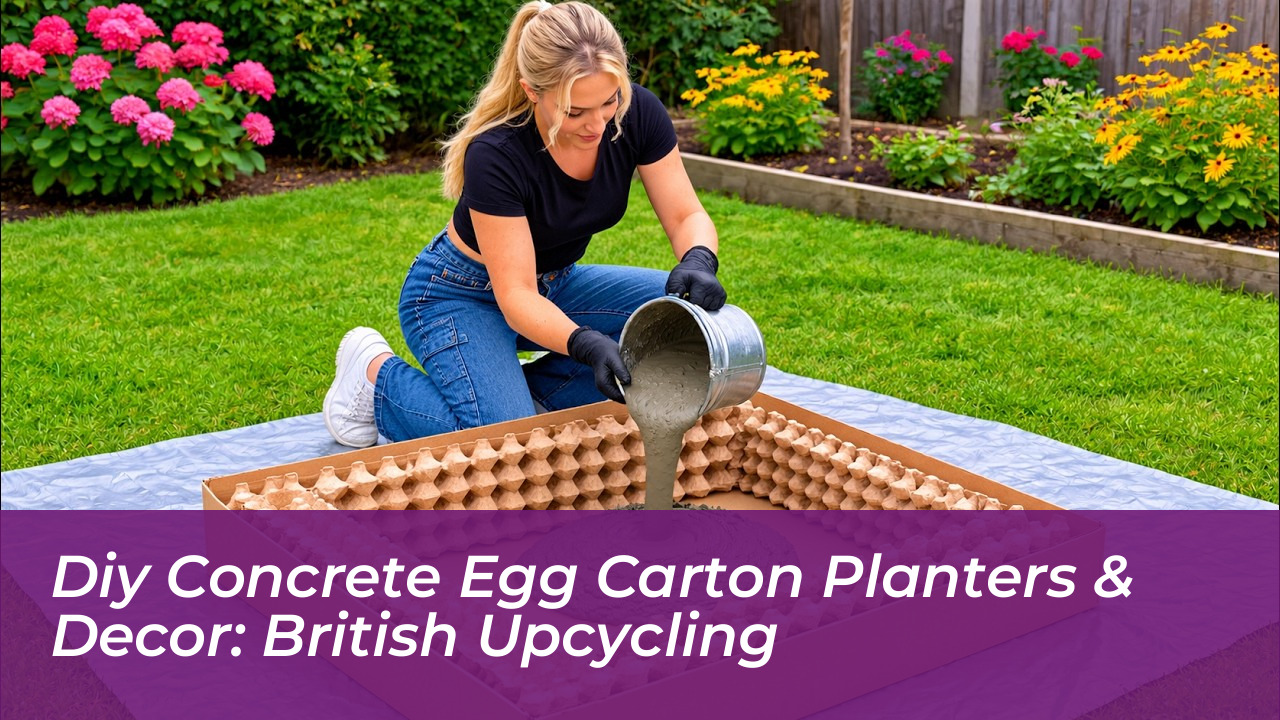

Discarded household packaging is getting a makeover in British backyards as DIY enthusiasts discover the architectural potential of ordinary egg cartons. Rather than tossing paper-pulp or plastic boxes into recycling bins, creative crafters pour wet cement mixtures into these geometric moulds. The result is bespoke, textured concrete tea light holders and miniature succulent planters made for pennies.
High-street home decor boutiques frequently charge steep prices for industrial-chic homeware. By contrast, repurposing a common kitchen staple delivers identical aesthetic appeal while transforming single-use rubbish into durable garden ornaments. The repeating hemispherical cups of a standard egg carton offer an ideal negative space, featuring natural recesses perfectly proportioned for standard tea light candles or drainage reservoirs for hardy alpine plants.
The Science of Upcycling: Paper Pulp vs. Plastic Moulds
Moulded paper-pulp packaging possesses two distinct advantages for concrete casting: rigidity and porosity. Unlike rigid plastic moulds that trap air bubbles against the sides, fibrous paper pulp allows moisture and tiny pockets of displaced air to escape gradually through its walls. This subtle absorption helps the slurry set uniformly while imparting a matte texture to the outer concrete shell. Once the cured cast is pried free, the outer surface reflects the organic weave of the cardboard fibres.
Conversely, plastic egg cartons deliver a different aesthetic. They produce ultra-smooth, high-gloss concrete surfaces that closely mimic polished stone or factory-cast architectural panels. Selecting your packaging depends entirely on whether you prefer an organic, rustic finish or a sleek, modern look.
Workshop Safety and Essential UK Preparation
Before mixing dry aggregates, personal safety requires attention. The UK Health and Safety Executive (HSE) advises that wet cement contains strong alkalis capable of causing severe skin burns and contact dermatitis upon direct exposure.
- Ventilation: Always work in a well-ventilated space, ideally outdoors or in an open garage.
- Protective Gear: Wear heavy-duty nitrile gloves, safety goggles, and an FFP2 dust mask to avoid inhaling fine airborne particulates during the dry blending phase.
- Surface Protection: Cover your workbench with a plastic drop cloth to catch stray mortar and prevent alkaline runoff from contaminating garden turf.
Step-by-Step Casting and De-Moulding Guide
Achieving crisp lines and structural integrity requires the correct consistency and mould preparation. A standard rapid-setting sand-and-cement mortar mix available from local British builders’ merchants works well for small decorative castings.
- Prepare the Barrier: Spray the inside of the cardboard carton thoroughly with household cooking oil or petroleum jelly to prevent the curing slurry from bonding irreversibly to the mould fibres.
- Mix the Slurry: Combine three parts fine sand with one part cement, adding cold water slowly until the mixture reaches the consistency of thick, pourable pancake batter.
- Cast the Cells: Pour the wet mixture smoothly into each egg hollow, filling the indentations halfway if you intend to insert tea lights, or completely to create solid sculptural blocks.
- Vibrate the Mould: Tap the sides and base of the carton vigorously against your work surface to force trapped air bubbles to the top before the initial set begins.
- Create Inner Cavities: Press an empty, oiled plastic tea light casing or plastic bottle cap into the centre of each filled cup to form the candle or plant cavity, securing it with a small pebble until set.
Curing, Sealing, and Styling Your Castings
Allow the casting to cure undisturbed for at least 48 to 72 hours in a frost-free environment. Rushing this curing phase risks brittle edges, surface cracking, and chalky textures. Once fully hardened, tearing away the pulp mould reveals a solid strip of connected decorative pedestals. If the cardboard clings to stubborn recesses, soaking the piece briefly in lukewarm water softens the remaining paper fibres for easy peeling with a soft brush.
Because raw concrete remains porous and sensitive to frost damage during damp British winters, applying a water-based stone sealant or breathable masonry waterproofing solution is crucial. This extra step protects the cured material from moisture absorption, freezing, and staining.
These modular cement blocks seamlessly integrate into rustic table settings, patio borders, or minimalist office desks. Accentuate the industrial finish by painting the lower rims with metallic gold acrylic, or bed small sedum cuttings into the hollows alongside coarse horticultural grit. Upcycling commonplace domestic waste into resilient garden architecture requires minimal expenditure, proving that style can stem from the simplest everyday items.
Frequently Asked Questions
Can I use plastic egg cartons instead of paper pulp?
Yes. Plastic egg cartons work well if you prefer a smooth, glossy, modern finish that mimics polished stone. However, they do not absorb excess moisture, so you must tap the mould thoroughly to eliminate air bubbles.
How do I prevent my concrete tea light holders from cracking?
Ensure your mortar mix is not too watery, and let the castings cure slowly for 48 to 72 hours under a plastic sheet or in a damp, frost-free environment out of direct sunlight.
What type of cement mix is best for small craft projects?
A standard general-purpose sand-and-cement mortar mix or a fine-aggregate concrete mix from a local builders’ merchant provides the ideal balance of workability and strength for small moulds.
Do I need to seal the finished concrete pieces?
Yes. Applying a breathable water-based stone sealant protects the porous concrete from moisture absorption, preventing winter frost damage and unsightly efflorescence stains.
What plants work best in egg carton concrete planters?
Hardy alpines, small sedums, and miniature succulents thrive in these compact spaces because they require minimal soil depth and tolerate drought conditions exceptionally well.