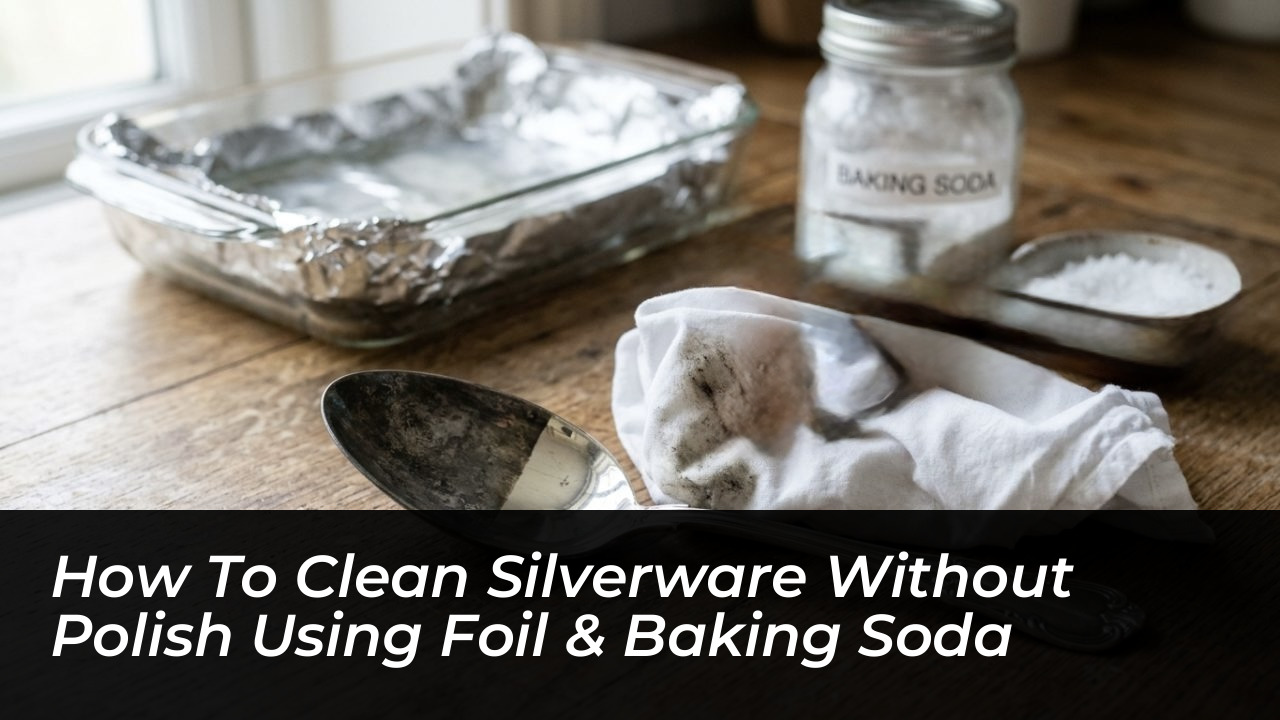

Your blackened silverware can regain its brilliant mirror finish without expensive specialized creams or endless rubbing. A simple kitchen remedy relies entirely on a sheet of aluminum foil, household baking soda, table salt, and boiling water to strip dark tarnish within minutes. Instead of grinding away precious metal, this method reverses oxidation through basic electrochemistry. It offers a safe, non-toxic alternative to commercial polishes that many households have relied on for generations.
Over time, silver naturally loses its luster as it reacts with sulfur compounds present in ambient air, forming a dark surface film known as silver sulfide. While many modern commercial pastes tackle this problem by scrubbing away the discolored outer layer, the traditional soak approach takes a completely different path that preserves the longevity of your cutlery.
The Science Behind the Reaction: Why Aluminum and Salt Lift Oxidation
The dark discoloration on tarnished cutlery is a chemical compound rather than simple surface dirt. Trying to wash it off with ordinary soap and water achieves very little because the chemical bond between the silver and sulfur remains intact.
Unlike abrasive polishes that physically wear down metal, this technique uses an electrochemical exchange to strip sulfur without scrubbing the base silver away. When you submerge silver alongside aluminum in a warm electrolyte solution, aluminum acts as a sacrificial metal. It carries a stronger chemical affinity for sulfur than silver does, readily donating electrons to transform silver sulfide back into pure metallic silver while transferring the sulfur directly onto the foil sheet.
Adding ordinary table salt and baking soda turns hot water into a conductive electrolyte bath. This allows electric charges to move freely between the metals. Heat speeds up the process significantly, cutting down what used to be hours of intense hand-polishing to a short resting period.
Official Validation from Agricultural Extension Services
The University of Arkansas System Division of Agriculture Cooperative Extension includes this specific approach in its official homemade cleaner recommendations. This validates it as an effective household alternative to commercial chemicals. By leveraging basic principles of science, homeowners can achieve professional-level results directly in their kitchens.
Required Supplies
- 1 quart of water (brought to a boil)
- 1 teaspoon of baking soda
- 1 teaspoon of salt
- A clean sheet of aluminum foil
- A heat-safe container or glass baking dish
Step-by-Step Cleaning Process at Home
Setting up your classic restoration bath requires minimal effort, but following the correct sequence ensures optimal contact and chemical exchange.
- Line the basin: Cover the bottom and sides of your heat-resistant bowl entirely with aluminum foil, shiny side facing up.
- Position your cutlery: Lay the flatware inside, making sure each item makes direct physical contact with the foil lining.
- Add dry minerals: Sprinkle the measured salt and baking soda evenly across the metal pieces.
- Pour boiling water: Carefully pour in boiling water until every piece of silverware is fully submerged.
- Let the solution work: Allow the items to rest in the bubbling liquid, inspecting them occasionally as the dark tarnish begins to fade.
- Rinse and buff: Carefully lift each piece out using tongs to prevent burns, rinse thoroughly under clean tap water, and wipe completely dry with a soft lint-free cloth.
Because every batch of flatware has a different level of oxidation, avoid relying on a rigid timer. Monitor the pieces visually until the bright finish returns.
Myth vs. Reality: When to Use This Trick and When to Avoid It
A widespread misconception is that any metal item with a silvery appearance can safely take this chemical bath. In reality, applying this approach blindly can ruin delicate heirloom collectibles or plated dinnerware.
| Item Category | Method Compatibility |
|---|---|
| Solid Sterling Silver Cutlery | Safe and highly effective for removing heavy silver sulfide |
| Thin Silver-Plated Tableware | Risky; repeated chemical baths can wear through thin plating |
| Pieces with Glued Handles or Gems | Not recommended; boiling water softens adhesives and loosens settings |
| Antiques with Intentional Patina | Avoid; the bath strips dark aesthetic shadowing in carved crevices |
It is equally important to remember that this chemical treatment only tackles tarnish, not general kitchen grime. Always wash your flatware with gentle dish soap and water after treating it before setting the dinner table. Check your silver hallmarks carefully before submerging flatware into a boiling electrolyte bath to confirm it is solid metal rather than delicate plating. Keep tongs and heat-resistant gloves nearby to safely manage hot water and protect your skin during the transfer process.
Frequently Asked Questions
How does aluminum foil remove silver tarnish?
The foil acts as a sacrificial metal in an electrochemical reaction. It attracts the sulfur atoms from the silver sulfide, transferring the tarnish onto the aluminum while converting the silver back to its pure, shiny state.
Do I need to use both baking soda and salt?
Yes. Both ingredients act as electrolytes when dissolved in hot water. This allows electrical charges to move freely between the silver and the aluminum foil to facilitate the sulfur transfer.
Is this method safe for antique silverware?
It is not recommended for antiques with intentional dark patina in the crevices. It is also unsafe for items with glued handles, hollow handles, or fragile gemstones, as the boiling water and chemical reaction can cause damage.
Can I clean stainless steel flatware using aluminum foil?
No. The foil and baking soda method relies on a chemical reaction specific to silver sulfide. Stainless steel does not tarnish in this manner, though it can develop rust spots that require alternative cleaning techniques.
How often should I clean my silver using this method?
You should only use this electrochemical bath when noticeable tarnish builds up, typically once or twice a year. Over-cleaning silver-plated items with chemical methods can eventually wear away the thin layer of precious metal.