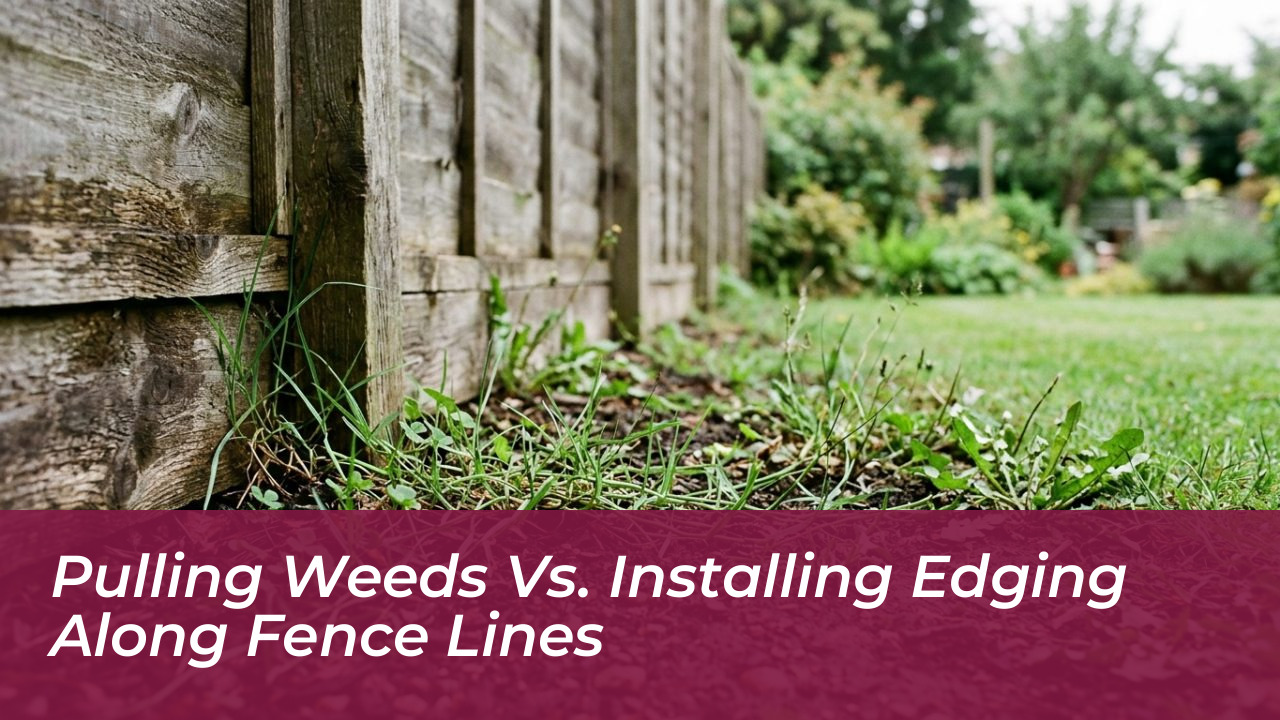

Maintaining a crisp property perimeter often turns into a frustrating weekly chore. Neighboring turfgrass and stubborn weeds repeatedly breach the fence line. Homeowners frequently debate whether simple surface maintenance like pulling weeds or establishing a permanent structural solution delivers better long-term results. Understanding how intrusive turf propagates beneath the soil reveals why temporary surface weeding continually falls short, while below-grade barriers provide permanent relief.
Why Turfgrass Creeps Under Boundary Lines
If unfamiliar turf consistently crops up along your property line, root biology is typically the primary culprit. Numerous turf varieties propagate via shallow root networks and underground runners. These runners easily slip beneath fences where soil remains loose or undisturbed. In addition, wind readily carries loose seeds into exposed soil pockets right along the perimeter, establishing new patches before homeowners notice the intrusion.
A common mistake in lawn maintenance is treating fence-line turf invasion as a surface problem. Pulling visible green blades leaves the subterranean reproductive system unharmed, so vegetative runners quickly regenerate. Subterranean root systems require a continuous underground divider to halt their persistent spread permanently.
Underground Edging vs. Surface Clearing
Tackling intrusive turf requires matching the method to the severity of the root invasion. Comparing structural installation against surface maintenance shows a stark contrast in required labor and long-term effectiveness.
- Buried Edging (Metal, Plastic, or Concrete): Blocks root paths 4 to 6 inches deep and offers permanent, maintenance-free protection.
- Mulch or Gravel Buffer: Deprives roots of moisture and light when installed at a proper 3- to 4-inch depth.
- Mow Strip (Pavers or Concrete): Provides a rigid physical boundary and simplifies routine mower edging.
- Surface Pulling or Boiling Water: Acts as a short-term fix, managing spot growth while failing entirely against underground runners.
How to Install a Subsurface Root Divider
For a durable subterranean stop, installing a physical barrier fabricated from rigid metal, durable plastic, or cast concrete provides an impenetrable wall against creeping rhizomes. A proper installation prevents roots from slipping underneath or breaching seams.
- Excavate a narrow trench directly along the target boundary line.
- Insert the barrier edging so it sits at least 4 to 6 inches deep into the soil.
- Backfill and tightly tamp down the soil to completely eliminate subterranean gaps.
This below-grade seal creates an invisible boundary. It preserves a clean property perimeter without interfering with routine lawn care or damaging fence posts.
Secondary Barrier Strategies for Fence Borders
Homeowners seeking alternative or supplementary approaches can implement dry buffers, hardscapes, or dense plant competition along fence boundaries to minimize ongoing manual labor.
No-Growth Buffers and Landscape Fabric
Creating a dedicated buffer strip offers an affordable, low-effort deterrent. Digging a shallow trench along the perimeter and filling it with a 3- to 4-inch layer of dry gravel or wood mulch deprives invading turf of essential moisture and sunlight. For added durability, placing permeable landscape fabric beneath the aggregate layer blocks sunlight while allowing proper drainage. This prevents stray seeds from anchoring into the dirt.
Mow Strips and Living Ground Covers
Installing a solid mow strip made of pavers, brick, or poured concrete underneath the fence provides a permanent hardscape divider. It also simplifies weekly passes with the lawn mower. Alternatively, establishing a dense living border of low-growing ground covers or ornamental grasses naturally crowds out unwanted turf. It occupies root space and starves encroaching shoots of direct light.
For isolated stray shoots that emerge around post gaps, quick spot treatments-such as manual extraction, pouring boiling water, or applying careful vinegar solutions-keep minor incursions from re-establishing. Establishing a physical boundary once saves endless hours of weeding every season, ensuring your property line stays immaculate year-round.