
Global armed conflicts devastate cultural heritage and historic books at an unprecedented scale, erasing the physical foundations of human history. Modern military campaigns cause catastrophic damage to centuries of history, historical monuments, and literary infrastructure. Active war zones across multiple continents leave irreplaceable archives, ancient manuscripts, and archaeological sites vulnerable to permanent loss. When missiles strike urban centers and artillery levels ancient districts, civilization loses more than bricks and mortar. It loses the physical anchors of collective memory.
- The Scale of Destruction Facing Global Cultural Heritage
- Threats to Architectural Landmarks
- Legal Protections Under Fire
- War in Europe: The Toll on Ukrainian Architecture and Literature
- European Architectural Casualties
- Eradication of Publishing Infrastructure
- Middle Eastern Crises: Eradication of Ancient Monuments
- Gaza Heritage Landmarks
- Impact on Iranian Masterpieces
- African Heritage at Risk: The Case of Sudan
- Neglect at the Meroe Pyramids
- Accelerated Environmental Degradation
- The Irreparable Loss of Rare Books and Historical Memory
- Erasure of Collective Memory
- Limits of Digital Preservation
- Pathways to Post-Conflict Reconstruction and Accountability
- International Collaboration and Funding
- Strengthening Deterrence Against Destruction
- Frequently Asked Questions
- Why is the destruction of books during wartime considered a unique tragedy?
- How do international laws protect cultural heritage in war zones?
- Can digital archiving completely replace physical libraries lost in conflict?
- What role do local volunteers play when international experts evacuate?
The Scale of Destruction Facing Global Cultural Heritage
Modern military campaigns cause catastrophic damage to centuries of history, historical monuments, and literary infrastructure across multiple continents. Active war zones leave irreplaceable archives, ancient manuscripts, and archaeological sites vulnerable to permanent loss. The sheer velocity of contemporary warfare leaves little room for heritage protection, turning priceless antiquities into collateral casualties.
State and non-state actors frequently treat cultural properties as acceptable losses during high-intensity engagements. Without robust defense mechanisms on the ground, ancient masonry and paper archives disintegrate under modern ordnance. This widespread devastation threatens the physical proof of shared human evolution.
Threats to Architectural Landmarks
Systematic targeting and collateral damage in dense urban conflict zones destroy unmovable architectural landmarks and fragile paper archives alike. This destructive cycle accelerates the erosion of collective identity through the systematic erasure of historical memory. Military planners often ignore civilian structures in the rush to secure tactical advantages.
Legal Protections Under Fire
International frameworks struggle to prevent ongoing cultural devastation during asymmetric warfare. The 1954 Hague Convention faces severe limitations when aggressive forces bypass diplomatic safeguards. Lawmakers must establish reliable enforcement mechanisms to hold state and non-state actors accountable for deliberate heritage destruction.
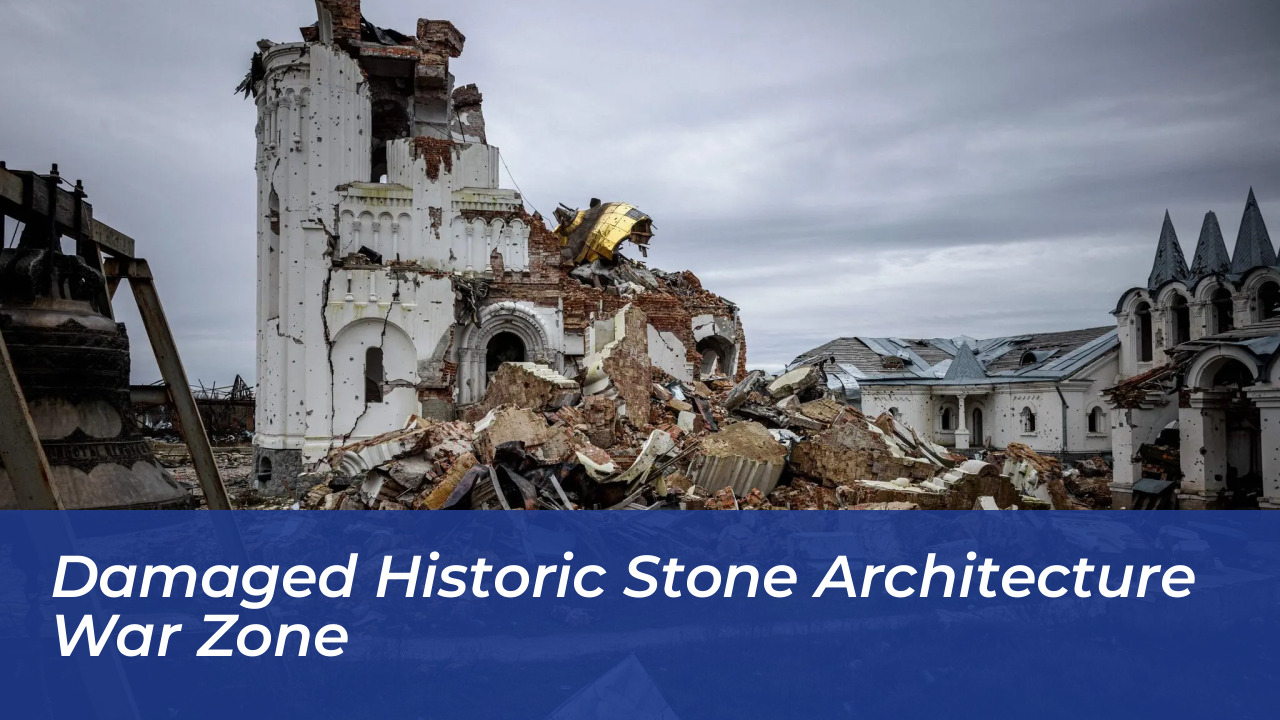
War in Europe: The Toll on Ukrainian Architecture and Literature
The conflict in Ukraine presents a devastating case study in the rapid destruction of European cultural heritage and publishing infrastructure through heavy bombardment. Historic urban centers that stood for centuries now bear the jagged scars of artillery barrages and missile strikes.
Beyond architectural ruins, the physical supply chain of European literature faces unprecedented threats. Publishing houses, distribution centers, and public libraries absorb direct hits, wiping out millions of volumes intended for readers and scholars.
European Architectural Casualties
Aerial bombardments damage over 140 officially recognized cultural sites, including the structural impact of missile strikes on the UNESCO-listed Alexandru Sturdza House in Odesa. Local preservationists undertake emergency shelter and physical shielding efforts despite constant shelling.
Eradication of Publishing Infrastructure
Military strikes target large-scale commercial printing facilities and warehouses across major urban hubs. The loss of over 13 million books during a single month of intensive shelling severely disrupts national distribution networks and threatens contemporary European literature.
Middle Eastern Crises: Eradication of Ancient Monuments
Recent military escalations across the Middle East have targeted some of the oldest civilizations, resulting in irreversible losses to religious, civic, and royal architecture. The cradle of human civilization bears constant witness to the shattering of irreplaceable antiquities.
Municipal records, ancient places of worship, and royal palaces crumble into dust under relentless air campaigns. Local experts struggle to document these losses while evading active danger zones, making accurate damage assessments nearly impossible.
Gaza Heritage Landmarks
Severe structural damage inflicts heavy losses upon the ancient Great Omari Mosque and centuries-old municipal archives. Local archaeologists face extreme challenges while trying to document destruction amid active hostilities.
Impact on Iranian Masterpieces
Aerial strikes and concussive blasts affect more than 100 historic locations, placing structural stress on the Golestan Palace complex and Naqsh-e Jahan Square. These attacks risk compounding environmental degradation on fragile tilework and masonry.

African Heritage at Risk: The Case of Sudan
Civil unrest and regional instability in East Africa create environments where preservation efforts halt entirely, exposing ancient wonders to the elements. Sudan holds architectural marvels that rival the better known monuments of Egypt, yet these treasures remain acutely vulnerable.
International experts evacuate conflict zones immediately, leaving archaeological sites completely unmonitored. Without stabilization projects, ancient brickwork faces rapid deterioration from harsh desert winds and seasonal weather extremes.
Neglect at the Meroe Pyramids
Ongoing civil conflict halts critical stabilization and excavation projects at vital archaeological sites. The withdrawal of international archaeological teams creates a total absence of baseline maintenance, leaving ancient structures vulnerable to human and environmental pressures.
Accelerated Environmental Degradation
Unchecked sand erosion wears away ancient sandstone carvings and reliefs across vulnerable desert sites. Flash floods and shifting desert climates damage unprotected archaeological strata, emphasizing the urgent need for remote monitoring systems.
The Irreparable Loss of Rare Books and Historical Memory
Beyond stone monuments, the destruction of libraries and archives severs the connection between past generations and contemporary society. Rare manuscripts contain unique linguistic and historical data that cannot be recovered once burned or shredded.
Digital backups offer some security, but they fail to capture the physical essence of historical volumes. The loss of regional libraries disproportionately affects minority groups whose oral and written histories vanish from public consciousness.
Erasure of Collective Memory
Warfare causes the permanent disappearance of unique manuscripts, legal codes, and personal diaries. Wiping out regional libraries erases minority histories and indigenous knowledge, creating a profound psychological impact on displaced populations losing their physical connection to the homeland.
Limits of Digital Preservation
Scanning initiatives race against the clock in pre-conflict and stable zones to save valuable texts. Technical and financial hurdles hinder efforts to back up millions of fragile paper volumes, proving that digital files cannot replace original physical books.
Pathways to Post-Conflict Reconstruction and Accountability
Rebuilding destroyed archives and restoring damaged monuments requires decades of international cooperation, specialized funding, and advanced restoration methodologies. Global alliances must step forward as soon as ceasefires take hold.
Holding aggressors legally accountable for cultural destruction sends a powerful deterrent message. When international tribunals classify the obliteration of heritage as a war crime, military planners think twice before targeting libraries and museums.
International Collaboration and Funding
UNESCO emergency response teams deploy immediately following ceasefires to secure damaged sites. Global philanthropic networks mobilize resources to fund artisan restoration workshops and train local experts in advanced artifact-recovery techniques.
Strengthening Deterrence Against Destruction
Military forces must integrate cultural property protection training directly into standard operational doctrines. Expanding satellite-based tracking systems helps monitor threats in real time while prosecuting offenders in international tribunals.
Frequently Asked Questions
Why is the destruction of books during wartime considered a unique tragedy?
Books carry irreplaceable historical, linguistic, and cultural data that cannot be recreated once destroyed. Their loss erases the foundational stories of entire communities.
How do international laws protect cultural heritage in war zones?
Conventions like the 1954 Hague Convention prohibit the targeting of cultural property, classifying intentional destruction as a war crime when enforced by global tribunals.
Can digital archiving completely replace physical libraries lost in conflict?
Digital copies preserve textual content, but they lack the forensic, tactile, and historical value inherent in original paper manuscripts and rare books.
What role do local volunteers play when international experts evacuate?
Local preservationists risk their lives to shield monuments, rescue damaged manuscripts, and document destruction for future post-conflict reconstruction efforts.