
There is probably no greater disappointment in the garden than seeing beautiful fruit you poured your whole heart into lying en masse under the tree with a telltale dark hole in the skin. When you slice such an apple in half, the truth comes out: a codling moth larva has been feeding inside. For many backyard gardeners, this is a cue to throw up their hands in defeat or reach for harsh chemical sprays.
Yet the most effective time to combat this destructive pest is right now, in the fall. Instead of waiting for a spring invasion and blanketing blooming trees with treatments, you can use the insect’s own biology against it. The method is brilliant in its simplicity, costs literally zero dollars, and relies mainly on plain brown cardboard from a used shipping box.
Where Do Pests Flee When the Season Ends?
To understand why this method works so well, you have to look at the garden through the eyes of a little caterpillar. Once the codling moth larva leaves the chewed apple, it has only one goal: to find a safe, dry, and warm shelter where it can spin a cocoon and survive the winter freezes. In the spring, it will emerge as a moth, fly up into the tree canopy, and lay hundreds of eggs on the next batch of developing fruit.
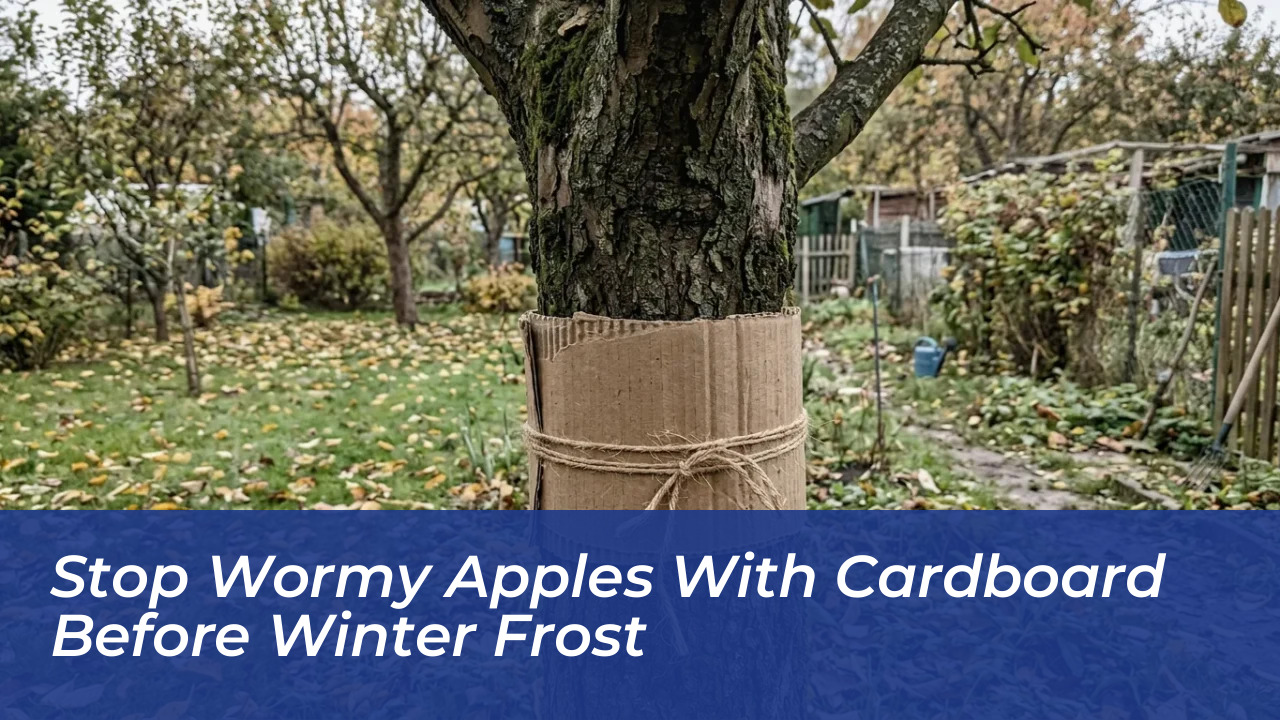
Usually, the caterpillars crawl down the trunk or climb up from fallen leaves, squeezing into the narrowest crevices in the bark. But if they encounter something far more comfortable than hard wood along the way, they will gladly take advantage of it. That is precisely how a corrugated cardboard band works, as it mimics an ideal winter shelter.
How to Make a Cardboard Trap: Step-by-Step Instructions
The process takes about fifteen minutes and requires no specialized tools. Follow these straightforward steps to set up an effective trap:
- Choose the right cardboard: Plain, thick corrugated cardboard works best. Make sure it is brown, without printing, plastic, or leftover packing tape.
- Cut the strip: Cut a strip about 6 to 8 inches wide. The length should match the circumference of the trunk, plus an overlap of about an inch.
- Ensure proper orientation: Place the cardboard around the trunk at a height of 12 to 20 inches above the ground. Make sure the fluting, which are the wavy channels inside the cardboard, runs vertically so caterpillars can easily crawl inside.
- Secure the band tightly: Tie the cardboard with jute twine or soft wire in at least two places, specifically at the top and bottom. The band should fit snugly against the bark contours without cutting into the trunk.
If the bark on an older tree is very rough, gently smooth it down by hand or with a stiff brush before wrapping it to ensure close contact.
The Crucial Step: Do Not Turn the Trap into a Year-Round Shelter
Many beginner gardeners make one cardinal mistake: they put the cardboard on and forget about it until summer. That is a recipe for disaster. A band left over the winter ceases to be a trap and instead becomes a safe shield protecting pests from freezing temperatures and hungry birds.
You must remove the cardboard bands in late fall, after the first hard frosts, which typically happens in late October or early November. Do this carefully, preferably over a spread-out tarp or bucket, so no dormant cocoons drop into the grass. Then dispose of the entire band immediately by burning it in a designated spot or sealing it tightly in a heavy trash bag.
Along with the cardboard, you will eliminate hundreds of next year’s pests. Clean, healthy apples without tunnels and dark droppings are not a matter of expensive sprayers, but of smart timing and consistency. Spending fifteen minutes in the fall wrapping trunks with cardboard disrupts the codling moth’s life cycle in the least invasive way possible, ensuring a bountiful and unblemished harvest next year.