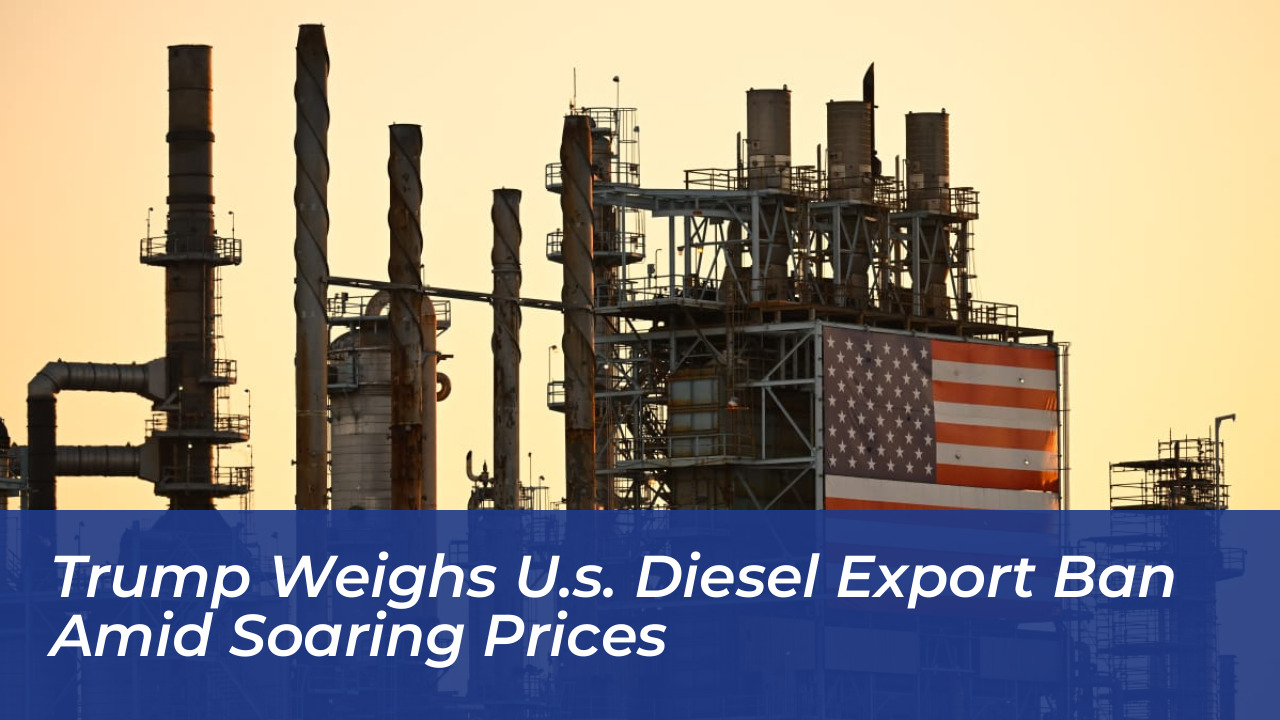
U.S. President Donald Trump is seriously considering a ban or restrictions on domestic diesel exports to curb record-high retail fuel prices ahead of the November midterm elections. This potential policy intervention comes despite warnings from energy analysts and industry leaders that restricting exports could backfire and destabilize global energy markets.
Speaking to reporters on Sunday, September 27, 2026, during a golf tournament in Illinois, Trump outlined the administration’s active deliberations regarding domestic refining networks and fuel costs. “We’re thinking about it very seriously,” said Donald Trump, President of the United States. “That can oftentimes lead to a little bit of an increase on gasoline for cars, so we’re looking at it very seriously. We may do it.”
Global Supply Disruptions and Record Fuel Prices
Average U.S. diesel prices have surged to unprecedented levels, hovering around $6.50 a gallon according to AAA data. This is up sharply from the previous year and sits just below a record high of $6.53. The dramatic climb in fuel costs is largely driven by ongoing geopolitical hostilities involving the U.S. and Iran, alongside the conflict between Russia and Ukraine, which have severely disrupted vital international oil and fuel trade routes.
The supply crunch has placed severe financial strain on farmers, truckers, and agricultural workers who rely heavily on diesel fuel. In response, Republican lawmakers and candidates facing tough races in the upcoming November midterms have advocated for federal intervention. Figures such as Iowa Representative Ashley Hinson and Alaska Senator Dan Sullivan have urged the administration to halt diesel shipments abroad to keep supplies anchored domestically.
Administration Evaluation and Industry Pushback
Treasury Secretary Scott Bessent confirmed that the administration is actively examining the feasibility of the proposal. “We’re examining whether it’s feasible in terms of the overall refining capacity and whether a full or partial ban would work,” Bessent stated during a bilateral meeting at the United Nations.
However, major oil industry trade groups have pushed back strongly against the concept. The American Petroleum Institute (API) and the American Fuel and Petrochemical Manufacturers argue that an export ban would backfire. Mike Sommers, CEO and president of the API, warned that restricting U.S. energy exports would compound existing refining challenges and ultimately hurt consumers.
Potential Downstream Market Impacts
Commodity strategists at Morgan Stanley noted that while an export ban might initially lower domestic diesel prices, it carries significant risks of adverse downstream reactions. By cutting off marginal supply to international markets-particularly Europe, which relies heavily on U.S. diesel to offset diminished flows from Russia and the Middle East-global prices could spike.
Analysts caution that a steep rise in global diesel prices could trigger an unintended feedback loop, forcing domestic refiners to adjust operations in ways that ultimately drive up the cost of regular gasoline for American drivers. As the White House weighs its final decision, the administration faces a tight political window to balance consumer relief against complex global economic realities.