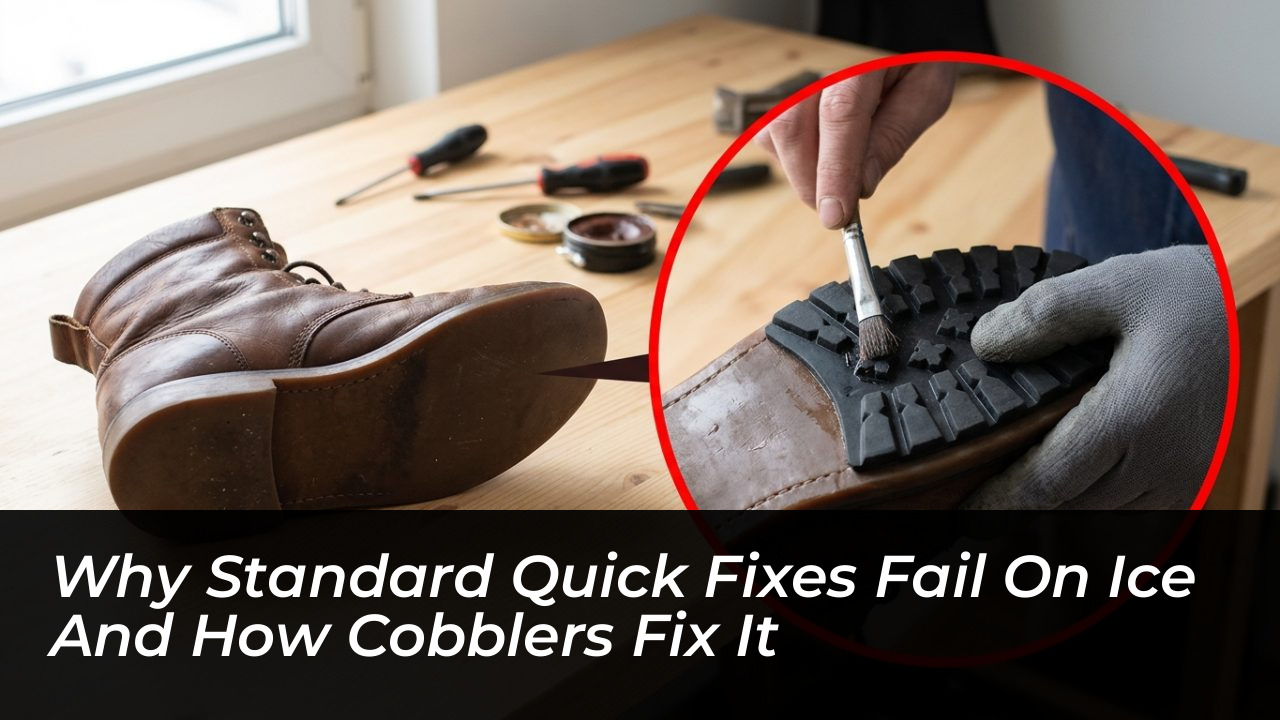

Walking over icy or snow-packed sidewalks presents an immediate slip hazard that often results in painful sprains, strains, or fractures. When standard factory tread fails to grip packed snow and black ice, adjusting the outer contact surface becomes essential for safety. While temporary household remedies like adhesive tape offer quick emergency help, professional sole overlays deliver reliable stability across frozen walkways where standard quick fixes fail.
Understanding why standard quick fixes fail on icy pavement requires examining the physics of friction and the harsh chemical environments of winter streets. Slush, road salt, and repeated freeze-thaw cycles aggressively break down weak adhesives and temporary surface treatments, leaving pedestrians vulnerable to sudden slips.
The Cobbler Method: Why Professional Rubber Half-Soles Lead the Pack
When factory soles lack grip, taking boots to a shoe repair professional offers a robust, long-lasting solution. Cobblers bond industrial-grade rubber protective pads or grooved half-soles directly onto the bottom of footwear. This creates high-friction contact points that handle heavy slush, salt, and frost.
Unlike makeshift additions, these vulcanized rubber upgrades integrate smoothly into the base of the shoe without ruining walking posture or delicate leather outsoles. They remain firmly attached through severe freeze-thaw cycles, extending the lifespan of favorite winter boots. Professional cobblers reinforce slick footwear using specialized rubber soles designed to maintain stability and friction on smooth, hard surfaces.
Why Standard Quick Fixes Fail on Icy Pavement
Many pedestrians turn to quick, inexpensive household hacks when faced with sudden winter storms. However, these methods have severe functional limits when exposed to freezing temperatures and moisture:
- The Fabric Bandage Trick: Standard fabric adhesive bandages offer a rapid, short-term traction boost on dry, crisp days by generating immediate friction. However, moisture from melting snow rapidly loosens the adhesive, causing bandages to peel off after brief exposure to wet streets.
- Hair Spray and Traction Sprays: While sticky sprays help shoes grip indoor floors temporarily, water washes away the chemical film instantly, rendering the treatment useless on wet outdoor ice.
- Temporary Sandpaper Scuffing: Roughening smooth rubber or leather soles with 50- to 120-grit sandpaper creates initial micro-abrasions. However, the daily wear of abrasive concrete and packed ice quickly smooths the sole back down, eliminating the traction.
At-Home DIY Fixes for Slick Soles
If an immediate visit to a repair shop is out of reach, several household techniques can add temporary grip to slick treads depending on weather conditions:
The Bathroom Silicone Sealant Technique
Clear silicone sealant-the type commonly used for sealing kitchen and bathroom fixtures-serves as an effective friction layer. Applying small silicone dots or patterned raised ridges across clean outsoles creates a textured tread pattern. Once completely cured, these raised silicone bumps mimic the grip found on non-slip socks. Because silicone resists moisture and stays flexible in freezing temperatures, this method withstands changing winter weather much better than adhesive tapes.
Comparing Winter Grip Solutions
Choosing the right method depends on how often you walk outside, current sidewalk conditions, and your footwear material. The table below breaks down how various approaches stack up against winter hazards:
| Method | Durability & Weather Resistance | Best Use Case |
|---|---|---|
| Cobbler Rubber Half-Soles | High; permanent protection through heavy slush, salt, and ice. | Daily commuters and high-end winter boots |
| Commercial Traction Pads | High; engineered traction pads built for direct street use. | Quick retail application without craft visits |
| Silicone Sealant Dots | Moderate; flexible grip that withstands wet freeze-thaw cycles. | Emergency DIY home application |
| Fabric Adhesive Bandages | Low; quick temporary fix that fails as soon as moisture hits. | Short dry walks in absolute pinches |
Commercial Traction Pads and Over-the-Shoe Grips
For those seeking durable traction without visiting a craftsman, retail anti-slip sole stickers and slip-on rubber traction cleats provide dependable stability. These manufactured rubber pads feature aggressive texturing designed to adhere directly to dry outsoles. Meanwhile, strap-on metal cleats dig directly into sheet ice. Pairing the right traction upgrade with your footwear ensures firm footing throughout the coldest months.
Check your boot treads regularly before heading out onto freezing sidewalks. Finding the right balance between DIY fixes and professional repairs keeps footwear in top condition and prevents dangerous winter falls.