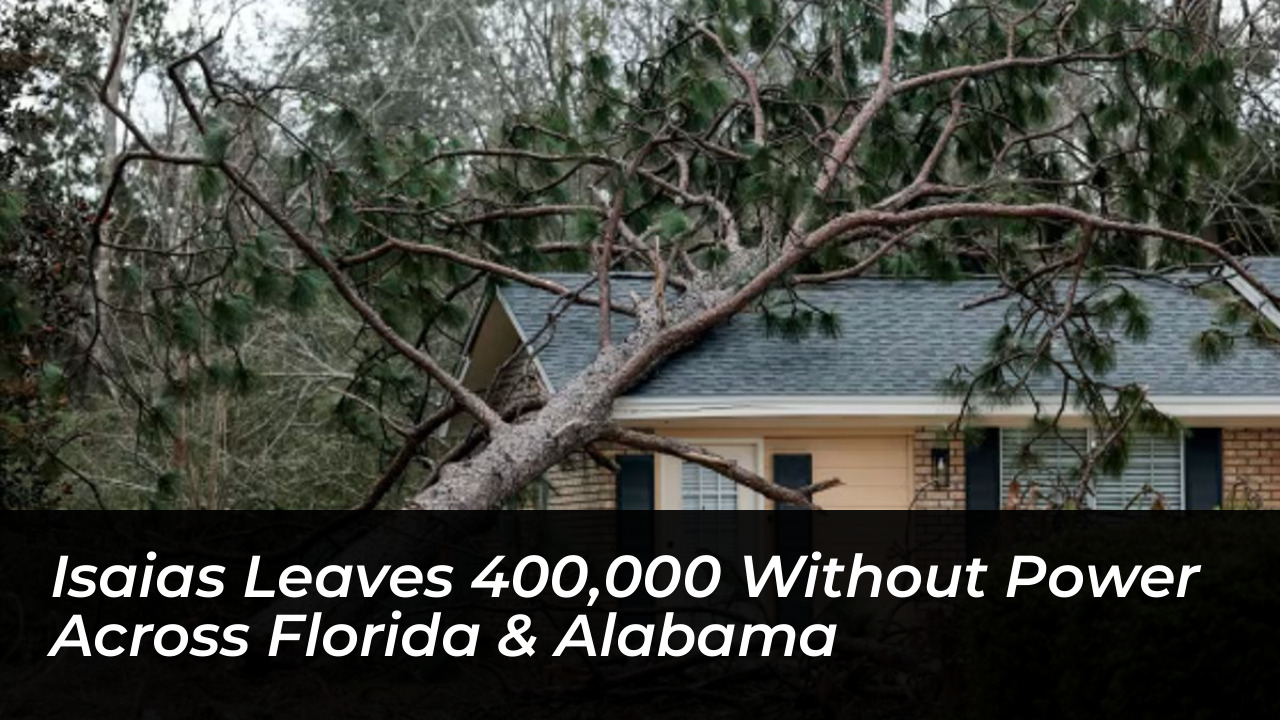

Nearly 400,000 customers across the Florida Panhandle and southern Alabama remained without power as the remnants of Hurricane Isaias moved north toward the central Appalachians and mid-Atlantic region. The storm brought heavy rain, severe flooding risks, and damaging winds after initially making landfall near Destin, Florida, as a Category 2 hurricane.
According to reports from The Associated Press and local officials, the storm has been linked to at least four deaths across Florida and Alabama. Fatalities included individuals killed by falling trees crashing into homes, as well as storm-related motor vehicle incidents and carbon monoxide poisoning from a generator.
Landfall and Immediate Impacts
Isaias struck the U.S. Gulf Coast as the first hurricane of the Atlantic season, bringing maximum sustained winds of 105 mph (169 km/h) near Destin. The low-lying coastal vacation area experienced flooded roads, battered waterfront properties, and structural damage, including a roof ripped off a hotel in Pensacola and damage to the city’s airport facilities.
Florida Governor Ron DeSantis urged residents during a press conference to remain cautious, warning that the flooding threat was far from over. Saturated ground and continued rainfall created severe conditions even after the center of the storm passed inland.
Power Outages and Regional Spread
By Saturday morning, the storm had weakened significantly into a post-tropical cyclone with maximum sustained winds dropping to about 35 mph (55 kph) as it tracked through Alabama. However, tracking data from PowerOutage.us showed that roughly 400,000 customers in Florida and Alabama remained in the dark, alongside additional outages spreading into Georgia.
Summary of Regional Weather Impacts
- Florida: Flooded streets in Destin and Pensacola; structural damage to hotels and condominiums; two storm-related fatalities in Escambia County.
- Alabama: Widespread downed trees and power lines in Mobile; road closures in Houston County; two fatalities including a Birmingham home strike and a Barbour County crash.
- Georgia and Carolinas: Emergency declarations approved by President Donald Trump to facilitate federal disaster relief; heavy rains capable of triggering flash floods.
Emergency Responses and Official Warnings
The National Weather Service maintained warnings for life-threatening surf and rip current conditions along the Gulf and southeastern Atlantic coasts. Forecasters also predicted 4 to 8 inches of rainfall across southern Alabama, the Florida Panhandle, and parts of Georgia, posing ongoing flash flood risks as the storm system moved toward the Appalachians.
In response to supply chain disruptions caused by the storm, the U.S. Department of Energy authorized emergency exchanges of crude oil from the nation’s Strategic Petroleum Reserve to maintain refinery operations and stabilize fuel supplies across the region.
State officials continue to urge citizens to avoid downed power lines, exercise extreme caution around standing water, and follow safety guidelines when operating emergency generators indoors or in enclosed garages.