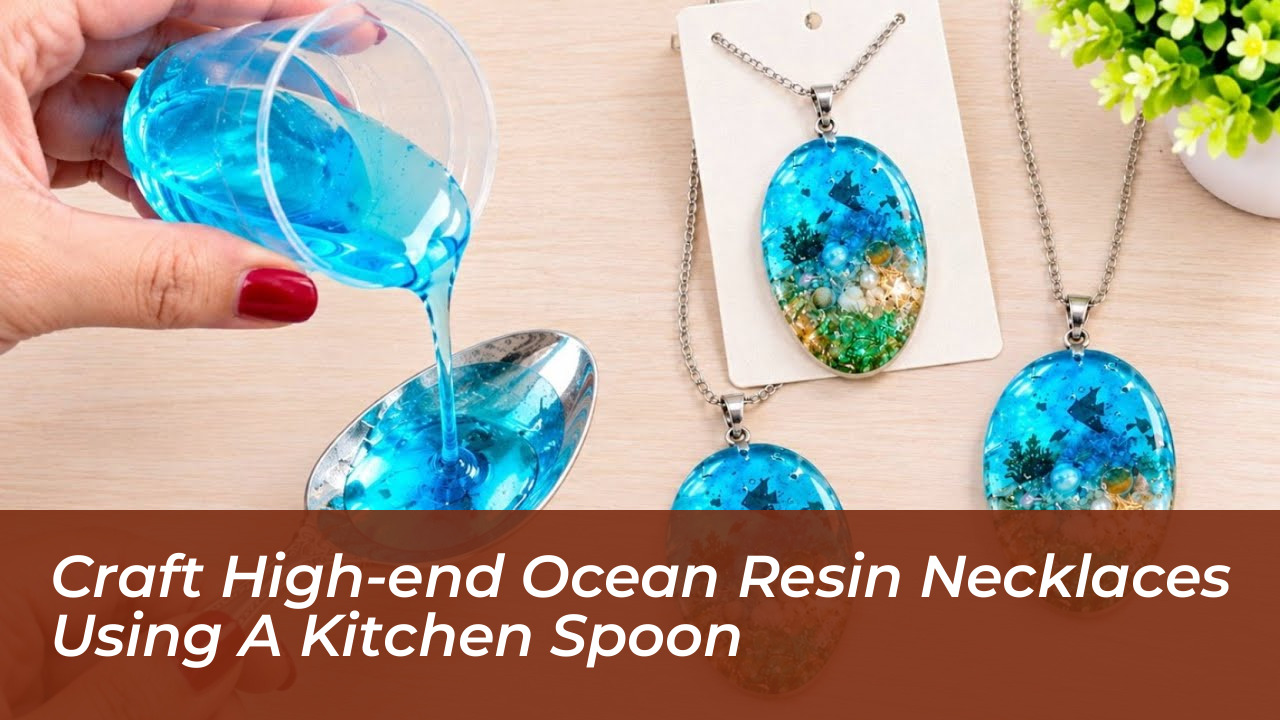

Crafting professional-grade jewellery does not require specialised silicone tools; an ordinary metal tablespoon provides the exact shallow, curved contour needed to cast an ocean resin necklace. By turning everyday cutlery into a temporary casting vessel, makers across the UK produce boutique-quality coastal pendants using simple layered epoxy, genuine sand, and miniature marine accents. This clever method bypasses the problem of flimsy commercial moulds warping under heat. A rigid stainless steel bowl holds its shape, giving each pendant an elegant cabochon curvature that mimics smooth sea glass plucked straight from the Cornish shoreline.
The secret to success lies in proper mould release techniques and patience during the chemical cure phase. Makers can easily transform standard cutlery into a crafting studio staple without breaking their budget on specialty manufacturing supplies.
The Canteen Secret: Turning Stainless Steel into a Reusable Mould
Placing liquid epoxy directly against stainless steel causes raw resin to bond to microscopic scratches found on everyday cutlery. The breakthrough hack relies on coating the metal bowl with a thin, continuous layer of clear PVA or craft glue before any chemical mixing begins. As the glue dries, it establishes a flexible, water-soluble barrier between the metallic surface and the polymer.
Once the casting cures, this barrier releases cleanly, allowing the finished cabochon to pop out without prying or cracking. This single preparatory step transforms an everyday utensil into a reusable casting die that yields professional results.
Essential Supplies for the Kitchen-Table Studio
Achieving realistic depth inside a shallow pendant requires specific raw components arranged in distinct optical strata. Sourcing these items does not demand high-end suppliers, but each piece plays a defined structural role in the final design:
- A dedicated metal spoon: Soup or dessert spoons offer the broad oval silhouette best suited for wearable pendants.
- Clear liquid glue: Acts as the non-reactive barrier film to prevent permanent metal-to-resin bonding.
- Two-part epoxy resin: A low-viscosity casting formula ensures crisp clarity without trapped air bubbles.
- Natural beach sand: Provides terrestrial texture and anchors the bottom boundary of the coastline scene.
- Transparent blue pigment: Gives liquid resin the realistic refraction of deep seawater without obscuring underlying details.
- Miniature inclusions: Micro-pearls, crushed shells, and tiny starfish or transparent acetate marine silhouettes.
- Wet-and-dry sandpaper: Grits ranging from 400 to 2000 for truing edges and smoothing the reverse side.
- Jewellery findings: Pinch bails, jump rings, and fine link chains to complete the wearable item.
Makers should treat resin with standard safety care. The UK Health and Safety Executive highlights the importance of adequate room ventilation and nitrile gloves when working with reactive polymer systems, ensuring fumes and skin contact remain controlled throughout the mixing phase.
Step-by-Step Casting: Building a Miniature Shoreline
Creating an authentic marine scene inside a shallow cavity requires pouring in deliberate phases rather than filling the bowl in one pass. Rushing the process causes decorative elements to drift or sink into the bottom of the spoon.
Begin by blending a modest quantity of two-part epoxy according to precise manufacturer ratios. Divide the mixture into two small mixing cups, tinting one batch with a droplet of translucent cyan or ocean blue dye while keeping the second batch crystal clear. Blend coarse natural sand directly into a small pool of the tinted blue resin and deposit it along the lower third of the glue-prepped spoon. This creates a textured ocean shelf that remains stable as the polymer begins its initial gel phase.
While this lower seabed layer remains tacky, introduce your decorative elements directly into the composition:
- Press micro-shells and pearls firmly into the sand margin so they stay pinned in place.
- Set precision-cut acetate silhouettes, such as miniature fish or sea turtles, slightly above the seabed within the clear zone.
- Allow the composition to reach a partial cure before attempting further layers, ensuring embedded items do not migrate toward the rim.
Once the base layer stabilises, flood the remaining cavity with clear resin to seal the underwater world completely.
Mastering the Dome: Finishing and High-Gloss Glazing
After a full 24-hour cure cycle, the pendant can be separated from the metal bowl. A gentle flex or light tap on the spoon handle should dislodge the casting cleanly, leaving the sacrificial glue residue safely on the back of the piece. Rinse the pendant in lukewarm water to dissolve any remaining dried glue film.
The perimeter may present irregular flashes of resin where the liquid met the spoon rim; rub these down flat using wet-and-dry sandpaper lubricated with cold tap water to keep airborne dust particles at zero. To restore transparency to the sanded edges and establish a glossy dome, apply a micro-droplet of clear resin across the entire front face using a toothpick. Surface tension will pull the clear liquid toward the perimeter, producing a self-levelling liquid lens that magnifies every tiny shell trapped beneath.
From Craft Table to Commercial Stall: The Maker’s Market Appeal
Small-batch craft jewellery continues to enjoy demand across artisan craft fairs and independent digital boutiques. Consumers frequently favour miniature, tactile nature scenes over mass-produced plastic accessories. Using a spoon as a structural base ensures every piece shares a consistent geometry while retaining bespoke internal detailing.
Attach a silver-plated or stainless steel bail using a small pilot hole or heavy-duty jewellery adhesive, thread the pendant onto a matching curb chain, and present it inside an unbleached card box for retail presentation. By substituting expensive factory equipment with thoughtful domestic hacks, creators reduce overheads to near zero while delivering distinct, gallery-worthy pieces.