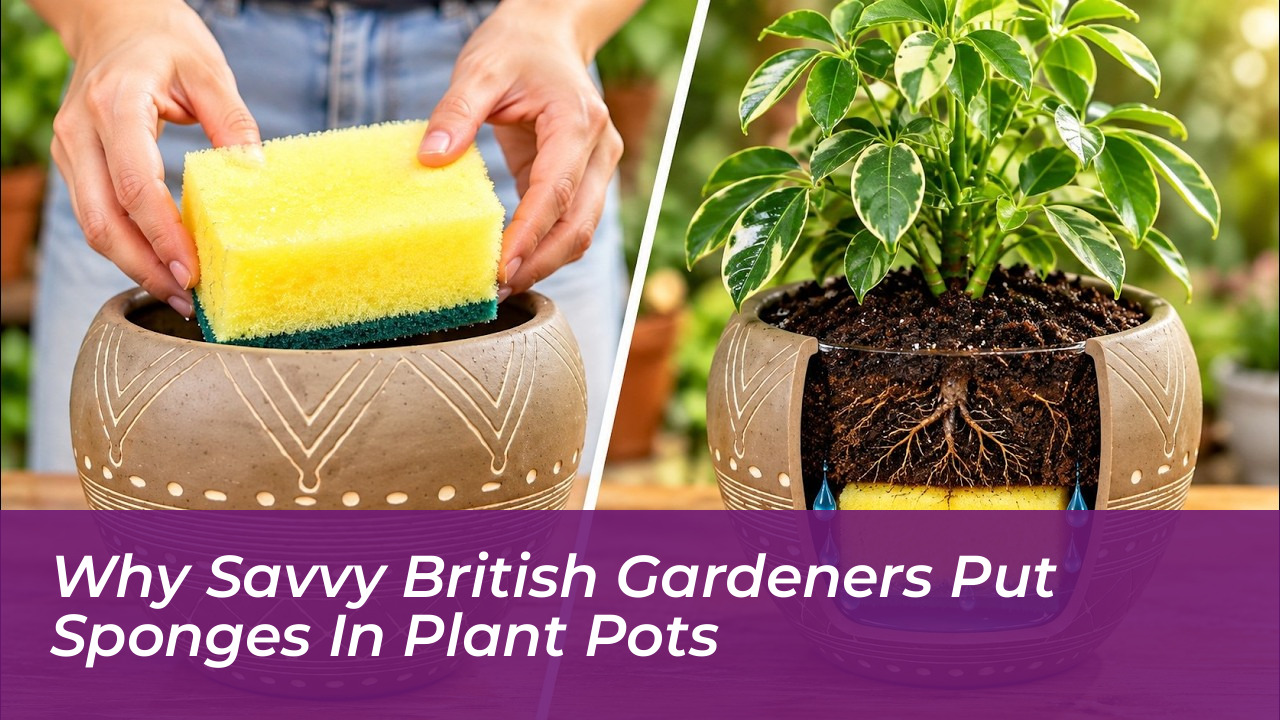

Placing an ordinary kitchen sponge at the bottom of a container pot creates an automatic moisture reservoir. It absorbs excess run-off during heavy downpours and feeds hydration back to delicate root systems as the compost dries out. This clever gardening hack solves a common dilemma for balcony growers and patio gardeners: preventing root rot without allowing pots to dry out during sudden heatwaves or prolonged dry spells.
Container compost often behaves unpredictably during shifting British weather. A heavy rainstorm can waterlog root systems and leach vital nutrients out of drainage holes. Meanwhile, brisk drying winds can leave the same soil baked hard within forty-eight hours. By rethinking everyday kitchen cast-offs, you can stabilise growing conditions and slash routine plant maintenance. These practical gardening tips turn simple household items into high-performing horticultural tools that protect foliage, nourish soil, and streamline container care.
The Kitchen Sponge Trick: Protecting Container Root Systems
Positioning a clean sponge at the base of your planter-resting just over the drainage hole before you add compost-radically alters internal moisture dynamics. The open cellular structure of the sponge captures excess water that would otherwise drain immediately into saucers. It holds moisture right beneath the lower root zone. When the surrounding soil dries, capillary action draws that stored hydration upwards, keeping root tips supple and hydrated.
This simple technique delivers multiple advantages for outdoor and indoor displays:
- Prevents nutrient leaching: It holds onto enriched water rather than allowing liquid feed to wash straight onto the patio floor.
- Stops soil spillages: The sponge acts as a porous barrier, ensuring compost stays securely inside the pot without blocking vital drainage points.
- Reduces watering frequency: Thirsty plants such as hydrangeas, sweet peas, and fuchsias gain a buffer against daytime wilting.
When dealing with synthetic versus natural materials, garden experts note important distinctions. Synthetic sponges make durable subterranean moisture reserves at the bottom of pots. Natural options like cellulose or loofah are preferred for compost heaps, where they help balance nitrogen-rich materials and absorb water to keep microbes active.
Smart Irrigation: Low-Cost Slow Watering from Recycled Bottles
Pumping gallons of water onto dry soil often causes fast run-off rather than deep saturation. Bone-dry peat and coir repel sudden deluges. A slow-release drip system made from an ordinary plastic drinking bottle delivers hydration precisely where plant roots can use it, avoiding wasteful surface evaporation.
To set this up, take an empty plastic water bottle and pierce several tiny pinholes through the cap and shoulders. Invert the filled bottle directly into moist potting compost, burying the neck several centimetres deep beside your plants. Water seeps out drop by drop through hydrostatic pressure, providing steady moisture across two or three days. It proves particularly effective for heavy feeders like tomatoes, peppers, and courgettes, which suffer blossom-end rot whenever watering cycles become erratic.
Three Household Cast-Offs Reimagined for Green Spaces
Your recycling bin contains a wealth of functional gardening equipment that costs nothing and keeps single-use waste out of domestic rubbish collections:
- Used tea bags as seedling cradles: Tucking seeds into cooled, unbleached tea bags creates a damp, nutrient-rich environment for early germination before potting up.
- Banana peels as natural fertiliser: Potassium-rich chopped banana skins break down quickly beneath the mulch, slowly feeding roses, staghorn ferns, and potted fruiting shrubs.
- Tongs and clean socks for foliage care: Clamping a pair of kitchen tongs wrapped in soft cotton socks lets you gently dust delicate indoor leaves on both sides simultaneously, improving photosynthesis without tearing tender foliage.
High-Torque Weeding: Tackling Deep Taproots Mechanically
Pavement cracks, gravel pathways, and unmortared brick joints present frustrating weeding tasks in domestic gardens. Hand-pulling frequently snaps off dandelion and dock crowns at surface level, leaving deep taproots behind to regenerate within weeks.
A cordless power screwdriver or drill fitted with a long, narrow masonry or spiral bit offers an effective mechanical solution. Aligning the spinning bit right through the centre of the root crown shears through the main taproot and winds up fibrous stems instantly. This technique removes the stubborn growing core without relying on chemical weedkillers or harsh salts that can leach into nearby flower borders.
Embracing Sustainable, Resource-Efficient Gardening
A demonstration of these practical techniques shows how effortlessly ordinary household items can transform your weekend garden routine. Sustainable gardening rarely requires bespoke plastic gadgets from garden centres. Simple, resource-efficient adaptations consistently deliver the healthiest foliage and most resilient blooms.
Taking a closer look at kitchen waste often reveals ingenious alternatives to store-bought plant care supplies. By repurposing everyday items with intention, you can protect your plants, reduce household waste, and maintain a thriving, resilient green space all year round.