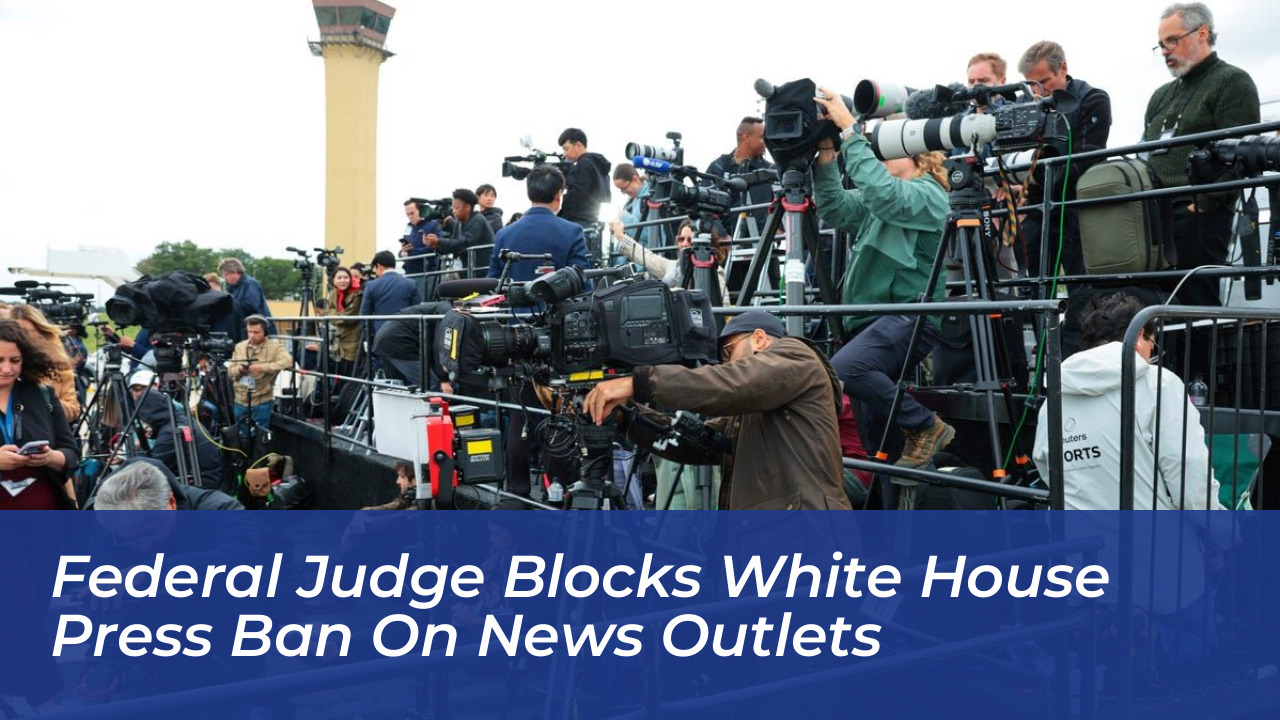
A federal judge intervened on September 24, 2026, issuing a temporary restraining order that halts the Trump administration from barring CNN, MS NOW, and Politico from the White House grounds. U.S. District Judge Timothy Kelly ordered the immediate restoration of press credentials for journalists representing the three organizations. This swift judicial action addresses a high-stakes constitutional showdown over executive power, freedom of the press, and procedural fairness within the federal government. The conflict erupted on September 18 when President Donald Trump announced via Truth Social that he was revoking the hard passes of the three media outlets, citing what he labeled cumulative fake news and hostile coverage.
- Federal Judge Blocks White House Press Ban in High-Stakes Legal Battle
- The Genesis of the Ban and Immediate Legal Challenge
- Presidential Announcement via Social Media
- Joint Lawsuit and Constitutional Claims
- Judicial Scrutiny: Dismantling Executive Defenses
- Evaluating National Security Justifications
- The 14-Day Temporary Restraining Order
- Legal Precedent: The Ghost of the 2018 Acosta Case
- Parallels to the Jim Acosta Litigation
- Judicial Constraints on Executive Discretion
- Media Solidarity and Operational Fallout
- Suspension of the White House Television Pool
- Amicus Curiae Support and Gate Chaos
- Unexplored Legal Angles: Administrative Procedure and Coercion
- Administrative Procedure Act Violations
- First Amendment Coercion Doctrine
- Future Outlook for White House Press Access
- Upcoming Court Deadlines and Preliminary Injunctions
- Frequently Asked Questions
- Why did the White House ban CNN, MS NOW, and Politico?
- What legal grounds did the news outlets use to sue the administration?
- What was the immediate outcome of the lawsuit?
- How did other media organizations respond to the ban?
Federal Judge Blocks White House Press Ban in High-Stakes Legal Battle
Within days, the affected organizations filed a joint federal lawsuit in Washington, D.C. They argued that the ban constituted unconstitutional viewpoint discrimination under the First Amendment and violated Fifth Amendment due process guarantees. Judge Kelly agreed with the core of their procedural claims, ruling that the administration acted without adequate legal standards or notice. The rapid pace of this litigation highlights the sensitivity surrounding executive access and the fierce defense of journalistic freedoms in the nation’s capital.
The Genesis of the Ban and Immediate Legal Challenge
Presidential Announcement via Social Media
The sequence of events began on September 18, 2026, when President Donald Trump published a post on Truth Social announcing the immediate revocation of press credentials for CNN, MS NOW, and Politico. The presidential statement justified the action by pointing to cumulative negative coverage and accusations of misleading reporting. This social media decree bypassed traditional White House press office communication channels and immediately triggered alarm across the journalistic community.
Targeted outlets faced instant operational paralysis as their reporters lost access to briefing rooms, workspaces, and daily press briefings. The administration framed the decision as a necessary measure against hostile media actors, but legal scholars immediately questioned the constitutional footing of using executive property management to punish specific editorial stances.
Joint Lawsuit and Constitutional Claims
In response to the executive action, attorneys for CNN, MS NOW, and Politico filed a joint federal lawsuit in the U.S. District Court for the District of Columbia. The complaint centered on two primary constitutional violations. First, the plaintiffs argued that the ban constituted viewpoint discrimination, violating the First Amendment by penalizing specific media entities for critical reporting. Second, they asserted that the abrupt revocation bypassed established procedural safeguards, violating Fifth Amendment due process rights.
The swiftness of the legal filing underscored the gravity of the situation. Media organizations recognized that allowing executive credential stripping without clear rules would create a dangerous precedent for future administrations. The lawsuit sought an immediate injunction to restore access and prevent further constitutional harm.
Judicial Scrutiny: Dismantling Executive Defenses
Evaluating National Security Justifications
Faced with a mounting legal challenge, the Justice Department scrambled to construct a retroactive defense. Government attorneys submitted retrospective letters on September 22, attempting to justify the press ban through national security concerns. These documents cited specific reporting incidents, including CNN coverage of East Wing bunker construction details, MS NOW reporting on internal leak investigations, and Politico publishing security funding documents related to the White House ballroom.
Judge Kelly methodically dismantled these justifications during court hearings. He noted that the primary reason given by the president in his initial social media post focused exclusively on negative reporting rather than classified leaks or tangible security risks. , the court observed that many of the cited reporting incidents had occurred months or years prior, undermining the claim that current access posed an immediate danger.
The 14-Day Temporary Restraining Order
To prevent ongoing constitutional harm, Judge Kelly issued a 14-day temporary restraining order. This judicial remedy restored press credentials for the affected journalists immediately and established a tight timeline for preliminary injunction proceedings. The order signaled that executive discretion regarding press access is not absolute and must adhere to established constitutional bounds.
The operational impact was immediate. While the restraining order provided temporary relief, it also set the stage for a prolonged legal battle over the permanent rules governing White House press credentials. Both sides prepared for an extended clash over the boundaries of executive authority.
Legal Precedent: The Ghost of the 2018 Acosta Case
Parallels to the Jim Acosta Litigation
This legal confrontation echoes a nearly identical battle from 2017 and 2018. During his first term, President Trump revoked the press pass of then-CNN correspondent Jim Acosta following a contentious White House news conference. CNN sued the administration, and it was Judge Timothy Kelly who ruled in favor of the network, ordering the White House to restore Acosta’s credentials.
That foundational litigation established critical D.C. Circuit precedent. Government officials cannot arbitrarily strip a reporter of a press pass without providing notice, an explanation of the alleged violation, and a formal opportunity to be heard. Judge Kelly emphasized this constraint in his latest ruling, noting that he remained bound by appellate precedent regardless of executive disagreements.
Judicial Constraints on Executive Discretion
The court’s insistence that executive property management remains bound by constitutional due process serves as a check on presidential power. While the executive branch holds broad authority to manage federal property and secure official grounds, that authority cannot be weaponized to suppress free expression.
Legal experts anticipate further appellate challenges following the preliminary injunction phase. If the case ascends through the federal court system, it could ultimately force the Supreme Court to clarify the constitutional limits of public property access and presidential discretion regarding the press.
Media Solidarity and Operational Fallout
Suspension of the White House Television Pool
The exclusion of CNN, MS NOW, and Politico triggered an unprecedented display of professional solidarity across the American media landscape. CNN participates in the rotating five-network U.S. television pool, which supplies vital video coverage of presidential movements to domestic and international broadcasters. When the administration blocked CNN from traveling with the president to the United Nations General Assembly in New York, the remaining pool networks, including ABC, CBS, NBC, and Fox News, refused to fill the gap.
This collective refusal effectively suspended the television pool for the trip. Other major journalistic enterprises quickly joined the protest. Outlets such as The New York Times and The Washington Post temporarily withheld still photography distributed through pooled coverage, demonstrating unified industry pushback against executive credential restrictions.
Amicus Curiae Support and Gate Chaos
On Wednesday, September 23, an amicus curiae brief signed by 49 distinct media organizations was submitted to the court. The brief argued that stripping news organizations of access based on editorial viewpoint violates decades of established jurisprudence. The morning after Judge Kelly issued his ruling, the confrontation took a chaotic turn.
Reporters from the affected outlets arrived at the White House gates only to be turned away temporarily by Secret Service officers who had not yet received updated operational orders. Attorneys for the news organizations filed an emergency request for non-compliance proceedings. White House Director of White House Press Operations Micah Stopperich quickly filed a sworn declaration outlining the timeline of badge reactivation, and by noon on Thursday, journalists successfully retrieved their credentials and resumed broadcasting from the complex.
Unexplored Legal Angles: Administrative Procedure and Coercion
Administrative Procedure Act Violations
While most public coverage focuses on First Amendment and Fifth Amendment due process claims, legal analysts have identified deeper dimensions under the Administrative Procedure Act (APA). The administration’s sudden revocation of credentials without formal rulemaking or transparent administrative guidelines potentially violates the APA. Federal agencies and executive offices must follow rational decision-making processes rather than executing arbitrary decrees.
Establishing clear, objective standards for credential management is a legal requirement for federal agencies. Bypassing these procedures exposes executive actions to additional vulnerabilities in federal court, as arbitrary and capricious decision-making runs afoul of administrative law.
First Amendment Coercion Doctrine
Beyond simple viewpoint discrimination, the ban functions as an unconstitutional prior restraint designed to coerce favorable coverage. By punishing specific outlets, the executive branch creates a chilling effect across the entire media ecosystem. This coercion doctrine prevents government officials from using access deprivation as a tool to shape news reporting.
Constitutional protections exist precisely to prevent government actors from penalizing dissent. The courts view institutional bans designed to induce self-censorship as a direct threat to the democratic function of a free press.
Future Outlook for White House Press Access
Upcoming Court Deadlines and Preliminary Injunctions
The legal battle moves swiftly toward its next major phase. Plaintiff motion deadlines are set for September 28, with government responses due by October 2, 2026. These filings will determine whether Judge Kelly converts the temporary restraining order into a longer-lasting preliminary injunction.
Pressure continues to mount on the executive branch to establish transparent, objective credential management standards. As the litigation progresses, the administration faces the ongoing challenge of defending its access policies against established constitutional precedents.
Frequently Asked Questions
Why did the White House ban CNN, MS NOW, and Politico?
President Donald Trump announced the ban on September 18, 2026, citing negative reporting and what he characterized as fake news and national security risks.
What legal grounds did the news outlets use to sue the administration?
The outlets filed a civil lawsuit arguing that the ban violated their First Amendment rights through viewpoint discrimination and their Fifth Amendment due process rights.
What was the immediate outcome of the lawsuit?
U.S. District Judge Timothy Kelly issued a 14-day temporary restraining order requiring the immediate restoration of press credentials for the affected journalists.
How did other media organizations respond to the ban?
Major news networks and publications suspended pooled coverage operations and filed an amicus curiae brief signed by 49 media organizations supporting press access.