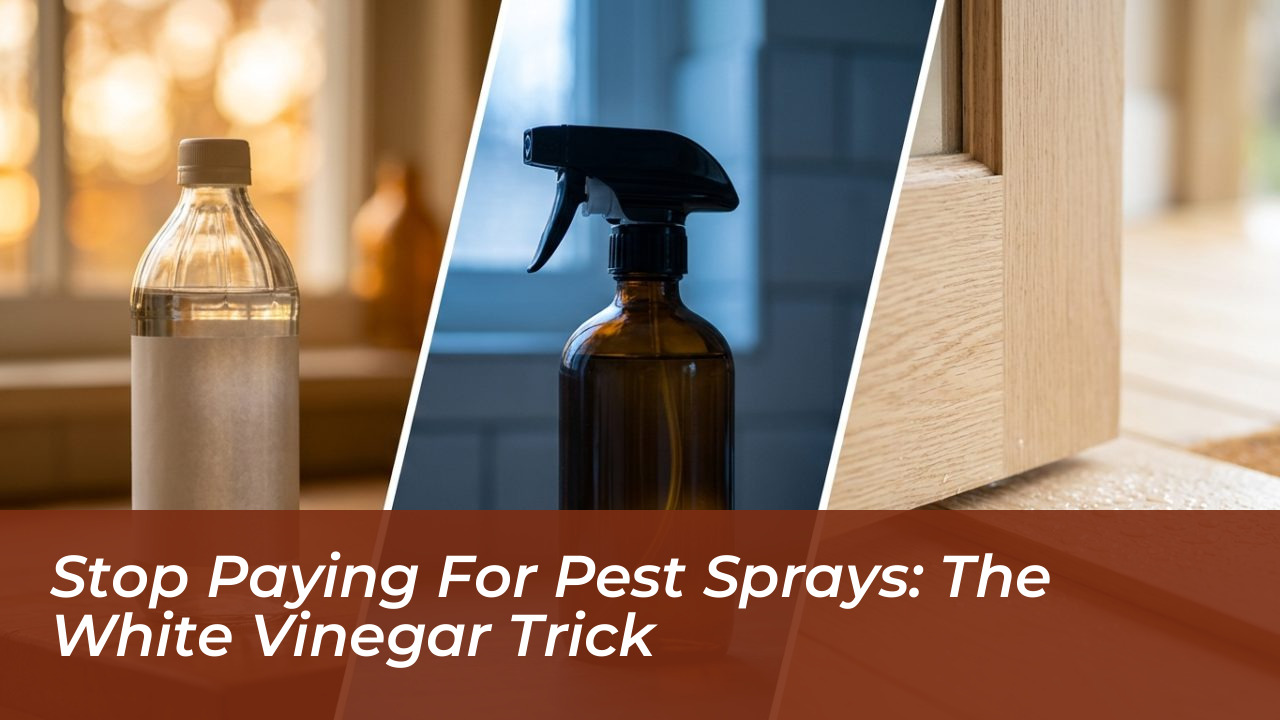

Spraying a simple bottle of white vinegar across your front doorway stops invading insects without spending money on commercial pest control products. The entrance serves as the primary gateway into any home. Hitting the threshold with this household staple instantly breaks the invisible trails ants use to navigate into kitchens and living spaces. Store-bought chemical sprays can quickly run up your household budget, yet plain white vinegar delivers a reliable alternative for a fraction of the price. It acts immediately upon contact, tackling entry points before pests establish an active highway across your floors.
The Science of Scent: Why Acetic Neutralizes Household Bugs
The secret behind this affordable entryway barrier comes down to basic chemistry and insect biology. Standard white vinegar is an aqueous solution of acetic , characterized by a sharp, penetrating scent that humans notice immediately and insects find completely overwhelming. Ants do not wander randomly. They navigate using invisible trails of chemical messengers known as pheromones. Once scout ants locate a food source, they lay down these microscopic markers to guide the rest of the colony directly to your pantry.
The pungent acidity of acetic breaks down invisible pheromone trails, leaving following insects disoriented and unable to locate entry paths. Spraying an acidic solution directly over their path wipes out that chemical footprint entirely. Behind the lead ants, the rest of the column loses the signal and scatters. At the same time, the acidic profile works on contact to break down grease, lift ground-in dirt around the threshold, and eliminate trapped odors without commercial detergents.
Myth vs. Reality: Chemical Sprays Versus Natural Deterrents
A common misconception is that keeping insects away requires strong synthetic toxins inside the living perimeter. While industrial insecticides rely on specialized chemical agents designed to eradicate colonies, routine barrier control at thresholds often boils down to sensory disruption and regular maintenance. Commercial pest formulas often leave lingering residues that cause concern for households with toddlers or curious pets roaming near exterior doors. Food-grade options provide peace of mind.
- Active Mechanism: Acetic disrupts scent trails and masks pheromone pathways.
- Household Safety: Pet- and child-friendly alternative free from harsh chemical fumes.
- Secondary Benefit: Cuts surface grease, lifts grime, and neutralizes odors.
- Application Frequency: Reapplied every few days, especially after washing floors or rain.
Step-by-Step Guide: How to Apply White Vinegar at Your Threshold
Setting up an effective, low-effort barrier takes less than a minute of preparation using tools already sitting in your kitchen pantry:
- Prepare the solution: Combine equal parts white vinegar and clean water in a standard plastic spray bottle. For an aggressive deterrent against stubborn trails, pour the vinegar directly into the bottle at full strength.
- Target entry points: Generously mist the exterior door sill, doorframe, interior baseboards, and any structural cracks or gaps where bugs slip inside.
- Cover active paths: Spray along the entire visible path that pests follow across the floor to thoroughly wipe out the scent markers.
- Wipe clean (optional): Run a clean microfiber cloth along the threshold to lift accumulated dust, grime, and grease while sealing the perimeter.
- Maintain the barrier: Reapply the mist every few days. Refresh the surface immediately following heavy rain or routine floor mopping, as standing water dilutes the active acetic layer.
Maximizing Coverage Across High-Traffic Entryways
Entryways handle constant foot traffic, which gradually wears down any surface barrier applied to the floor. Focus your spray directly into the recessed edges of the door casing and the weatherstripping beneath the door where shoes rarely make direct contact. This targeted placement keeps the protective scent intact longer, ensuring that incoming pests encounter an unyielding sensory barrier before they ever reach the interior hallways. Simple changes to everyday routines can eliminate recurring costs on expensive specialty products while protecting your living spaces.
Frequently Asked Questions About Using Vinegar for Pest Control
Will white vinegar harm or stain my doorframes and baseboards?
When used in a diluted 1:1 ratio with water, white vinegar is generally safe for most sealed wood, painted surfaces, and tile. However, because of its acidity, you should avoid using it on natural stone surfaces like marble or granite, as it can dull the finish.
Is vinegar safe to use around household pets?
Yes, white vinegar is a non-toxic alternative to harsh chemical pesticides. Once the spray dries and the sharp scent dissipates, it is completely safe for homes with cats, dogs, and children. Just ensure pets are kept away during the initial application.
How often should I reapply the vinegar spray?
For the best protection, reapply the spray every two to three days. You should also reapply immediately after heavy cleaning, washing the floors, or severe rainstorms that may have washed away the exterior barrier.
Does vinegar kill insects on contact?
Vinegar is primarily a deterrent and trail-disruptor rather than a lethal poison. While direct contact with full-strength vinegar can overwhelm very small soft-bodied insects like fruit flies or young ants, its main power lies in erasing pheromone pathways so pests avoid the area entirely.
Can I add essential oils to boost the effectiveness?
Yes, adding 10 to 15 drops of peppermint, eucalyptus, or tea tree oil can significantly enhance the repelling power of your DIY spray. Keep in mind that certain essential oils, like peppermint, can be toxic to cats, so omit them if you have feline pets.