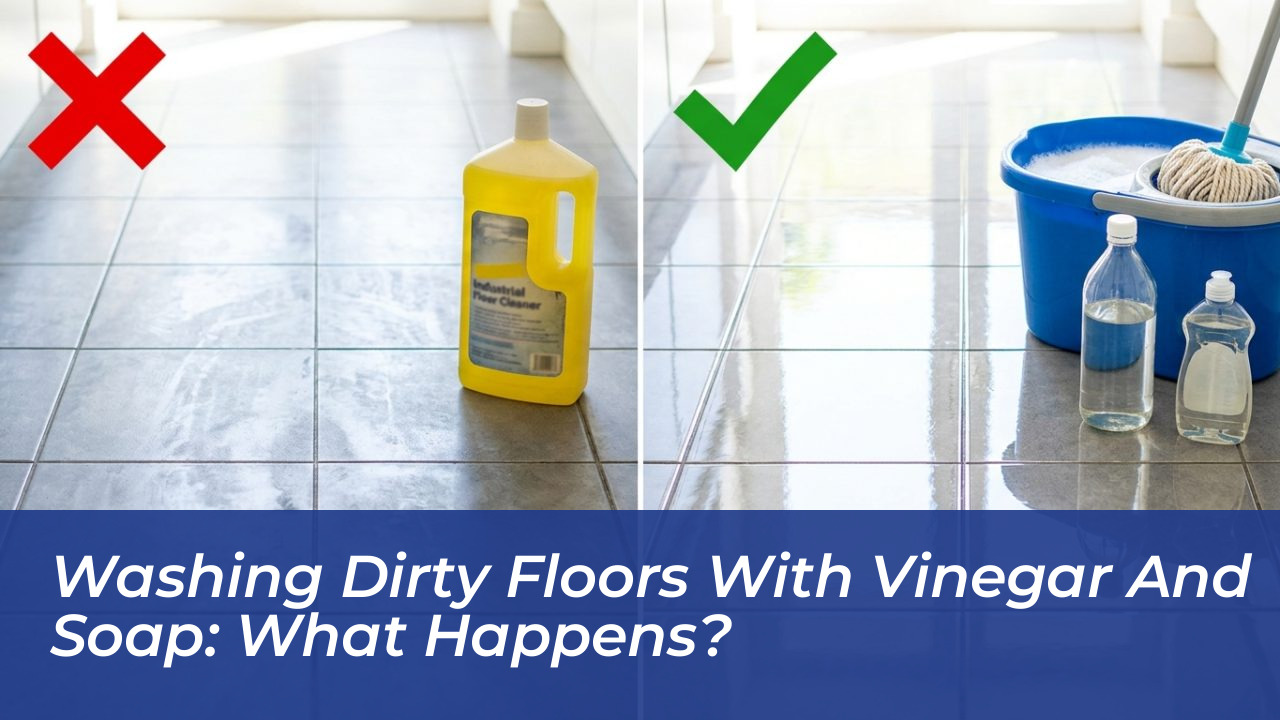

Mopping dirty floors with a measured blend of white vinegar, mild dish detergent, and warm water lifts surface grease without toxic residues or dangerous chemical fumes. The exact formula, featured in non-toxic cleaning documentation published by the U.S. Environmental Protection Agency (EPA), uses mild surfactants alongside natural acetic to loosen mineral deposits and strip grime across standard residential flooring. Household chemical interactions can pose genuine health hazards when strong commercial formulas mix unpredictably. By utilizing basic, biodegradable ingredients, homeowners can safely maintain multiple surfaces without resorting to harsh commercial compounds or complicated rinse cycles.
How the Basic Floor Cleaning Mixture Works
The solution functions through a direct balance of surface-active agents and organic compounds. Liquid detergent provides surfactants, which work by reducing the surface tension of water. This physical reaction enables liquid to penetrate dried spills, lift grease particles, and hold oily residues suspended in the wash bucket rather than smearing them across the room.
White vinegar introduces mild acetic to the bucket. This acidic element dissolves mineral scale, water spots, and light limescale deposits that standard soap leaves behind. Lemon juice can serve a similar acidic function due to its natural citric content. The warm water acts as the carrier, spreading the active ingredients across the surface and sweeping particulate matter into the mop fibers. The basic floor cleaning formula works across diverse surfaces, with the sole exception of materials specifically flagged by manufacturers against the use of detergents.
Step-by-Step Preparation Using Official Guidelines
To correctly mix the solution outlined by the Morongo Environmental Protection and Outreach Program and hosted by the EPA, gather standard household items in a large plastic bucket:
- Measure 1/4 cup of fragrance-free, biodegradable liquid detergent or liquid soap into the bucket.
- Add up to 1/2 cup of white vinegar (or fresh lemon juice as an alternative).
- Pour in 2 gallons of warm tap water (roughly 7.6 liters) to dilute the mixture.
- Apply the liquid across target areas using a standard mop or heavy-duty sponge.
A notable operational advantage of this specific formula is labor efficiency: the official guidelines do not require a separate freshwater rinse step after mopping.
Customizing the Formula for Specific Household Needs
Depending on room conditions, routine maintenance may require targeted adjustments for heavy grease or lingering odors. Modifying the base recipe allows you to tackle distinct household messes without introducing synthetic solvents:
- Heavy Degreaser: Add 1/4 cup washing soda (sodium carbonate, Na2CO3). Never apply to waxed floors.
- Deodorizing Wash: Add 1/4 cup borax dissolved thoroughly before adding water; targets damp odors.
- Antiseptic Scent: Add 10 to 20 drops of lavender, rosemary, or tea tree essential oil (note: this does not make it a registered disinfectant).
- Herbal Infusion: Use several cups of brewed strong peppermint tea or lavender infusion for a natural scent.
Separating Everyday Cleanliness from Medical-Grade Disinfection
A common misconception in DIY cleaning is treating homemade vinegar blends as absolute germ-killers. While essential oils like tea tree or lavender add antiseptic properties and pleasant fragrance, official records note that these botanical additions do not turn a homemade mop solution into a registered disinfectant.
Similarly, households must not confuse washing soda (sodium carbonate, Na2CO3) with basic baking soda (sodium bicarbonate, NaHCO3). Washing soda provides substantially stronger alkaline degreasing power to strip baked-on kitchen residues, but its high strength will strip protective wax finishes from sealed wood or vinyl if misused. Always pay close attention to manufacturer floor warranties before applying acidic washes to unsealed stone or sensitive finished wood.
Frequently Asked Questions
Can I use a vinegar and soap mixture on hardwood floors?
No, vinegar damages polyurethane finishes over time. It is best to stick to pH-neutral cleaners specifically formulated for solid and engineered hardwood surfaces.
Do I need to rinse my floors after mopping with vinegar and dish soap?
According to EPA-backed non-toxic cleaning guidelines for this specific weak dilution, a separate freshwater rinse step is generally not required, provided you do not overuse soap.
Does vinegar disinfect my floors?
While vinegar cuts grease and mineral deposits, it is not a registered hospital-grade disinfectant and will not kill all household bacteria or viruses.
What is the difference between washing soda and baking soda in floor cleaning?
Washing soda (sodium carbonate) is a strong alkaline agent used for heavy degreasing, whereas baking soda (sodium bicarbonate) is a milder abrasive often used for scrubbing grout stains.
Why does my floor look hazy or sticky after mopping with soap?
A hazy or sticky film usually means you used too much soap or detergent. Cutting back on the soap quantity and ensuring your wash water is properly diluted will eliminate this issue.