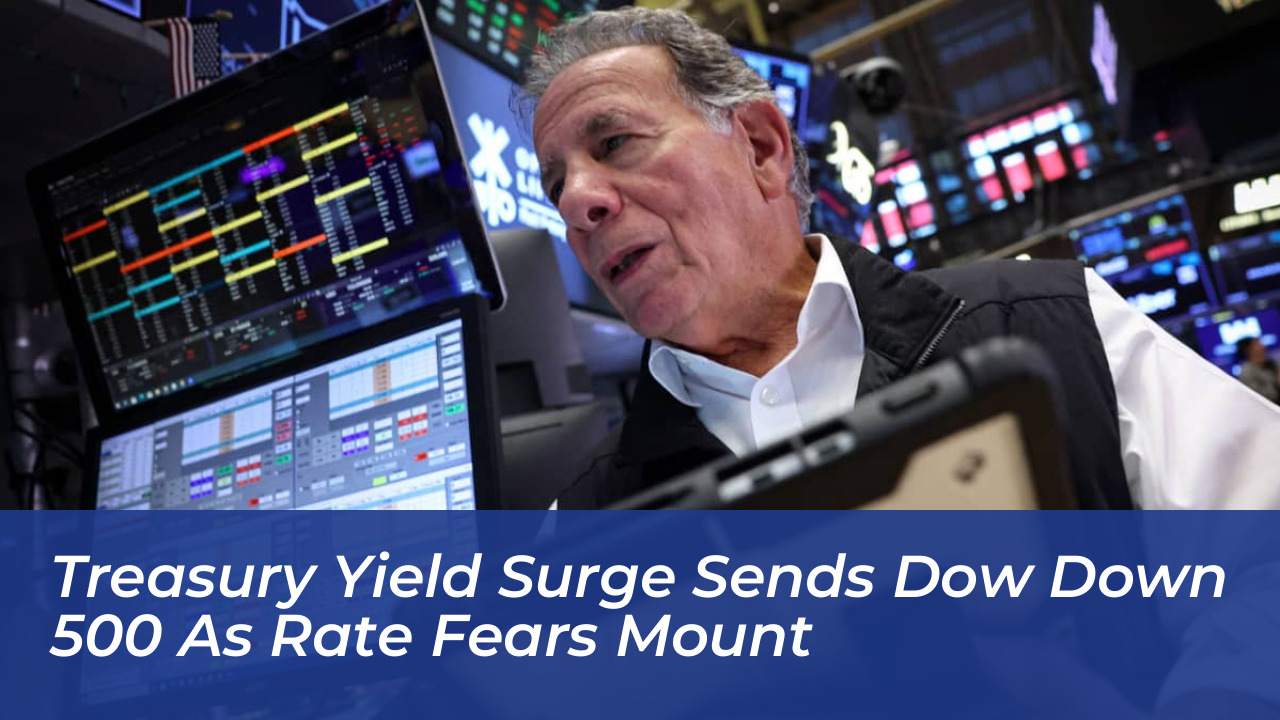


Wall Street experienced a sharp sell-off on Wednesday as soaring borrowing costs rattled investors. This drove the 10-year U.S. Treasury yield to its highest level since 2002. The rapid spike in bond yields dragged the Dow Jones Industrial Average down by approximately 500 points, placing heavy pressure across bank and technology shares.
According to market data, the benchmark 10-year Treasury note yield climbed more than 8 basis points to hit 5.356%, following an earlier session touch of 5.350%-the highest recorded level since April 3, 2002. Concurrently, the 30-year bond yield advanced by more than 8 basis points to reach 5.725%, marking its highest peak since May 2002.
Bond Market Sell-Off Deepens Ahead of Treasury Auction
The intense market movement unfolded just ahead of a scheduled $39 billion auction of 10-year notes by the U.S. Treasury. Investors and traders were also positioning themselves for the release of minutes from the Federal Reserve’s September policy meeting, during which policymakers implemented interest rate hikes for the first time since 2023.
Market strategists pointed out that the velocity of the move caught many participants off guard. When long-term yields surge rapidly, it immediately inflates borrowing costs for consumer mortgages, automotive loans, and corporate debt, sparking broader economic anxiety.
Broader Market Impact Across Major Indexes
- Dow Jones Industrial Average: Dropped roughly 500 points, reflecting broad-based industrial and financial weakness.
- S&P 500: Retreated from its record territory alongside the tech-heavy Nasdaq composite.
- Treasury Yields: The 10-year benchmark crossed critical psychological thresholds without encountering immediate buying resistance.
Fed Rate Hike Expectations and Global Economic Pressures
The sudden breakdown of calm in the fixed-income market stems from growing trader expectations that the Federal Reserve may adopt a more aggressive monetary tightening path to combat persistent inflation. Stronger-than-expected macroeconomic reports, combined with rising international energy prices, have intensified fears that central banks will maintain restrictive policies for an extended period.
As market participants await further guidance from federal policymakers, the combination of elevated government borrowing requirements, national debt expansion, and shifting global capital flows continues to keep risk sentiment fragile across international equities.