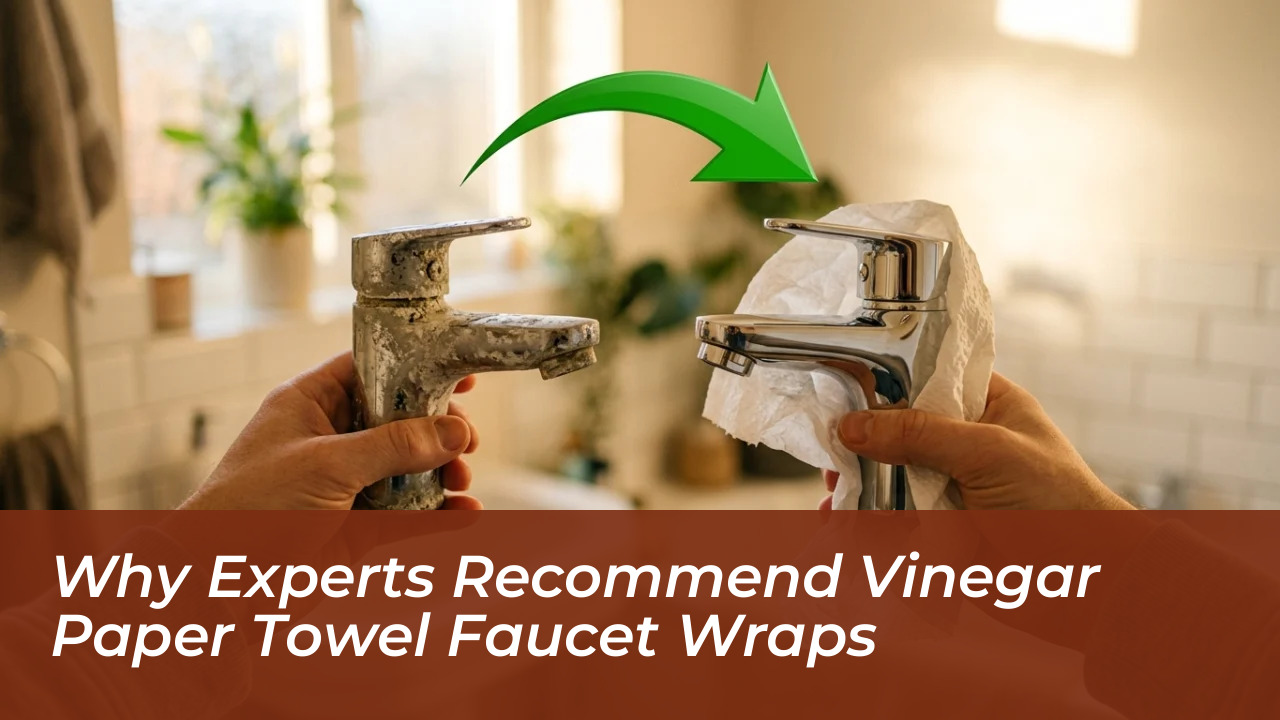

Hard water stains and calcified rings around kitchen and bathroom sinks frequently resist regular sponge scrubbing because calcium carbonate bonds directly to metallic and ceramic surfaces. According to published home maintenance guidance from the University of Georgia, wrapping household taps in paper towels soaked in plain white vinegar can dissolve these stubborn limescale deposits in approximately one hour. This inexpensive technique offers a chemical-free alternative to harsh commercial cleaners by keeping an acidic solution in continuous contact with mineral buildup without requiring specialized tools or abrasive scouring pads that might scratch expensive plumbing hardware.
Mineral encrustations build up around the base of bathroom faucets, aerators, and spout joints whenever standing tap water evaporates. Over time, these chalky deposits harden into crusts that standard spray-and-wipe routines cannot penetrate before the liquid runs off into the basin. By saturating an absorbent paper towel and draping it directly over the calcified area, the liquid remains localized, allowing the acetic in the white vinegar sufficient dwell time to penetrate and soften the crystalline matrix. This prolonged exposure transforms rigid mineral crusts into a soft slurry that wipes clean with minimal physical effort, preventing damage caused by scouring pads or metal scrapers.
Step-by-Step Guide: How to Remove Faucet Limescale
Treating calcified plumbing fixtures requires only two everyday household supplies: standard absorbent paper towels and a bottle of standard white vinegar. Follow these simple steps to restore your fixtures:
- Dampen sheets of absorbent paper towel thoroughly with white vinegar until completely saturated but not freely dripping.
- Press and mold the wet paper directly onto the mineral buildup located around the faucet base, spout, or handles, ensuring flush contact.
- Allow the wrap to rest undisturbed for approximately 60 minutes while the breaks down the deposits.
- Remove and discard the paper towel, then wipe the fixture thoroughly with a clean cloth to lift the softened debris away.
Essential Material Precautions for Natural Cleaning
While natural acids provide an effective DIY solution, homeowners must verify the specific material and finish of their fixture before applying the treatment. -sensitive surfaces-such as unlacquered brass, natural marble, or certain delicate plated finishes-can suffer cosmetic damage or corrosion if exposed to prolonged contact.
| Element | Application Detail |
|---|---|
| Recommended Solution | Standard household white vinegar |
| Application Method | Medium absorbent kitchen paper towels |
| Recommended Contact Time | Approximately one hour |
| Key Precaution | Verify finish resistance to before use |
Addressing mineral buildup early keeps fixtures flowing cleanly and prevents permanent finish pitting around high-moisture kitchen and bathroom sinks. Always check your faucet’s manufacturer instructions to ensure your finish handles vinegar exposure safely before beginning any cleaning routine. Regular 60-minute treatments can prevent dense limescale collars from developing around the base of your taps.
Frequently Asked Questions
Why does vinegar dissolve limescale on faucets?
White vinegar contains acetic , which reacts chemically with alkaline calcium carbonate found in hard water deposits. This reaction produces soluble calcium acetate, effectively breaking down the crust so it can be wiped away easily.
Can I leave a vinegar paper towel wrap on overnight?
While some guides suggest overnight soaking for heavy buildup, university experts recommend starting with a 60-minute window. Extended exposure to can risk damaging sensitive fixture finishes or rubber seals.
What surfaces should be avoided when using vinegar?
Acidic solutions like white vinegar should never be used on natural stone surfaces such as marble, granite, or limestone, as well as unlacquered brass or delicate antique plating, because the can etch and permanently dull the finish.
Do I need to rinse the faucet after removing the vinegar wrap?
Yes. After removing the paper towel and scrubbing away softened mineral debris, thoroughly rinse the fixture with clean water and buff it dry with a microfibre cloth to restore its shine and prevent water spots.
Is it safe to mix vinegar with commercial cleaning products?
Never mix vinegar with bleach or chlorine-based cleaners. Combining acids with chlorine bleach produces hazardous, toxic gases that pose severe health risks.