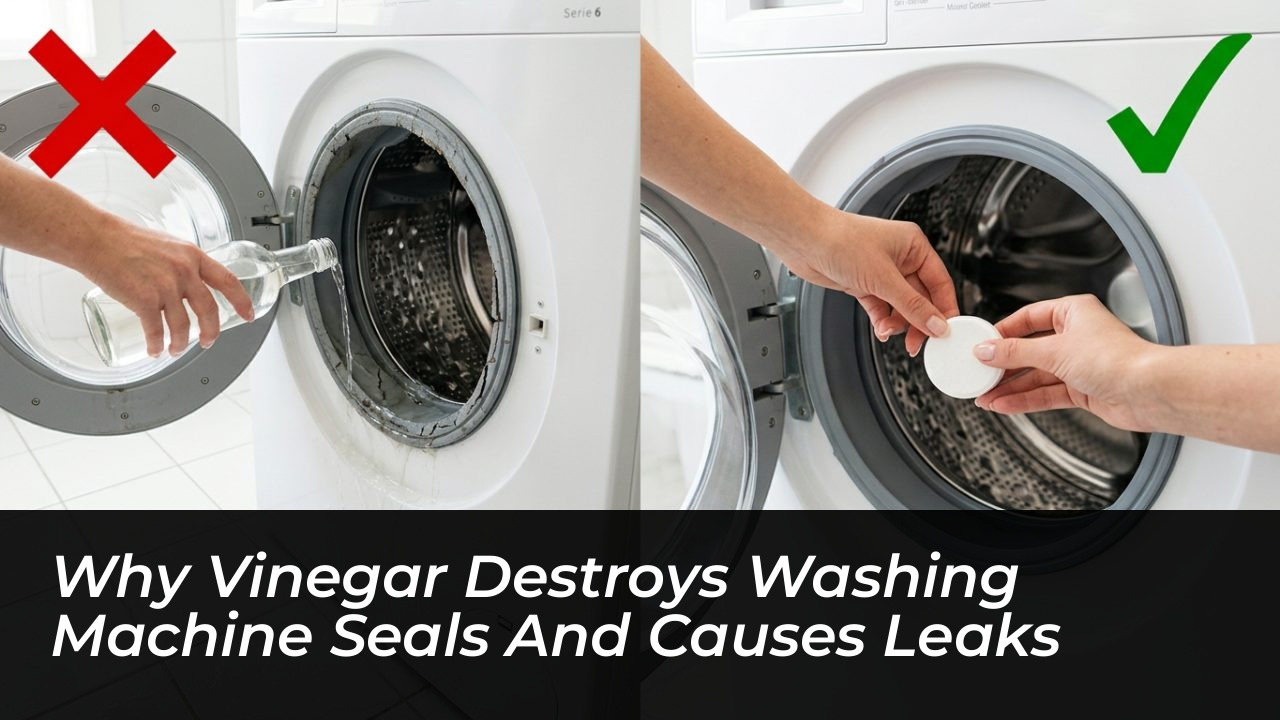

Pouring white vinegar into your washing machine drum may look like a safe, budget-friendly shortcut, but appliance technicians and major manufacturers warn that regular vinegar use eats away at rubber door seals and internal hoses until the machine leaks. While home-care forums heavily promote acetic to strip hard water minerals and eliminate mildew smells, a modern washing machine is an alkaline-engineered environment. Every cycle run with concentrated leaches flexibility directly out of the appliance’s critical watertight components.
This widespread warning has finally reached official service manuals. Maytag now explicitly tells appliance owners never to pour vinegar into the washer drum. Industry leaders Whirlpool and Bosch publish identical cautions, backing up what repair professionals have observed for years in the field.
Why Acetic Attacks Washer Components
A modern washing machine depends on pliable, soft parts to keep gallons of churning water from escaping onto your floorboards. The thick door boot gasket on a front-loader, the drainage lines, internal pump seals, and inlet valves are made from specialized rubber compounds. These materials are chemically formulated to withstand standard, alkaline laundry detergents-not repeated exposure to organic acids.
Acetic actively strips the plasticizers from these rubber parts. With repeated exposure, the synthetic material turns brittle, develops microscopic fissures, and eventually loses its seal entirely. Appliance technicians interviewed by Consumer Reports warn that regular vinegar use damages rubber seals and hoses to the point of causing leaks, with front-loading models being the most vulnerable.
The damage becomes far more severe when homeowners substitute vinegar for liquid fabric softener on a daily basis. Running vinegar through every wash load ensures constant chemical saturation across the internal plumbing, setting the stage for catastrophic hose failure-one of the leading causes of indoor residential water damage.
The Deceptive Delay of Wear
The primary reason this home remedy retains such a glowing reputation online is that the destruction is slow. Nothing visible happens during the first year of pouring vinegar into the tub. The rubber slowly hardens behind the scenes while the owner assumes the cleaning hack works perfectly.
The consequences appear much later. Homeowners suddenly face unexplainable puddles beneath the appliance cabinet, shredded drainage hoses, or a perpetually black-spotted door gasket. Once acetic creates microscopic cracks along the rubber surface, mildew embeds itself deeply inside the material where no surface wipe can ever reach it.
Washing Machine Maintenance: Myths vs. Verified Practice
Distinguishing safe laundry practices from damaging internet remedies requires understanding how different cleaning agents interact with rubber components.
| Maintenance Method | Appliance Impact |
|---|---|
| Regular white vinegar in drum | Corrodes rubber door boots, hardens internal hoses, and causes leaks |
| Dedicated cleaner tablets | Strips detergent buildup and biofilm without harming alkaline-rated seals |
| Manual gasket wipe-down | Physically clears lint and trapped moisture to stop mildew colonization |
| Diluted bleach treatment | Safely eliminates surface mold on rubber when rinsed thoroughly |
Proven Alternatives for Odor-Free Laundry and Machine Care
Achieving a fresh machine and soft clothes without degrading internal plumbing requires matching the proper maintenance routine to the right parts of the appliance.
- Use dedicated cleaner tablets monthly: For overall drum hygiene, drop a specialized washing machine cleaner tablet-such as affresh or equivalent store-brand formulas-into an empty hot cycle once a month. These tablets are chemically engineered to dissolve detergent scum, mineral scale, and biofilm without affecting rubber compounds.
- Dry and clean the door boot manually: Gasket odor responds best to physical intervention rather than chemical baths. Pull back the rubber folds after finishing laundry day, wipe away trapped hair and pooling water, and leave the washer door slightly ajar so the interior air-dries naturally.
- Treat mold safely: For existing surface mold, wipe the rubber with diluted bleach on a clean cloth, let it sit briefly, and rinse clean-never combining bleach with acids or other chemicals.
- Adjust detergent dosing: If laundry feels scratchy, excess detergent residue is almost always the cause. Reduce pour sizes to the recommended measure and utilize an oxygen-bleach (sodium percarbonate) soak occasionally to brighten fabrics.
If you still choose to use vinegar as a rinse aid, dilute a half-cup strictly in the fabric softener dispenser on rare occasions rather than pouring cups directly into the drum.
Conclusion
Vinegar earned its household fame on glass, stainless steel kettles, and ceramic tile, where it dissolves mineral scale without resistance. Inside a washing machine, that same attacks the flexible seals holding back the water. Protecting your appliance starts with keeping pantry acids far away from soft rubber gaskets and flexible internal hoses. Taking two minutes to dry the door boot and running a dedicated cleaning tablet every month preserves factory seals for years to come.
Frequently Asked Questions
Does vinegar damage washing machine rubber seals?
Yes. Regular exposure to acetic strips plasticizers from rubber door boots and internal hoses, causing them to turn brittle, crack, and eventually leak.
Are front-load washers more vulnerable to vinegar damage?
Front-load washers rely heavily on complex rubber door gaskets to prevent water from leaking out of the front door, making them much more susceptible to degradation than top-loaders.
What should I use instead of vinegar to clean my washing machine?
Commercial washing machine cleaner tablets (such as affresh) are specifically formulated to break down soap scum and mineral buildup without harming the appliance’s rubber components.
How can I prevent musty odors without using vinegar?
Prevent mildew and musty smells by wiping down the rubber gasket after your last load of the day, cleaning out the detergent drawer, and leaving the washing machine door open to air-dry.
Can I ever use vinegar safely in my laundry?
If you prefer using vinegar to soften fabrics, dilute a small amount strictly inside the dedicated fabric softener dispenser rather than dumping cups of straight vinegar directly into the wash drum.