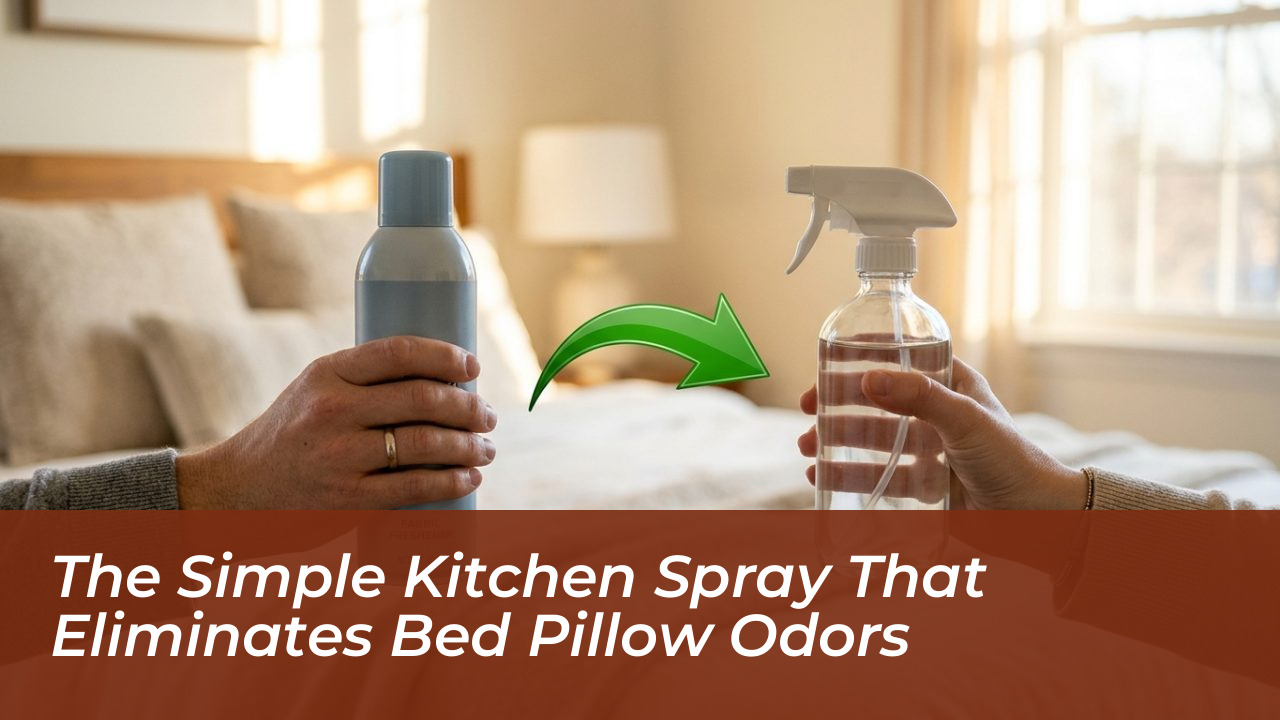

Spraying perfumed fabric fresheners directly onto a stale pillow only masks the scent temporarily, but applying a light mist of diluted white vinegar actually breaks down underlying sweat, moisture, and body oils. Bed pillows absorb sweat night after night, yet they cannot realistically go through a full wash cycle every few days without degrading their fill. Switching to a mild acidic solution dissolves dried residues, resets the fabric, and leaves your bedding naturally clean without harsh chemical fragrances.
The secret lies in the chemistry of human perspiration and how standard textiles trap organic residues over extended periods of rest. When you sleep, your face and scalp remain pressed against the same surface for hours, transferring oils directly into the weave. Ordinary cover-up sprays add artificial fragrance molecules over trapped grime, creating a heavy, layered scent that quickly sours.
The Chemistry: How Acetic Destroys Sweat Odors
Household white vinegar contains roughly 5% acetic , and that mild acidity makes it an elite fabric deodorizer. The unpleasant, stale smells embedded in pillows originate primarily from alkaline compounds, including volatile amines and ammoniacal byproducts created when skin bacteria break down sweat.
Because these molecules evaporate readily into the ambient air, they drift straight to your nose while you sleep. When acetic comes into direct contact with those alkaline molecules, an -base neutralization occurs instantly. The binds the offending compounds and converts them into non-volatile salts that can no longer evaporate into the air, silencing the odor at the molecular level rather than burying it under a synthetic perfume.
Vinegar on Pillows: Beyond Masking Fragrances
Beyond wiping out stubborn odors, the natural acidity loosens dried mineral salts left behind by evaporated sweat. It cuts through body oils clinging to internal fibers, ensuring that when laundering day finally arrives, standard detergents can penetrate the textile far more effectively.
Synthetic sprays trap stale moisture under artificial fragrance, whereas mild acetic converts volatile odor molecules into odorless, stable salts.
Myth vs. Reality: Does Vinegar Leave Behind a Sour Smell?
A widespread misconception is that misting bedding with vinegar leaves your bedroom smelling like a salad dressing or pickling jar. In practice, the sharp initial scent belongs entirely to the acetic evaporating during application. As the moisture dissipates fully into the circulating air, the scent vanishes, leaving behind neutral, odorless fabric.
Relying on heavily perfumed commercial aerosol sprays, by contrast, coats delicate bedding fibers in synthetic fixatives that rest against your skin and breathing pathways for hours each night. An acidic mist provides a clean slate without irritating sensitive facial skin or triggering morning respiratory tightness.
Comparison: Commercial Sprays vs. Vinegar Solution
- Commercial Fabric Sprays: Covers alkaline sweat molecules with heavy synthetic fragrances without breaking down embedded oils.
- Diluted White Vinegar: Neutralizes volatile amine compounds through an -base reaction and dissolves dried sweat salts.
Step-by-Step: How to Safely Mist and Freshen Your Bed Pillows
Treating your pillows takes less than two minutes and requires only common household supplies. Maintaining the proper dilution ratio ensures the spray remains gentle on cotton, microfiber, and blended pillowcases while delivering complete odor neutralization.
- Mix the solution: Combine one part white vinegar with three parts clean water in a standard fine-mist spray bottle.
- Optional fragrance boost: Add two to three drops of pure lavender essential oil to the bottle if you prefer a subtle botanical undertone.
- Apply a light mist: Hold the nozzle roughly ten to twelve inches away from the pillow, spraying until the surface is just barely damp. Never soak or saturate the inner batting.
- Air dry thoroughly: Place the pillow in a well-ventilated room or directly in the sunlight, flipping it halfway through so both sides dry completely before remaking the bed.
- Maintain a schedule: Repeat this maintenance step once a week or whenever moisture and mustiness accumulate between standard washings.
Why Consistent Maintenance Extends Pillow Lifespan
Sweat and sebum break down synthetic fiber fills and natural down over time, causing pillows to clump, flatten, and degrade prematurely. Incorporating an acidic misting routine keeps internal fibers resilient and prevents moisture buildup from setting deep into the core.
By maintaining a clean resting surface between deep wash cycles, you protect sensitive facial skin and avoid premature replacement costs. Try this simple kitchen refresh on your own bedding this week to experience the difference firsthand.
Frequently Asked Questions About Pillow Deodorizing
Can I use apple cider vinegar instead of white vinegar?
No. Apple cider vinegar contains organic compounds and color pigments that can stain light-colored pillow fabrics. Always use clear, distilled white vinegar for fabric applications.
Will the vinegar smell linger on my face while I sleep?
Not at all. Once the acetic fully evaporates-usually within 15 to 30 minutes in a ventilated room-all odor completely vanishes, leaving the fabric neutral and fresh.
Can this spray be used on memory foam pillows?
Yes, provided you apply only a very light mist and never saturate the foam. Ensure the memory foam is completely air-dried before putting the pillowcase back on.
How often should I apply the vinegar spray?
Applying the mist once a week is ideal for managing normal sweat accumulation and body oils between deeper washing sessions every six months.
Does vinegar kill dust mites?
While vinegar helps neutralize odor-causing bacteria and breaks down sweat salts, high heat drying and protective zippered pillow covers remain the most effective defenses against dust mites.